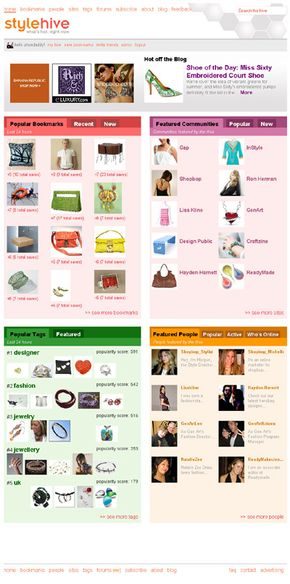
Fashion social networks are exactly what they sound like. You post a picture of your outfit. Other people comment. You find friends who like black shirts or vintage dresses. Sites like Share Your Look or StyleHive let you build a digital wardrobe. Some of these networks exist as standalone hubs. Others, like the old MySpace Fashion section, were just niches within bigger platforms.
But here is the real story. Retailers love these sites. They are an online store’s dream.
ComScore analyzed this back in 2007. The data was clear. The more time you spend on social networks, the more likely you are to buy stuff online. We are talking about clothing. Music. Electronics. Luxury items. If you are a “heavy” user, you are a target.
In August 2007, 61.2 million people visited online retailers. About 25 percent of them were heavy social network users. That is a quarter of all shoppers.
The link to clothing brands is even stronger. ComScore found that over half the visitors to sites like Alloy and Hollister in that same month were heavy social users. Why does this happen? It’s word-of-mouth marketing. You see a look. You like it. You click through.
FashMatch built its entire business model around this correlation. The site lets you pick tops, bottoms, dresses, shoes, and accessories. You pull them from dozens of brand-name retailers. You create a match. It’s a full outfit.
Once you post that match, you wait for the votes. Members rank each other’s styles. You collect fans. These are essentially friends or followers. You also get to flaunt your favorite brands. Every post has links to buy. It is seamless commerce disguised as play.
Not all fashion networks are about shopping. Some are for professionals. Fashionising focuses on the Australian market and caters to designers, models, stylists, and photographers. ModelsHotel is different. It is highly exclusive. It is just for models. No casual browsers allowed.
What do these sites actually have in common?
- You can organize looks by recency or popularity.
- Search functions use tags like “sexy,” “black,” or “shirt.”
- You can follow other users and become a fan of their style.
- Wishlists let you save items you want but haven’t bought.
- Many allow you to share your style on social bookmarking sites like Digg or del.icio.us.
The mechanism is simple. You create desire. Other users validate it. Then they buy the items.
It sounds straightforward. But the psychology behind it is messy. We trust our peers more than ads. A photo of a real person wearing a jacket feels more authentic than a catalog shot. That trust drives sales.
The platforms evolve. The specific sites mentioned here may have changed or vanished. The underlying behavior remains. People look at clothes online. They talk about them. They buy what they see others wearing.
The connection between social activity and retail spending is no longer just a theory. It is a measurable trend. Heavy social users spend more. Fashion networks capture that spending.
Does this mean you will only buy what you see online? Probably not. But you will be influenced. The loop is closed. You post. You get feedback. You shop.
The next time you browse a fashion network, ask yourself who is watching. And what they might be buying.