My Canon 6D is 14 years old. It’s seen better days, mostly spent gathering dust on a shelf while its expensive descendants — the $8,000 Leika and the EOS R5 — got the love. Sad state of affairs, really.
I looked at the used market. Prices were insulting. Not even enough for a decent dinner, let alone a new lens. So I stopped thinking like a reseller. Started thinking like a hacker.
Give it a new job. Make it shoot infrared.
Infrared isn’t just a filter. It’s a completely different way of seeing.
It’s not easy. You don’t just flip a switch. You have to open the body. Alter the sensor so it stops seeing normal light and starts drinking up infrared rays. I’m no technician with steady hands, so I sent mine off to Pro Tech Photographic in the UK. £320. Roughly $400. Not cheap, but cheaper than buying a new body you won’t love half as much. Kolari Vision does it stateside. I haven’t tried them, but the reputation holds up.
Here is what happens.
Green things. Grass, trees, leaves. They explode. Chlorophyll reflects infrared light like crazy. To your naked eye? A boring forest. Through that modified sensor? A blinding white landscape. It’s false color. Surreal. Blue skies, white foliage, a world that doesn’t make sense but looks fantastic.
I could have stayed there. But I didn’t.
The magic isn’t in the color. It’s in the monochrome.
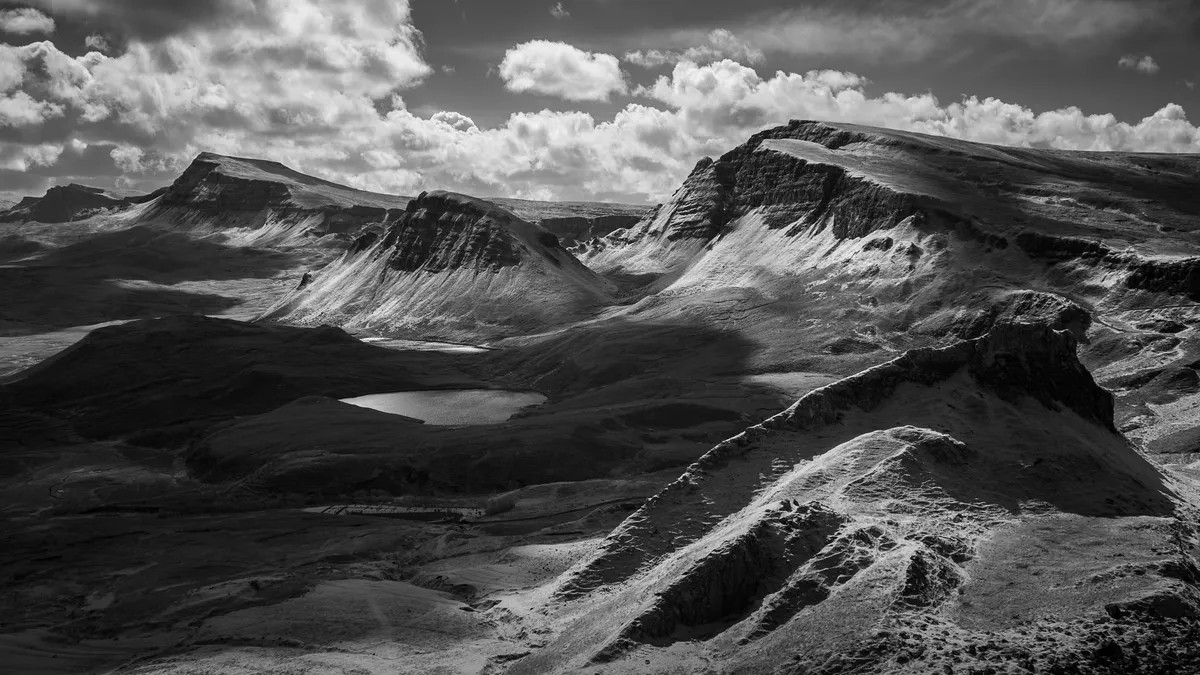
Shoot black-and-white infrared. Use the worst possible weather conditions for normal photography — harsh noon sun. Hard shadows. Everyone runs for cover during peak brightness. Not me. I want that contrast. Infrared loves the brutality of midday sun.
The skies go dark. Not just blue, but heavy. Almost black. The clouds puff up like cotton balls against voids of nothing. You convert those RAW files to black and white? Pure drama.
Took the rig to the Isle of Skye. Scotland. Rugged. Wet. Perfect.
I got images I would have paid thousands to get if I bought the gear to make them normally. In fact? I prefer them. I look at the color shots from my R5 and see competence. I look at these infrared B&W landscapes and see something weird. Something alive.
You could use a front-mount infrared filter. Sure. Anyone with a lens thread can buy one.
There’s a catch.
These filters block everything except the infrared spectrum. Which means almost no light gets through the lens. Your camera struggles. You’re forced into long exposures. Seconds, sometimes longer.
Hands shake. Images blur. Tripod required. Every. Single. Shot.
Carrying a tripod through Scottish hills is exhausting. Not fun. Not flexible. Modifying the sensor means I can shoot handheld. Quick. Easy. Messy, real moments captured in ethereal silence.
Why keep an obsolete body around just for one trick?
Maybe because tricks become art when you stop treating the tool as disposable. The camera doesn’t know it’s old. It only knows what it’s shown.
Show it light we can’t see. See what it remembers.