Ask a dozen internet experts what web 2.0 actually means. You will get twelve different answers. Some argue it is a philosophy. A set of practices designed to give users a deeper, richer digital experience. Others say it is simply a new collection of applications and technologies. Tools that make finding information and connecting with people online significantly easier.
Then there are the journalists. They maintain the term is meaningless noise. A marketing ploy used to hype social networking sites.
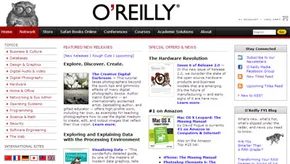
Before we dive into the semantic debate, let us look at the origin. The phrase started in 2004. O’Reilly Media and MediaLive International sat down for a brainstorming session. They were planning a conference. The goal was to address the state of the web. Its future. And the emerging techniques needed to ensure its success.
Tim O’Reilly had a specific agenda. The founder and CEO of O’Reilly Media wanted to make a point. Despite the dot-com crash of 2000, the web would become an enormous revenue generator. It was not dead. It was evolving.
During that session, Dale Dougherty, an O’Reilly Media publisher, coined the phrase. He used web 2.0 to describe the new environment. The one that emerged after the crash. Many internet companies had declared bankruptcy. A few hardy sites survived. New websites appeared every day. They used drastically different business models than the commercial sites that existed before the crash.
Still, no one had a clear definition. If there was a web 2.0, did that mean there was also a web 1.0? The use of “2.0” implied improvement. A new generation of sites. But there was no consensus on what made them different.
In September 2005, Tim O’Reilly posted a blog entry. He finally defined the term. The explanation spanned five pages. It included text and graphics. It illustrated his take on what the term meant.
O’Reilly’s philosophy included three main ideas:
- Using the web as an applications platform
- Democratizing the web
- Employing new methods to distribute information
We will explore each of these points. We will also look at the debate about whether web 2.0 actually has a practical meaning.
In the next section, we will look at what it means to use the web as a platform.
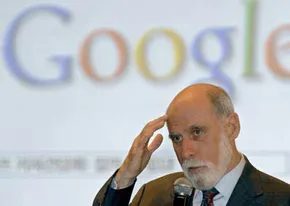
Tim O’Reilly’s take on the Web 2.0 philosophy drew a hard line in the sand. Before the dot-com bubble burst, companies like Netscape were obsessed with selling a distinct product. The Netscape Navigator browser was a box you could buy, a standalone piece of software that served as the entry point for a suite of other applications. It was a traditional model.
O’Reilly argued that the new era required a shift. A Web 2.0 company doesn’t sell a product. It provides a service.
Google was the poster child for this change. The search giant’s value wasn’t tied to a license key or a CD-ROM. It came from being a multi-platform service. You could hit Google from a PC, a Mac, or a mobile device. The interface changed, but the core utility remained consistent. This model broke away from the entrenched software industry business structure. Users didn’t need to purchase specific packages to access the tools they needed.
The engine behind this was a specialized database of information—the search results. This data worked in tandem with the search software. Strip away the database, and the search engine is useless. Remove the search application, and the database is an unwieldy mess nobody can navigate. The magic was in the integration.
Designing Rich User Experiences
Using the Web as a platform meant designing what O’Reilly termed rich user experiences. This wasn’t just about static pages. It involved applications and applets —small, self-contained programs embedded within larger web pages—to make browsing more engaging.
Take Twitter. The core concept is brutally simple: send a message to a network of friends via a basic interface. But the power lies in the openness. Twitter exposed part of its application programming interface (API ) to third-party developers. This access allowed outsiders to build new tools on top of the basic Twitter features.
Consider Twitterific, a desktop client for Mac developed by the Iconfactory. It wasn’t made by Twitter. It was a third-party application that integrated the Twitter service into the desktop environment. Twitter didn’t build Twitterific. They simply provided the raw information and the API keys that made it possible. This ecosystem approach allowed for innovation outside the core company.
Facebook followed the same playbook. In 2007, they opened their API to third-party developers. Within a short time, hundreds of new applications popped up, leveraging Facebook as a platform. Members could pick and choose from dozens of apps to customize their browsing experience. The site became less of a destination and more of an operating system for social interaction.
The service and access a Web site offers is an important part of Web 2.0’s philosophy, and it’s related to the idea of web democratization.
This shift toward open services and APIs is directly linked to web democratization. It’s about moving away from closed gardens. In the next section, we’ll look at how ordinary people are interacting with and changing the Internet.
Keeping It Simple
There’s a fine line between a rich experience and a cluttered mess. While providing good UX is vital, going overboard can kill a service. Too many options or a convoluted system will alienate the average user.
A complex system might thrill a small core of enthusiasts, but it won’t scale. To build a large customer base, a service must be streamlined. Uncomplicated.
We’ve all been there. You visit a site heavy with flash animation, multimedia players, and interactive widgets. For a tech-savvy user with high-speed fiber, it’s a playground. For the average visitor on a slow connection, it’s just noise. Sound and fury, signifying nothing.
If the barrier to entry is too high, the service fails. Simplicity isn’t just a design preference; it’s a business necessity.
Democratization of the Web
The shift from passive reading to active participation
The internet stopped being a digital brochure in the late 90s. Early web pages were static. They were digital billboards. You looked. You consumed. You moved on. It was a one-way street, much like television. Companies controlled the narrative. Users had a voice, but no microphone.
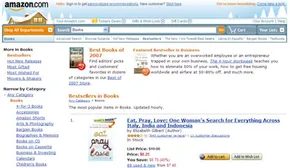
Then came the shift. Web democratization changed the rules entirely. It wasn’t just about access anymore. It was about contribution. Amazon saw this early. They let users write book reviews. Suddenly, anyone could be a critic. Other shoppers used those reviews to make buying decisions. The community started shaping the browsing experience. It wasn’t the company dictating value anymore. It was the crowd.
This is the core of Web 2.0. It’s not a software update. It’s a philosophy. It assumes users want to interact. They want to build. When a platform listens to what users do, it builds loyalty. Static sites are dead. Dynamic ones survive.
Harnessing collective intelligence
Tim O’Reilly put a name to this shift. He called it harnessing collective intelligence. The idea is simple. Sites shaped by user contributions will eventually outperform those that don’t. They become better destinations. More useful. More accurate.
Wikipedia is the poster child here. It relies on a community of informed users to monitor and maintain content. The theory is that the crowd corrects itself. Experts and amateurs alike can edit pages. The result is a living document.
But there’s a catch. Since anyone can contribute, accuracy is never guaranteed. You can stumble on false information. Or find it planted on purpose. There’s no accountability. You can’t sue a ghost. The system relies on trust in the crowd, not in a single author. It’s a gamble. A high-stakes one.
Tags and folksonomy
How do you find anything in this chaos? You tag it.
Tags are labels. They let users associate information with specific topics. You see them everywhere. Blog posts. Uploaded images. Photo albums. It’s a simple mechanism with a massive impact. When you tag something with a search term, it becomes discoverable. If another user searches for that term, your content surfaces.
This is folksonomy. A classification system born from the bottom up. Not a librarian’s catalog. Not a corporate taxonomy. Just users labeling what they care about. It makes searching faster. More efficient. Less rigid. It adapts as language evolves.
Open source software
The democratization puzzle isn’t complete without code. Open source software flips the traditional model. In the past, you bought a product. You didn’t see the engine. Now, the programmer invites you to look. Maybe even tinker.
You can examine the code. Modify it. Make it faster. Or use it as a foundation to build something entirely new. The goal is better quality assurance. If the code is open, anyone can test it. Any bug can be spotted. The crowd becomes the QA department.
It’s a powerful shift. From closed boxes to open labs. From consumers to co-creators.
Distributing Information
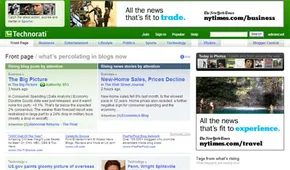
Static websites were the norm before the dot-com bust. Admins updated them sparingly. Text and images sat there, unchanged for months. Then, editing software got better. It became easy to tweak content daily.
Some sites stayed static. Most did. But a few tried something different. They wanted to push information out, not just sit there.
The Syndication Shift
Enter Web syndication. Specifically, Really Simple Syndication (RSS ).
This changed how users consumed data. Instead of visiting a site to see if it changed, you subscribed. When the admin posted, you got the update. It was proactive.
Programmers built desktop apps for Windows and Mac. These RSS readers lived on your desktop. You could check your favorite sites without launching a browser. No tabs. No navigating. Just updates.
The Blog Explosion
Then came blogs. They surprised people.
Personal web pages existed early on. They were digital resumes or hobby showcases. Blogs were different. They were chronological.
Readers saw the latest entry first. They could dig back through archives. They could follow the narrative from start to finish. It was a timeline, not a directory.
Blogs spread fast. One person reads something. They write about it. Their readers read that. Then they write about it again.
Marketing firms call this viral marketing. It’s powerful. It’s cheap. The audience does the distribution work. Companies noticed. They started paying attention.
The Importance of Permalinks
Blogs needed a specific link structure. Enter permalinks.
A permalink is a hypertext link to one specific entry. Not the homepage. The specific post.
Without them, sharing was messy. Links pointed to the main page. That page updates constantly. A link might lead to yesterday’s post, or next week’s. It’s confusing.
Permalinks anchor a path. You find a great discussion. You send the link. Your friends go straight to that text. No hunting. No guessing.
Beyond the Desktop
Web 2.0 wasn’t just about software. It was about hardware.
The internet moved off the desktop. Cell phones got connectivity. PDAs joined the fray. Apple’s iTunes synced with iPods. The web expanded into pockets and hands.
O’Reilly noted this shift. The internet was no longer confined to a screen on a desk. It was everywhere.
Cast Your Pod to the Wind
This evolution led to podcasting.
Podcasts combined the best of the previous features. They used the chronological structure of blogs. They used the subscription model of RSS. They leveraged mobile devices like the iPod.
It was information, on demand, anywhere.
Video blogs, or vlogs, followed. YouTube made them popular. You didn’t just read or listen. You watched.
The web had become dynamic. Interactive. Mobile.
Some in the tech community still argue about the term Web 2.0. They say it’s just a buzzword. They claim the web was always evolving.
But the shift was real. The tools changed. The behavior changed.
Podcasting proved it. You could carry the web in your ear. You could subscribe to video. The distinction between broadcaster and listener blurred.
Is it really a new web? Or just an old one with better tools?
The definitions might get fuzzy. But the impact is clear. We stopped waiting for updates. We started pulling them.
And now, with video and mobile, the content is even harder to ignore. What comes next? Something faster. Something more immersive. The web doesn’t stop. It just gets louder.
The Web 2.0 Debate
The label “Web 2.0” sparked a firestorm of debate. Some people argued it was a meaningless phrase. Others insisted it defined a new era of the internet. The arguments centered on what the term actually signified.
Tim Berners-Lee, the creator of the World Wide Web, rejected the concept entirely. He called it jargon in an interview with IBM’s developerWorks. He said nobody knows what it means. For him, the web was always about connection. There was no revolutionary shift. The philosophy was already inherent in the design.
Russell Shaw, a telecom author, took a different stance. He wrote in 2005 that the term was just a marketing slogan. He acknowledged that the individual pieces exist. But he argued they don’t fit under one roof. The goals clashed. The scope was too broad to be a single concept.
Jay Fienberg, an information architecture expert, called it a retrospective concept. He noted that O’Reilly coined the term. Within a year, it became a gimmick. Tech companies adopted the buzzword to sound innovative. This diluted the original meaning. It became a branding tool rather than a technical definition.
Paul Graham, an essayist and investor, had a shifting view. He initially dismissed Web 2.0 as a buzzword. Later, he recanted after Tim O’Reilly published his definition. Graham admitted the term started with no meaning. It gained definition as people analyzed the web’s current state. For him, it was about real user connections. It was about higher interactivity.
Andrew Keen offered a harsh critique. He called self-publishing and blogging “digital narcissism.” He didn’t argue about the existence of Web 2.0. He questioned if it was a good idea. People are uploading vast amounts of data. No one is reading it. Quality institutions are suffering. Everyone is too busy posting opinions to search for good information.
Hundreds of blog posts debated the term. Is it a step forward or a fading slogan? It is too early to say. The concepts, however, are being used across the internet.
Buzz, Buzz, Buzz!
Many feel the term has lost its meaning. It is now just a buzzword. Some experts avoid it entirely. They prefer precise terms like social networking. Others use Web democratization. These phrases describe the shift without the baggage of the number 2.0.
Frequently Answered Questions
What did Web 2.0 mean originally?
The term was coined in 1999 by Darcy DiNucci. She was a consultant at Microsoft. She used it to describe the emerging web. It was characterized by web-based applications. These allowed users to collaborate and share information online.
What is Web 2.0 and give its example?
It describes a new generation of web-based communities. It emphasizes online collaboration and sharing. A key element is social networking. This uses the web to connect people with common interests. Examples include Facebook, Twitter, and LinkedIn.
What are examples of Web 2.0 applications?
Popular applications include social networks like Facebook and Twitter. Video sharing sites like YouTube are also prime examples. Blogging platforms like WordPress round out the list.
Lots More Information
Related Articles
– How BitTorrent Works
– How Blogs Work
– How Computer Viruses Work
– How Facebook Works
– How Hackers Work
– How Home Networking Works
– How Internet Infrastructure Works
– How Internet Search Engines Work
– How Myspace Works
– How Operating Systems Work
– How Podcasting Works
– How Web Pages Work
More Great Links
– Tim O’Reilly’s Blog
– Web 2.0 Summit
– Open Source Initiative
Sources
– Fienberg, Jay. “The era of web 2.Over.” the iCite net. October 1, 2005.
– Graham, Paul. “Web 2.0.” PaulGraham.com. November, 2005.
– Keen, Andrew and David Weinberger. “Reply All.” The Wall Street Journal Online. July 18, 2007.
– Kelly, Kevin. “We Are the Web.” Wired. August, 2005.
– Laningham, Scott. “developerWorks Interviews: Tim Berners-Lee.” IBM. August 22, 2006.
– O’Reilly, Tim. “O’Reilly Radar.”
– O’Reilly, Tim. “What is Web 2.0.” O’Reilly Media. September 30, 2005.
– Shaw, Russell. “Web 2.0? It doesn’t exist.” ZDNet. December 15, 2005.
– Vander Wal, Thomas. “Web 2.0 Dead?” vanderwal.net. December 19, 2005.