Remember Zora, Twendy One, or Robear? If you were paying attention to robotics in the mid-2010s, those names probably ring a bell. They were the early wave of Japanese home and care robots that promised to change how we live. But the narrative has shifted. We aren’t just talking about domestic assistants anymore. The conversation has moved to autonomous mobile robots, or AMRs.
These machines made headlines recently for disinfecting rooms during the pandemic. That was just the beginning. Now, they are taking on heavy lifting in industrial sectors. They are flexible. They are collaborative. And they are everywhere.
Why AMRs Outperform Traditional AGVs
Here is the reality: companies are sick of painful logistics tasks. For years, human operators dragged carts and used forklifts for manual handling. It was inefficient. It was dangerous. And it was boring.
Enter the AMR.
Unlike older automated guided vehicles (AGVs), AMRs don’t need magnetic tape, cables, or physical sensors embedded in the floor to move. They are smart. They use 3D scanners, intelligent cameras, and advanced sensors to navigate with precision. They map their environment in real time. They avoid collisions. They don’t get stuck because a box is in the wrong spot.
“The most advanced AMRs can even open doors and take elevators.”
This level of autonomy changes everything. It allows for true mobility within a defined perimeter. It means you can reconfigure your warehouse layout without rewiring the floor. The robots adapt to the space, not the other way around.
How AMRs Change Workplace Dynamics
The real innovation isn’t just the movement. It’s the interaction.
Industries demand flexibility and safety. They want robots that work with humans, not just beside them. This is the core of the collaborative robot (cobot) model. European industry recognized this early. The ColRobot project, coordinated by the Arts and Métiers Institute and funded with €4 million, brought together 11 partners. By mid-2019, they created two demonstrator cobots for the automotive and aerospace sectors.
It wasn’t a one-off experiment. Many companies followed suit.
Why does this matter to the average worker? It removes the drudgery. AMRs handle the transport. The human handles the decision-making or the fine-motor tasks that robots still can’t do well. The result is a safer, more efficient workflow. The robot isn’t replacing the human; it’s handling the heavy lifting so the human can focus on higher-value work.
The Technology Behind the Move
You might wonder what powers these machines. It’s a mix of hardware and software.
- Navigation Systems: LIDAR and 3D cameras allow the robot to “see” obstacles and map the route.
- Sensors: Proximity and collision detection ensure safety near human operators.
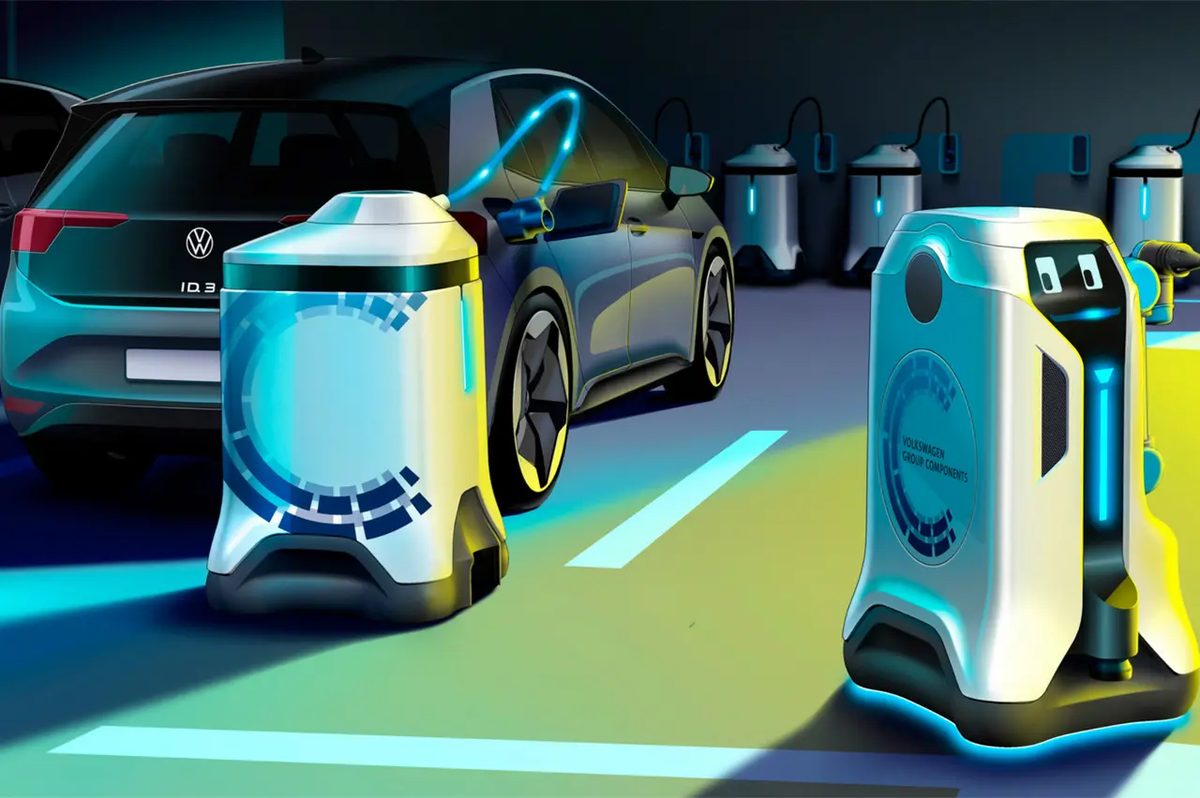
- Integration: They can carry robotic arms or conveyor belts, expanding their utility beyond simple transport.
This isn’t science fiction. It’s current industrial reality. The autonomous mobile robot is no longer a prototype. It’s a standard tool in the modern supply chain.
Where This Is Headed
We are seeing a shift from isolated automation to integrated systems. The intelligent autonomous vehicle is becoming a team player. It opens doors. It takes elevators. It works alongside humans without causing harm.
But the landscape is still evolving. How do we balance efficiency with safety? How much autonomy is too much? These are the questions manufacturers are grappling with right now.
The robots are here. They are smarter than we thought. And they aren’t going back to the lab.