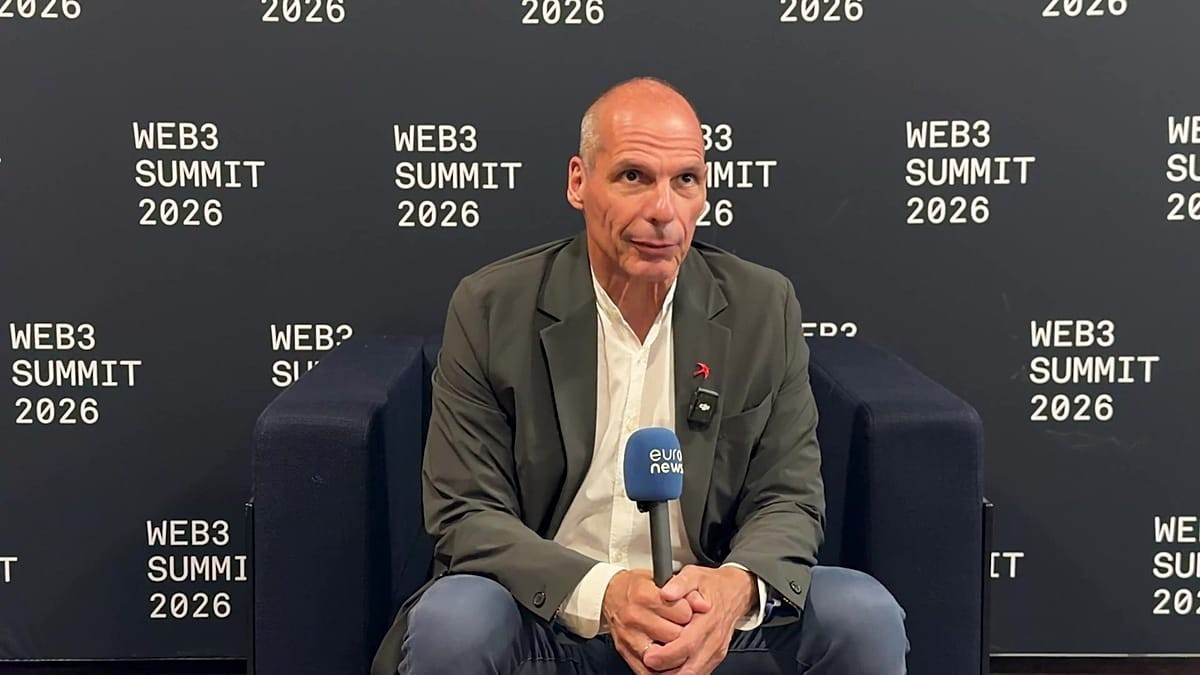
At the fifth Web3 Summit the conversation got serious. Not about crypto prices. Not Bitcoin memes. Organizers called it “the festival for digital freedom.” But the real topic was heavier. Can decentralized tech actually stand up to Big Tech?
These giants hold the leash on data, AI, and the whole digital economy.
Web3 promises a way out. An internet where users actually own their digital lives. Sounds nice, doesn’t it?
“Less trust, but more truth” became a key theme here. We don’t trust institutions anymore. That trust is crumbling. But maybe we can build systems that verify facts instead of relying on blind faith. Developers, economists, activists—they all sat around wondering how blockchain could change the rules of ownership.
The Value of Your Data
Bill Laboon works in technical ops for the Web3 Foundation. He points out a brutal reality.
Personal data is expensive. Very expensive.
He estimates a person generates $162,00 (€140,000 worth of value over their digital life. You give all that value away. To companies. Without knowing it. And with AI rising? That makes things worse.
“The danger in AI often is the data it gets from you. We don’t want it to know your particular information,” he said.
It’s creepy, right? The machines learning too much.
Power to the People? Or Feudal Lords?
Then there is Yanis Varoufakis. Former Greek finance minister, economist, writer. He sees a deeper problem. It’s about who controls the infrastructure of society.
He calls the current state of affairs “technofeudalism.” A few tech giants hold unprecedented power. They are the new lords of the manor, but with servers.
He thinks democracy is the only fix.
“Every political regime which is unsustainable… can only be ameliorated by democratic action.”
He doesn’t think technology alone saves us. He is skeptical Web3 beats Big Tech. Maybe tech is useful, sure. But it isn’t the magic wand we need.
Building Something Different
Joshua Davila thinks otherwise. He founded The Blockchain Socialist. He wants to use blockchain for solidarity, not speculation.
Early Web3 promised everything, then got swallowed by greed. But Davila sees a path for alternative economies. Cooperative banks. Local credit unions.
He wants to merge these things using blockchain applications.
“The idea is you have a place where your interest generated money goes into what you support.”
It sounds radical. It sounds like a real choice.
The Road Ahead
AI is accelerating. The race for control of digital infra is on. Both lovers and haters of Web3 see decentralization as a way to shift power around.
The question is simple but hard. Can the technology actually redistribute that power? Or does it just create new kinds of inequality?
We might never know until it’s too late. Or maybe, just maybe, the next generation figures it out.