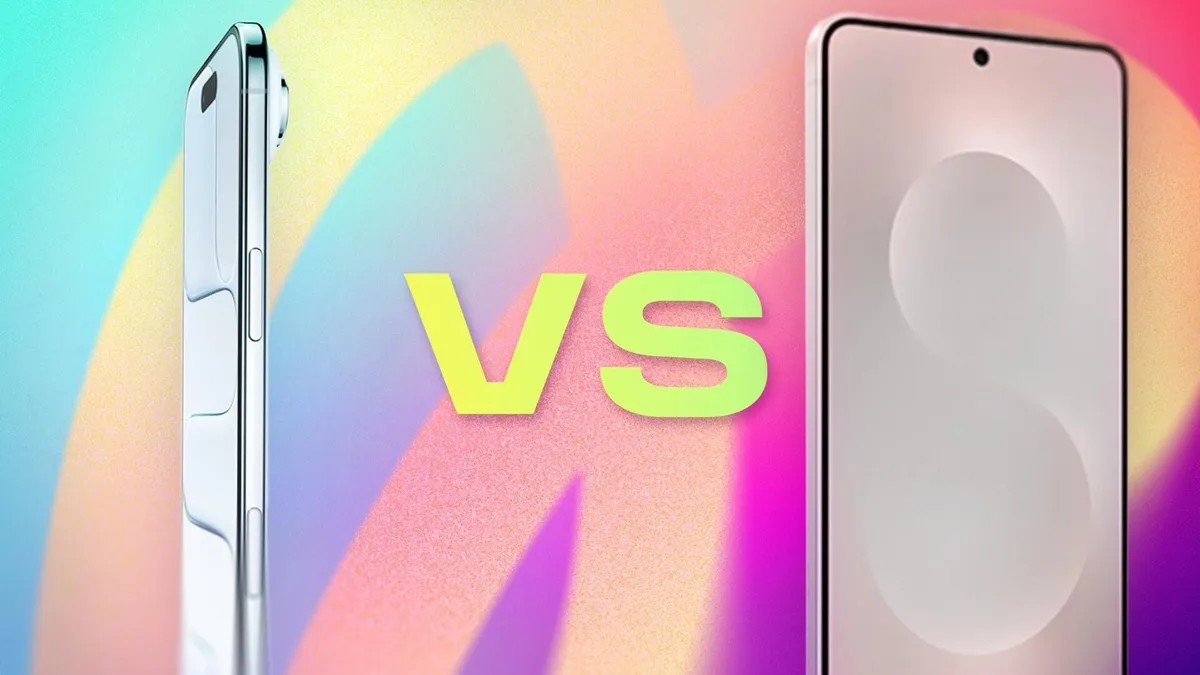
Apple and Samsung are back at it. But this time they’re fighting for millimeters.
If you hate that pocket bulge—the heavy, awkward brick digging into your thigh—these two are the cure. The iPhone Air. The Galaxy S25 Edge. Slimmer. Lighter. Undeniably stylish. They’re paving the way for the future, too, acting as dress rehearsals for the upcoming foldables like the Galaxy Z Fold 7 or whatever Apple eventually decides to call their fold.
But slenderness comes with a cost. Always does.
What do you lose? Battery life. Maybe camera quality. Sound? Maybe that too. If you stack the two thin phones together, are they still thinner than a regular iPhone or Samsung flagship? I ran the numbers. Here is the breakdown.
Price and Positioning
Let’s talk money.
iPhone Air: $999. It’s replacing the old iPhone 16 Plus. It sits alone now. The only large-screen model that isn’t a Pro.
Galaxy S27 Edge: $1,100 ($1,100 base). It joins the S25 and S25 Ultra in this year’s lineup.
Wait, the iPhone Air starts with less stuff? Yes. Fewer cameras than the base iPhone 15/16 era standards. But it gives you a bigger screen and the A18 Pro chip. Storage starts at 256GB. Apple has a long history of charging a premium for design. Remember the first MacBook Air? It fit in a manila envelope and cost nearly $1,800 despite having the specs of a brick. Eventually, it became the budget option. The Air is back.
The Galaxy is pricier by $100+. Probably trying to extract extra value from people who want to stand out. We’re already seeing discounts though. Prices are shifting.
One oddity: the sticker price has held steady against the chaos of trade tariffs so far. A miracle.
The thin phone isn’t just about size. It’s a status signal. And status costs money.
Dimensions and Weight
How thin is thin?
Manufacturers hate admitting their phones are “chunky.” Even the Max models try to deny it. The truth? The gap between standard and thin is huge.
Ignoring the camera bump—the “plateau” Apple likes to call it—the iPhone Air body is 5.36mm thick.
The S27 Edge? 5.25mm at its slimmest point.
Compare that to the iPhone 14 at 7.80mm. Or the S23 at 7.60mm. The difference is tangible. You can feel it.
Foldables are thinner. The Z Fold 7 opens up to 4.60mm. Chinese brands like Huawei and Honor go even slimmer. But that’s only when you unfold them. They remain bricks in the pocket.
So, does stacking them work?
Press the Air and Edge together (ignoring the camera lenses).
11.4mm.
That is thicker than an iPhone Pro Max. It is closer to the original iPhone from 2007. A vintage brick. Not the ultra-thin profile you might imagine.
Weight tells a different story. The Air is 171g. The base iPhone 14 is 174g. You lose almost nothing.
The Edge weighs 187g. The S24 is 168g. That is a 19g gain. You will feel the balance shift.
Displays
Apple calls the Air’s 6.1-inch OLED a Super Retina XDR. It’s crisp. 4580×2544 resolution? No. Wait, it’s smaller than the Pros.
Resolution: 2340 x 1080. That’s it. For an $999 phone? Sure.
Brightness hits 2,000 nites max.
Samsung’s S27 Edge goes bigger. 6.8-inch Dynamic AMOLED 2X. QHD+. 3200×1440. Sharp. Crisp. 2600 nites brightness.
Both use 120Hz LTPO panels. Smooth scrolling. The Samsung feels sharper. The iPhone feels… fine.
Cameras
This is where things get complicated.
The iPhone Air drops to a dual-lens setup? No. Single 48MP main camera.
It relies heavily on cropping and AI. The f/1.5 lens is fast. Good for low light.
But no periscope. No true telephoto. You get digital zoom crops. Up to 5x? Yeah. It’ll work. It won’t dazzle.
Samsung puts a 200MP main sensor on the Edge.
And a 12MP ultra-wide.
Still no periscope telephoto.
This is strange for a premium “Pro-tier” feeling device. Why remove the long-end glass? To save space for battery? No. The battery is already compromised.
Here is the twist: The Edge actually offers more flexibility. The 200MP sensor allows for excellent digital zooms without buying the Ultra.
Battery
The elephant in the room. Thin means small.
iPhone Air: 3,309mAh.
Galaxy Edge: 4,000mAh.
Apple doesn’t list capacity. But they claim all-day use. In testing? The Air struggles under load. A day of heavy use drains it. You will be looking for a charger by 4 PM.
Apple sells a magnetic battery puck specifically for this phone. $35 more. Attach it, and it defeats the whole “thin” point. But hey. It works.
The Samsung holds on better. 4,000mAh is nothing to sneeze at. It survives.
Reviewers note it barely scrapes by. You’ll need to charge every night.
But do you mind?
“I’m enjoying the sleek form so much I’m willing to trade hours for grams.”
Under the Hood
iPhone Air
A18 Pro chip. The same one in the 14/15 Pros. It’s fast. Faster than the standard A16/A17.
8GB RAM likely. iOS 16 or 17 depending on release date.
Base storage 256GB or 512GB? The source says 512GB start? Let’s assume standard 256/512 options.
Galaxy S27 Edge
Exynos 2400E (Global) or Snapdragon 8 Gen 3 (US).
12GB RAM.
Android 14 out of the box.
Final Verdict
Is the slenderness worth the sacrifice?
The Galaxy Edge looks like the complete package. Better screen. More storage. More RAM.
The iPhone Air feels like an incomplete iPhone 15 Pro. It misses lenses. It lacks battery.
If you need all day battery? Skip both. Get the regular flagship.
If you just want to look good?
Pick up the phone. Hold it.
It fits.
Maybe that’s enough.