Proofreading is not just about catching typos. It’s the final checkpoint. This step happens after you’ve written, revised, and edited your draft. You have a proof—a specific copy of your text—and you’re marking corrections before it goes to print. The goal is simple: remove surface errors. We are talking about spacing, punctuation, formatting, grammar, and spelling. If these slip through, the publication looks unprofessional.
The History of Checking Work
This practice is old. Very old. It goes back to the early days of printing. By 1499, a contract already held authors responsible for correcting proofs. You had to check your own work.
The term “galley proof” comes from the equipment used. A galley was a long tray holding a column of type. So, the first proof came from that tray. Later, when photocomposition replaced metal type, the term stuck. Photocomposition set text by projecting characters onto film or paper. It didn’t use physical metal blocks, but the name remained.
More Than Just Typos
Modern proofreading involves more than just matching the manuscript to the page. Proofreaders often spot factual errors. They raise queries. This requires skill. It’s not just a mechanical check.
Historically, this caused drama. Printers and authors sued each other. Errata sheets—lists of corrections—were common. Authors complained about not seeing their work in print. These issues happened in the 15th, 16th, 17th, and 18th centuries. They still happen today.
Proofreading is the final stage of editing, preceded by prewriting, planning, drafting, revising, and editing.
The Role of the Proofreader
A proofreader ensures an exact correspondence between the copy given to the printer and the printed form. But they also look for inconsistencies. If something looks wrong, they flag it. This process protects the integrity of the text.
In modern publishing, this step is still critical. Digital formats have changed how we set text, but the need for a final check remains. Whether it’s a blog post or a textbook, surface errors distract readers. They undermine credibility.
Why It Matters
Skipping proofreading is risky. Readers notice mistakes. They notice bad formatting. It makes the content seem rushed or careless. In a world of digital publishing, where content spreads quickly, a flawed article can damage reputations.
The process starts with prewriting. Then planning. Then drafting. Then revising. Then editing. Finally, proofreading. Each stage builds on the last. You can’t skip ahead and expect a polished result.
The Human Element
Despite advances in technology, human eyes are still needed. Software can catch some errors, but it misses context. It doesn’t understand nuance. A proofreader brings that human judgment to the table.
This is why authors still need to review proofs. It’s a collaborative effort. The author writes. The editor shapes. The proofreader polishes. Each role matters. Without proofreading, even the best content can fall flat due to technical errors.
Looking Ahead
The next part will cover how digital tools are changing the proofreading landscape. We’ll look at software that assists proofreaders and how human oversight remains essential. Stay

Why Traditional Symbols Still Matter
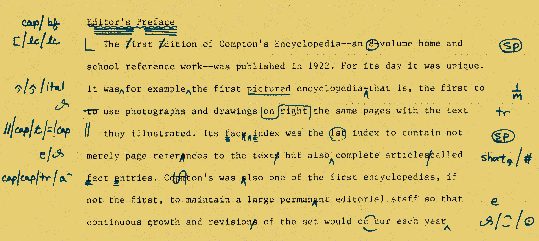
Even though we live in a screen-dominated era, the logic behind traditional proofreading marks remains foundational. Editors often use these symbols during the copy-editing phase, long before a document reaches the final proof stage. Understanding them isn’t just about nostalgia; it’s about recognizing the lineage of editing precision.
Take the deletion mark, for instance. The symbol ᵺ tells a typesetter or editor exactly what to remove. It’s direct. Then there’s the number sign (#), which signals an insertion of space. You might not notice a missing space until it breaks a line or creates a hyphenation error, but it matters.
When an editor sees a new paragraph, they often use the pilcrow (¶ ). It’s a tiny vertical line with a loop at the top, universally recognized as a paragraph break. For emphasis, the instructions are simple: ital for italicize and caps for capitalize. If a word is scrambled, the tr mark indicates a transpose, switching the order of letters or words back to their correct sequence.
The caret (^ ) is perhaps the most versatile. It points to where something needs to be inserted—a word, a letter, or punctuation. But not every change is permanent. The term stet (meaning “let it stand”) is a lifesaver when a previous correction was a mistake. Formatting commands like bf for bold and rom for roman (standard) type ensure the visual hierarchy stays intact. These aren’t just scribbles; they’re a coded language designed for speed and clarity.
How Digital Proofreading Works Today
The shift to digital proofreading has changed the medium, but not necessarily the goal. The objective remains the same: identify and correct errors in electronic documents before publication. The difference lies in the tools.
Traditional methods relied on printed proofs and physical marks. Now, professionals use word processing software with built-in spellcheck and grammar checkers. The Track Changes feature has become the digital equivalent of the tr or deletion marks, allowing collaborators to see exactly what was added, removed, or modified.
PDF editors and online platforms have become the new workspaces. Instead of circling errors in pen, annotators use digital sticky notes and highlighters to share changes on page layouts. This method is faster and easier to version-control.
The Role of AI in Modern Editing
Artificial intelligence has entered the chat. AI-powered tools can now spot grammar, punctuation, and formatting errors at a scale humans simply can’t match. They scan for consistency, check citation formats, and flag repetitive phrasing.
But here’s the catch. AI lacks context. It doesn’t understand nuance, tone, or the subtle intent behind a sentence. It might flag a stylistic choice as an error or miss a culturally specific reference.
AI tools are powerful assistants, not replacements. They require human oversight to ensure the final output retains its voice and accuracy.
The human editor steps in to handle what the algorithm can’t. They decide if a sentence flows correctly within the broader argument. They catch the joke that the grammar checker marked as a fragment. They ensure the brand voice is consistent.
Which Tools Do Professionals Actually Use?
The choice of software often depends on the industry