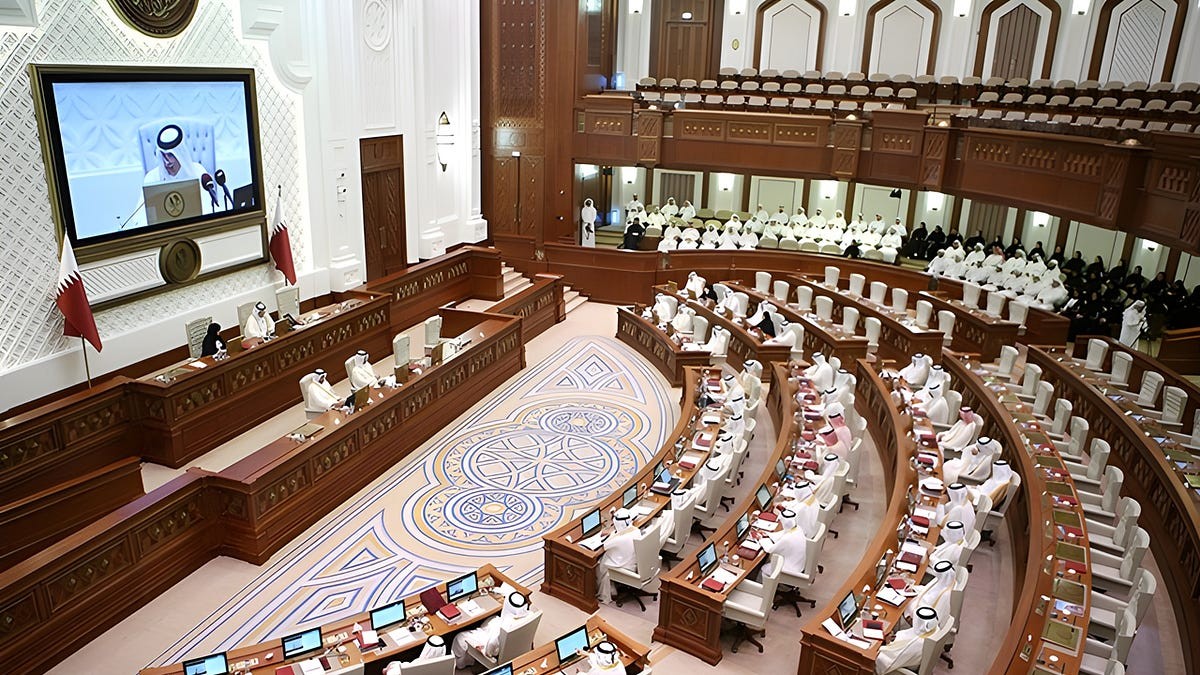
The Qatar Shura Council has officially entered the debate on artificial intelligence governance, marking a significant shift from high-level strategy toward concrete legislative action. During a formal session presided over by Speaker HE Hassan bin Abdullah Al Ghanim, council members addressed the urgent need for a legal framework to manage the complexities of AI, ranging from data privacy to legal liability.
From Strategy to Law: The Legislative Push
While Qatar has long maintained a digital agenda and a national AI policy, it currently lacks specific, enforceable laws tailored to artificial intelligence. To bridge this gap, the Shura Council has moved to formalize the legislative process.
A motion was passed to refer the matter to the Health, General Services and Environment Committee, led by H.E. Abdullah bin Nasser bin Turki Al Subaie. This committee is tasked with conducting a detailed scrutiny of the issue and preparing a formal report for the council, which will serve as the foundation for potential new laws.
Key Areas of Concern
The debate highlighted that AI is no longer just a technical tool but a fundamental factor in public policy and decision-making. Members identified several critical risks that require immediate regulatory attention:
- Algorithmic Integrity and Ethics: Addressing potential biases within AI systems to ensure fairness.
- Data and Privacy: Protecting individual privacy and ensuring robust data protection standards.
- Intellectual Property and Liability: Determining who holds rights to AI-generated content and who is legally responsible when AI systems cause harm.
- Digital Sovereignty: A central theme of the discussion involved Qatar’s reliance on foreign technologies. Members expressed a need to maintain national control over data, infrastructure, and essential AI systems.
- Economic and Labor Shifts: The council noted the potential for AI to disrupt the labor market, emphasizing the necessity of upskilling the national workforce to remain competitive in a digital economy.
The Global Context: Innovation vs. Regulation
A recurring theme in the session was the widening gap between the speed of technological innovation and the pace of legal scrutiny. This is a global phenomenon; as AI deployment accelerates, parliaments worldwide are struggling to create frameworks that are “risk-based”—meaning they provide enough oversight to protect citizens without stifling the innovation necessary for economic growth.
Qatar’s AI Roadmap
This legislative movement is the latest step in a multi-year national effort to integrate AI into the country’s fabric:
- 2019: Launch of the National Artificial Intelligence Strategy (focused on education, data, employment, business, research, and ethics).
- 2021: Establishment of the Artificial Intelligence Committee to coordinate government-wide initiatives.
- September 2025: Publication of the National AI Policy Brief by the Ministry of Communications and Information Technology.
- December 2025: The launch of Qai by the Qatar Investment Authority (QIA), a Doha-based global company dedicated to AI development and infrastructure.
Through strategic partnerships with giants like Microsoft, Google Cloud, and Scale AI, Qatar is positioning itself as a regional hub for AI, moving from a consumer of technology to a structured, regulated participant in the global digital economy.
Conclusion
By moving toward specific AI legislation, Qatar is attempting to transition from broad strategic goals to a functional legal reality. This shift aims to protect national sovereignty and citizen rights while ensuring the country remains a competitive player in the global AI landscape.