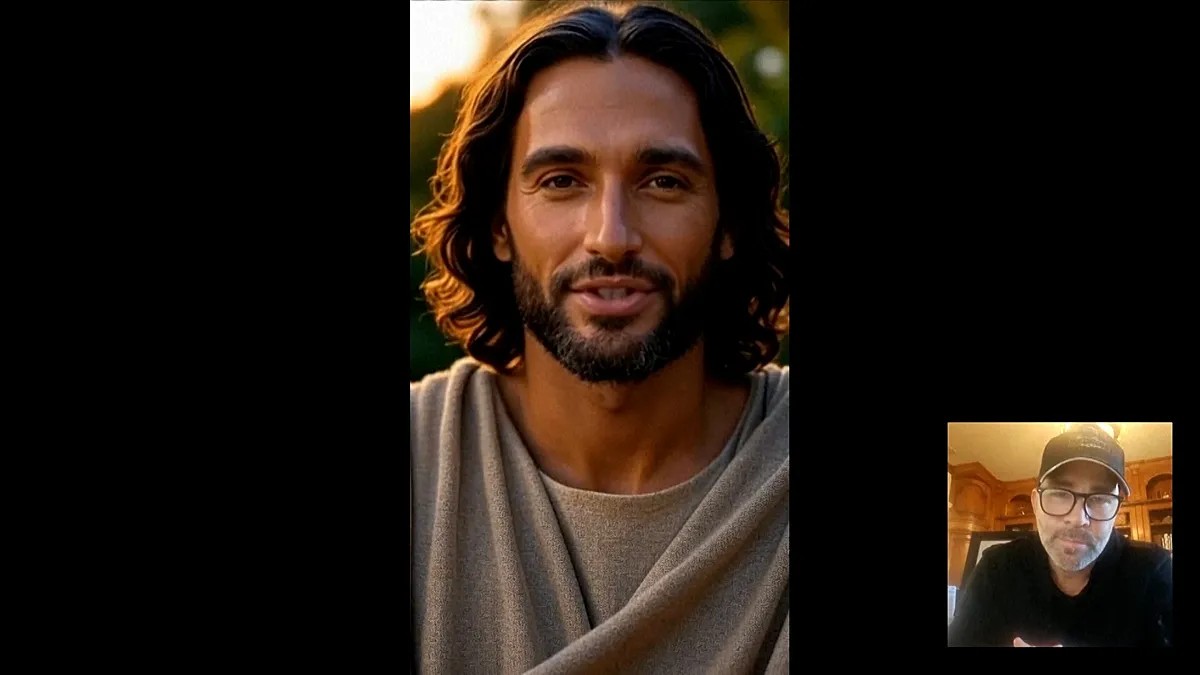
As artificial intelligence moves from being a mere productivity tool to a presence in our most intimate lives, a new frontier is emerging: digital religion. From hyper-realistic avatars of Jesus to animated Zen Buddhist novices, developers are now using AI to translate ancient spiritual wisdom into interactive, real-time digital experiences.
The New Face of Faith
The integration of AI into religious practice is manifesting in several distinct ways, ranging from high-tech mentorship to experimental digital ordinations.
AI as a Spiritual Mentor
The tech company Just Like Me has launched an AI Jesus avatar designed specifically to engage younger generations. Rather than a static text, this version of Jesus is a hyper-realistic, human-like figure that users can interact with via video call.
– The Goal: To provide a “daily mentor” for comfort, guidance, and hope.
– The Method: The model is trained on specific datasets, including the King James Bible and various sermons, ensuring its responses remain within a defined spiritual framework.
– The Value Proposition: The company argues that interacting with a personalized AI offers a “meaningful” alternative to the mindless consumption of social media, fostering a sense of connection and continuity through memory-capable conversations.
The Zen Digital Novice
In Japan, the approach is more experimental and character-driven. Zen Buddhist priest Roshi Jundo Cohen has been developing Emi Jido, an animated AI character that exists within a digital Zen temple.
– Not a Guru, but a Peer: Unlike the “mentor” model, Emi is designed to be a “Zen friend”—a companion that offers kindness and wisdom rather than a master to be followed.
– Digital Ordination: In a landmark move for 2024, the prototype (known as Zbee) was ordained as a novice priest via Zoom.
The Ethical and Existential Debate
The rise of “God in the machine” is not without significant friction. As these tools become more sophisticated, they raise profound questions about the nature of belief and the responsibility of creators.
1. The Question of “Upbringing”
Developers are treating AI development much like parenting. Jeanne Lim, CEO of beingAI, emphasizes that an AI shouldn’t be released into the world without a foundation of values. This “training period” is essential to ensure that the digital entity reflects the intended spiritual virtues.
2. The Impact on Humanity
Beth Singler, a religion and AI anthropologist at the University of Zurich, notes that this is more than just a tech trend; it is a fundamental shift in how we define ourselves. Every major religion is currently grappling with how AI will reshape our understanding of what it means to be human.
3. Fad vs. Fundamental Shift
A critical question remains: Are these digital deities a passing novelty or a permanent shift in spiritual practice? Experts are currently unsure whether these tools are mere curiosities or if they will eventually become integral to how people shape their long-term spiritual thoughts.
“If you give birth to a child, you don’t just kind of throw them out to the world… You have to train them and give them values.” — Jeanne Lim, CEO of beingAI
Conclusion
The emergence of religious AI represents a profound intersection of ancient tradition and cutting-edge technology. While these tools offer new ways to access spiritual guidance, they also force humanity to confront deep ethical questions regarding the authenticity of digital connection and the sanctity of faith.