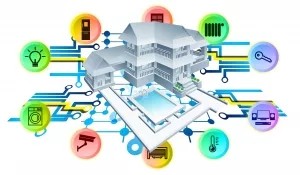
We are told that the future involves talking to our toasters. Or at least, that is what manufacturers keep insisting. The vision is a house so “smart” that you manage it all from a tablet. You tap a screen. Lights dim. The coffee starts. It sounds efficient. It sounds convenient.
But does it actually work? Or is it just a collection of overpriced appliances pretending to have a brain?
A true smart home allows you to control devices remotely. It lets you set automation rules. Get the blinds down when the sun gets too harsh. Turn on the porch light when you unlock the door. These features are designed to simplify life. They promise to free up time. They promise comfort.
There is a catch, of course.
Connecting your fridge to the internet does not make it a chef. It just makes it a potential entry point. The same connectivity that allows you to start your laundry from bed also creates vulnerabilities. Every link in that chain can be broken. Or worse, exploited.
We are moving toward a world where our homes listen and watch. The convenience is real. So is the risk. Which one wins? That depends on how much you know about the tech you invited into your living room.
The Illusion of Intelligence
It is easy to confuse “connected” with “intelligent.” There is a big difference.
When you use a smartphone app to turn on a smart bulb, you are not interacting with intelligence. You are sending a command over a network. The bulb obeys. It is a remote control with Wi-Fi.
Automation is where things get interesting. You might set a rule like “If motion is detected at night, turn on the hallway light.” That is a simple logic loop. It makes life easier. It saves you from fumbling for a switch in the dark.
But this ease of use comes with a trade-off. You are trusting a lot of hardware and software to do the right thing. What if the network drops? What if the server controlling your lights goes down? What if someone else gains access to that network?
“The promise of smart homes is automation. The reality is often dependency on unstable software.”
Connectivity vs. Control
In a standard home, your devices are isolated. Your toaster does not talk to your TV. They share a power outlet, that is all.
In a smart home, everything is talking to everything. Your thermostat sends data to your phone. Your camera records to the cloud. Your lock opens when your GPS signals you are nearby.
This creates a complex web. Each device is a node. If one node is weak, the whole structure is exposed. Manufacturers love this model. It locks you into their ecosystem. It creates recurring revenue through apps and subscriptions.
But for the average user, it just looks like magic until it breaks. Then it looks like a hassle.
The Real Risk
The biggest risk is not that your house will attack you. It is that your house will be used to attack others.
A compromised smart bulb might not do much. A compromised router, however, can be the gateway to your entire network. Hackers often use IoT devices as stepping stones. They are abundant. They are often poorly secured. They are everywhere.
When you buy a smart device, you are not just buying hardware.
How Smart Home Devices Actually Talk to Each Other
It used to be that smart home stories were just about convenience. Now, they’re about privacy. Take the smart coffee maker. You’ve had programmable timers for years. The new trick? Starting the brew from work so the mug is hot by the time you walk in. You can do this with washing machines too. Or the heating system. Voice assistants like Amazon Echo make this possible. But every time “Alexa” is mentioned, the conversation shifts. People are asking who is listening. They worry about data privacy. It’s not just a tech feature anymore. It’s a security concern.
Security Through Communication
Technology is simplifying daily life. It also makes homes safer. Networked motion sensors, cameras, and lights act as a deterrent. You control them via smartphone. But the real magic happens when they talk to each other. A motion sensor detects movement at night. It triggers the hallway light automatically. This isn’t just cool tech. It prevents falls. Especially for seniors.
Smarter thermostats are part of this ecosystem too. Open a window? The heating shuts off. No more wasted energy. Motion sensors also know when you’re gone. They drop the temperature. You save money. You save power. The devices work together to optimize the environment.
The Real Cost of Smart Living
Yes, you can save money. But only after you spend it first. Smart devices cost money upfront. Whether the investment pays off remains to be seen. There’s another risk. Connected devices might be harder to repair. We’ll see what happens in the next few years.
Connected devices are inherently vulnerable. They create entry points for attackers looking to breach a network. You cannot eliminate this risk entirely, but you can reduce it significantly through disciplined maintenance.
Simple habits help. Change passwords regularly. Use strong, unique combinations. Do not reuse credentials across different platforms.
Network segmentation is equally important. Isolate your smart home devices. Keep them off the same network as your main computer. That machine holds sensitive personal data. If a smart bulb or camera is compromised, you do not want that breach to cascade directly into your financial records or private documents.
Then there is the patching process.
Manufacturers release security updates for a reason. These patches close known vulnerabilities. Ignoring them leaves doors wide open. Applying them takes effort. It takes time. It often requires budget for new hardware when old devices can no longer receive support.
Smart homes offer comfort. They simplify daily routines. But that convenience comes with a tax. You pay for it in cash, yes. But you also pay in cognitive load. You become the IT department for your own house.
“Applying manufacturer security updates is the most effective way to close known security gaps.”
This trade-off is unavoidable. You gain automation. You lose some simplicity in management. The trade-off is real.
The question is whether the added security overhead is worth the convenience. For many, the answer is yes. For others, the friction of constant updates becomes a deterrent.
There is no universal solution. Each setup requires a balance. You decide where to draw the line between safety and effort. The risk remains if you stop updating. The network stays exposed. The choice is yours.
Hackers can absolutely steal your information. It isn’t just theoretical anymore. Security researchers proved this by hacking thermostat software. They took full control. They locked out the actual owner.
Think about that. A stranger with technical skills could turn off your heat. Sure, criminals might do this just to cause trouble. But the more likely scenario involves server dependency. You are stuck at the mercy of the manufacturer’s cloud infrastructure. If their servers crash, your smart devices stop working.
We saw this happen with an automatic lawn care company. Their servers went down. Mowing robots became useless. Some user accounts were even deleted. When customers returned from vacation, their lawns looked like dried-up deserts. The tech didn’t just fail. It actively destroyed their gardens.
Who pays for smart home failures?
Right now, we are in a legal gray zone. It is unclear who bears responsibility for these damages. The Federal Association of Consumer Centrales notes that while new tech offers benefits, consumers have a massive information deficit.
Security isn’t the only worry. Compatibility between devices is another headache. Often, you simply cannot tell what a manufacturer does with the data they collect. We need more transparency. We need higher IT security standards. Period.
The popularity of smart technology
Despite these risks, adoption is skyrocketing. In 2017, there were approximately 2.8 million smart-home households in Germany. Statista Digital Market Outlook (DMO) predicts this number will hit 9.3 million by 2022.
That is nearly 25% of all households.
Note how these numbers are calculated. They include homes with a central control unit connected to the internet and linked to various sensors and devices. Isolated systems, like simple surveillance setups, are counted too. Smart TVs, fridges, and ovens? They are left out of this specific count. The focus is on connected, interactive ecosystems.
The cloud always listens
Here is the deal with voice assistants. The microphone is always on. It has to be. That ensures smooth operation. The device can respond instantly to commands without lag. For Amazon Echo, that means seven to eight microphones per unit. They filter out background noise to catch your voice precisely.
Better precision means a happier customer. But it also breeds paranoia.
Amazon Echo stores vast amounts of user data in the cloud. How often does it listen when the activation word isn’t spoken? Wirtschaftswoche conducted an extensive report on this. The short answer: it is hard to say for sure. You have to trust the internet giant.
There are already reports from the United States. Law enforcement agencies demanded data release from Amazon. They claimed Alexa could serve as a witness in a murder case. Amazon has successfully resisted these demands so far. But the precedent is set. The data exists. The question is how long it stays protected.