Kazakhstan wants to be your launching pad. Not just for minerals, but for the next era of technology.
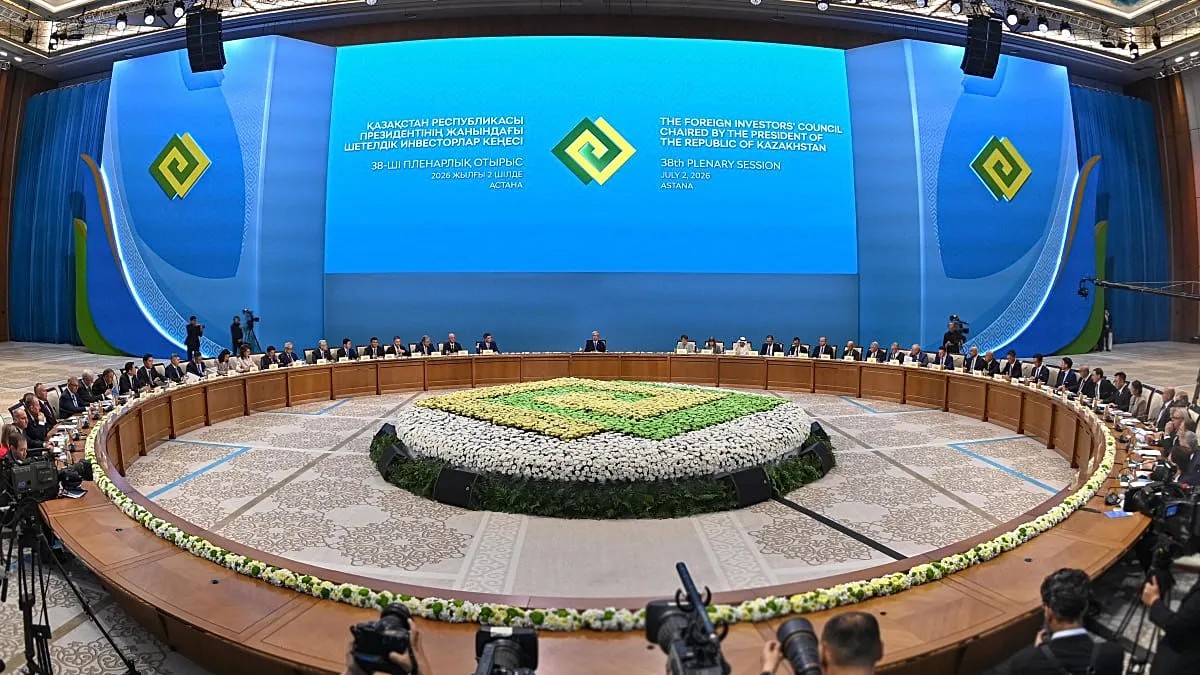
At the 38th Foreign Investors’ Council in Astana, President Kassym-Jumayev Tokayev made his pitch direct and clear. The country is done relying solely on raw material exports. It wants global tech capital to help build world-class artificial intelligence infrastructure. Digital sovereignty isn’t just a buzzword here; it’s the backbone of economic resilience.
“We invite capital leaders to leverage our unique jurisdiction,” Tokayev said. “Your secure, high-yield launching pad.”
The numbers back up the ambition. Net foreign direct investment has topped €130 billion. That is nearly 70% of the total for all of Central Asia. Kazakhstan intends to hold that lead. But there is a hard deadline. The goal is a fully digital economy by 2030. We are getting close.
Where does Kazakhstan stand in global AI infrastructure development?
Building this kind of brainpower requires power. Specifically, it requires a one-gigawatt AI data center campus. The plans are already advancing.
Connectivity matters as much as computing power. Kazakhstan is laying a fiber-optic cable beneath the CaspianSea. This isn’t just about local speed; it is about international integration. Lower latency. Faster cloud services. The Ministry of Digital Development is pushing reforms to make cloud computing easier for foreign players.
Recent memorandums with Citi and Freedom Holding Corp are designed to unlock financing models for this new AI cluster. The vision is a single ecosystem. It would house high-performance computing, startup hubs, research institutes, and massive cloud infrastructure. It would serve the government, big business, and academia all at once.
“The cluster will become a hub for investment and talent, while providing the necessary infrastructure.”
— Zhaslan Madiyev
Why are critical minerals part of the AI strategy?
You cannot have an AI revolution without the hardware. And hardware requires minerals.
Tokayev highlighted critical minerals as a twin pillar of the investment strategy. As the energy transition accelerates and AI demand spikes, global hunger for these materials grows. Kazakhstan wants to capture more of that value chain.
The government has launched a Unified SubsoilUse Platform. It digitizes licensing. It automates 22 government services for exploration. They have digitized 4.7 million historical geological records into a national database.
This is not just about digging. It is about data. Officials are using AI to convert legacy geological info into machine-readable datasets. Companies can now analyze exploration data with unprecedented efficiency.
A new Regional Research Center for Rare Earth Metals will provide better geological data to investors. The goal? Unlock next-generation deposits.
“Embedding artificial intelligence throughout exploration and mining improves resource efficiency.”
Which legal safeguards protect foreign investors in Kazakhstan?
Risk is real. Disputes happen. Kazakhstan is trying to change that narrative with hard legal reforms.
New legislation, effective this week, changes how state authorities interact with businesses. Authorities can no longer inspect investors, suspend operations, revoke licenses, or impose restrictions without prosecutor approval.
This is described as the strongest legal protection the country has ever offered.
The reforms are a response to high-profile commercial disputes. Cases involving the Kashagan oilfield cast a shadow. The government needs to reassure international backers that their capital is safe.
To that end, the Prosecutor General now acts as Kazakhstan’s Investment Ombudsman. Individual prosecutors are assigned to oversee major projects. They are tasked with dispute resolution.
Kazakhstan claims to have signed nearly 50 investment protection agreements. Over 2,000 investors are involved in more than 250 projects. To keep things moving, the government launched a National Digital Investment Platform. It is a one-stop shop for regulatory interactions.
How does Kazakhstan plan to process raw materials domestically?
Extracting is step one. Processing is step two. And that is where the money gets interesting.
The European Bank for Reconstruction and Development (EBRD) announced a €255 million loan. This funds Kazakhstan’s first large-scale refractory ore processing facility.
The project, led by Solidcore Resources, will build the Ertis pressure oxidation hydromethallurgical complex in the Pavlodar Region. It will process up to 278,000 tonnes of gold concentrate annually.
This shifts the focus. No longer just raw exports. The country aims to move up the value chain. Advanced industrial production. Higher-margin metallurgy. It aligns with the broader push to keep more economic activity within its borders.
What is the current state of Kazakhstan’s AI ecosystem?
Regulatory frameworks are catching up to infrastructure. Parliament has adopted the Digital Code. New legislation specifically governs artificial intelligence. The Digital Kazakhstan Strategy provides the long-term roadmap.
Oversight sits with the Ministry of Digital Development, Innovation, and Aerospace Industry. Tokayev personally chairs the AIDevelopmentCouncil. This signals high-level commitment.
The proposed Data Centre Valley in the Zhambyl Region is the crown jewel of this effort. Partners include Firebird, NVIDIA, and Presight AI.
Presight AI has recently joined the Foreign Investors’ Council. Thomas Pramotedham, its CEO, sees a clear shared vision: developing the Data Centre Valley and rolling out smart cities across the country.
“Our shared vision is to help develop the Data Center Valley and support the rollout of smartcities across Kazakhstan.”
Are cross-border data rules blocking growth?
Investors have feedback. The most pressing issue? Data regulations.
Working groups at the Council emphasized the need for modernized legislation governing cross-border data transfers. Clearer rules would lower the barrier to entry for cloud services and AI app development. Draft amendments are already prepared, awaiting final approval.
Erlan Dosymbekov, Chair of the Kazakhstan Foreign Investors’ Council Association, noted that concrete steps are being taken to implement these proposals.
The strategy relies on Kazakhstan’s geographic and resource advantages. Abundant minerals. Competitive energy costs. A location straddling Europe and Asia.
The ambition is not to remain a supplier of raw inputs. It is to become a node in the global digital economy. Computing infrastructure. AI-powered industries. A fully integrated ecosystem.
The money is there. The infrastructure is being laid. The legal shields are being polished.
Whether Kazakhstan successfully transitions from a resource exporter to an AI hub remains to be seen. The clock is ticking toward 2030. The invitations have been sent. The world is watching.