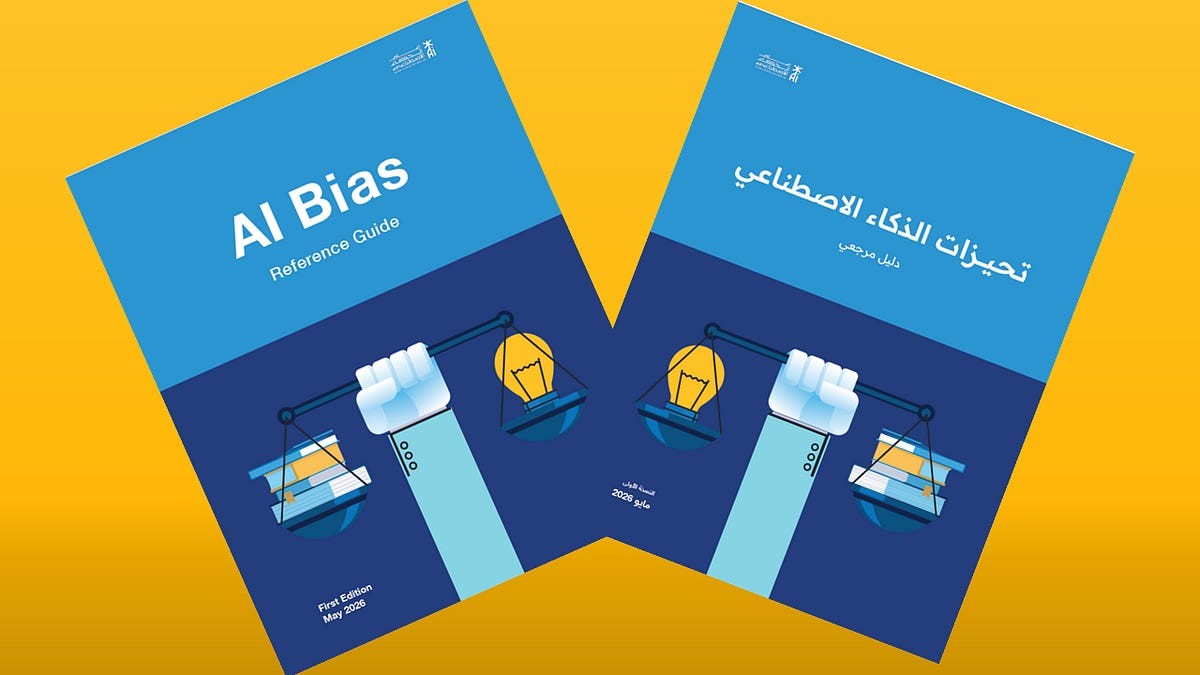
Saudi Data and Artificial Intelligence Authority (SDAISA) has just dropped its first edition of the AI Bias Reference Guide.
It is granular. Unnervingly so.
The document lists more than 100 specific types of bias. These are the subtle glitches that creep into algorithms. They distort accuracy. They warp fairness. And they matter a lot now.
For every bias type listed, the guide does the heavy lifting. It explains how the bias starts. It outlines the potential societal fallout. It even offers real-world examples and ways to stop it.
Why This Matters for Critical Sectors
Some sectors are flashpoints.
Justice. Healthcare. Education.
These areas rely heavily on AI-driven decisions now. The stakes are high. A biased algorithm in a courtroom isn’t just a math error. It affects human liberty. A biased diagnostic tool in a hospital affects lives directly.
Unchecked bias transforms AI.
Instead of a tool for equity, it becomes a machine for discrimination. This damages institutional reputations. It creates legal liabilities that no one wants to manage.
SDAIA is trying to keep pace.
As adoption accelerates across both public and private sectors, risk grows naturally. The authority is playing a key educational role here. They want builders and decision-makers to have practical information. They need to mitigate risk. They need to embrace responsible AI.
Breaking Down the Bias
So, where does this bias actually come from?
It rarely comes from malicious code. Usually, it is structural.
The guide points to unrepresentative training data as a primary culprit. If the data is skewed, the model is skewed.
There are also algorithms that unintentionally favor certain characteristics. Flawed assumptions made during data interpretation add another layer.
Take recruitment.
Consider a hiring tool that favors candidates from elite educational backgrounds. It rejects equally qualified applicants from less privileged schools. That is not a feature. It is a failure of design and data curation.
Bias guides are common. Cataloguing 100 distinct types is a different beast. It signals a shift from awareness to operational control.
Building on Existing Frameworks
This guide doesn’t exist in a vacuum.
SDAIA has been laying the groundwork for some time. This document builds on earlier work, including the AI Ethics Principles and the Generative AI Principles for government entities.
It also ties into the AI Adoption Framework.
Recently, the authority published a prior study titled Bias in Artificial Intelligence Systems: Challenges and Solutions. That paper examined where bias emerges across different stages of AI development. This new guide acts as a companion piece.
It also complements the National Artificial Intelligence Risk Management Framework.
This framework uses a four-phase methodology. It covers scope definition, risk identification, mitigation, and continuous monitoring. It classifies AI risks into seven main categories for clarity.
The move suggests SDAIA is elevating knowledge levels about ethical principles. It is providing concrete details for anyone building or deploying AI in the Kingdom.
The market needs this. The technology moves fast. The guidelines are trying to catch up, if not lead.
But bias is elusive. It changes form as models become more complex. Does cataloguing 100 types help, or does it create a false sense of security?
Perhaps both. Having a map is better than wandering blind.