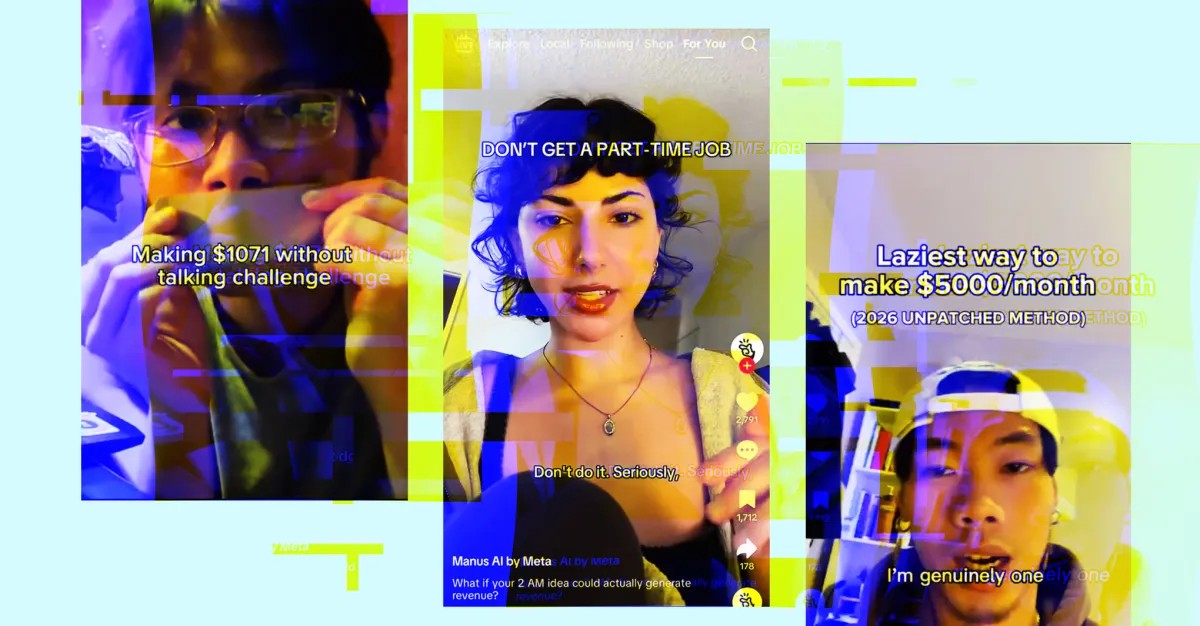
Manus, the AI startup acquired by Meta for $2 billion last year, is at the center of a controversy involving aggressive marketing campaigns that promise users can easily generate thousands of dollars using its tools. The campaign relies on a network of social media accounts promoting Manus as a “side hustle” with little to no transparency regarding their financial ties to the company.
This situation raises significant questions about advertising transparency, platform responsibility, and the ethical boundaries of AI marketing. As AI tools become more integrated into daily life, the line between organic user enthusiasm and paid promotion is becoming increasingly blurred—often without proper disclosure.
The “Easy Money” Pitch
The core of the Manus campaign is a simple, high-reward proposition: use Manus’ AI agents to build websites for local businesses that lack an online presence, then sell those websites for a profit.
In promotional videos across TikTok, Instagram, and YouTube, creators claim this process takes less than 10 minutes and can yield up to $5,000 per month. One video, posted under the handle “Manus AI by Meta,” features a young creator stating, “There is literally no limit,” implying that anyone can replicate this success with minimal effort.
However, the reality is far more complex. The promise assumes a steady stream of businesses willing to buy generic, AI-generated websites from strangers—a market that is likely far smaller and more competitive than the ads suggest.
A Network of Undisclosed Promoters
Investigation reveals that these promotions are not organic grassroots movements. Instead, they are part of a coordinated effort involving paid content creators who often fail to disclose their relationship with Manus.
Key findings include:
- Hidden Affiliations : Many accounts featured in the ads do not tag Manus or disclose payment in their bios or posts. Some creators even went to great lengths to obscure their ties, such as taping their mouths shut in videos titled “making [thousands of dollars] without talking challenge.”
- Uniform Messaging : The accounts share striking similarities in tone, visual style, and language. Phrases like “The art of Manus” and “my websites don’t look vibe-coded anymore” appear repeatedly across different profiles.
- Contractor Confessions : LinkedIn profiles of some creators identify them as contractors hired specifically for content production. One profile listed a role as a “viral growth expert” tasked with leading a team of 10–20 creators, enforcing brand guidelines, and training them on how to go viral.
Manus spokesperson Ronghui Li confirmed that the company works with third-party agencies for paid user-generated content (UGC) programs across major platforms. However, Li stated that Manus does not endorse exaggerated earnings claims and is currently reviewing the flagged content.
Legal and Ethical Concerns
The lack of clear disclosure in these promotions violates the terms of service for Meta, TikTok, and YouTube, all of which require creators to clearly label paid partnerships. Beyond platform rules, legal experts warn that these practices may also breach consumer protection laws in multiple jurisdictions.
“Vague brand-adjacent language won’t cut it as a disclosure,” said Alexandros Antoniou, a law professor at the University of Essex. “British regulators take a firm position on undisclosed commercial relationships in influencer marketing.”
Sonal Patel Oliva, an advertising lawyer at Fieldfisher, noted that incentivized content must be clearly labeled as an ad. The failure to do so not only misleads consumers but also undermines trust in digital advertising ecosystems.
Platform Response and Regulatory Scrutiny
Following inquiries from journalists, TikTok has removed many of the hype videos and banned several associated accounts. Instagram and YouTube have not publicly commented on the issue, but the removal of content suggests platforms are taking action to enforce their policies.
Manus has declined to answer questions about Meta’s awareness of the campaign or whether it complies with Meta’s own advertising standards. The company has also not provided evidence to support the earnings claims made in the videos, leaving consumers with little basis to evaluate the legitimacy of the “side hustle.”
Why This Matters
This case highlights a growing trend in AI marketing: the use of ambiguous, high-reward narratives to drive adoption. By framing AI tools as easy paths to financial freedom, companies can attract users who may not fully understand the limitations or risks involved.
Moreover, the involvement of Meta-owned Manus adds another layer of complexity. As Meta integrates Manus into its broader ecosystem, the parent company faces potential reputational and legal risks if its subsidiaries engage in deceptive practices. With Chinese regulators already blocking the acquisition, any further controversy could complicate Meta’s efforts to resolve the deal.
Conclusion
The Manus marketing campaign serves as a cautionary tale for the AI industry. As companies race to monetize new technologies, transparency and ethical advertising must remain top priorities. Consumers deserve clear information about who is behind the promotions they see, and platforms must enforce rules that protect against misleading claims. Without these safeguards, trust in AI tools—and the companies behind them—will continue to erode.