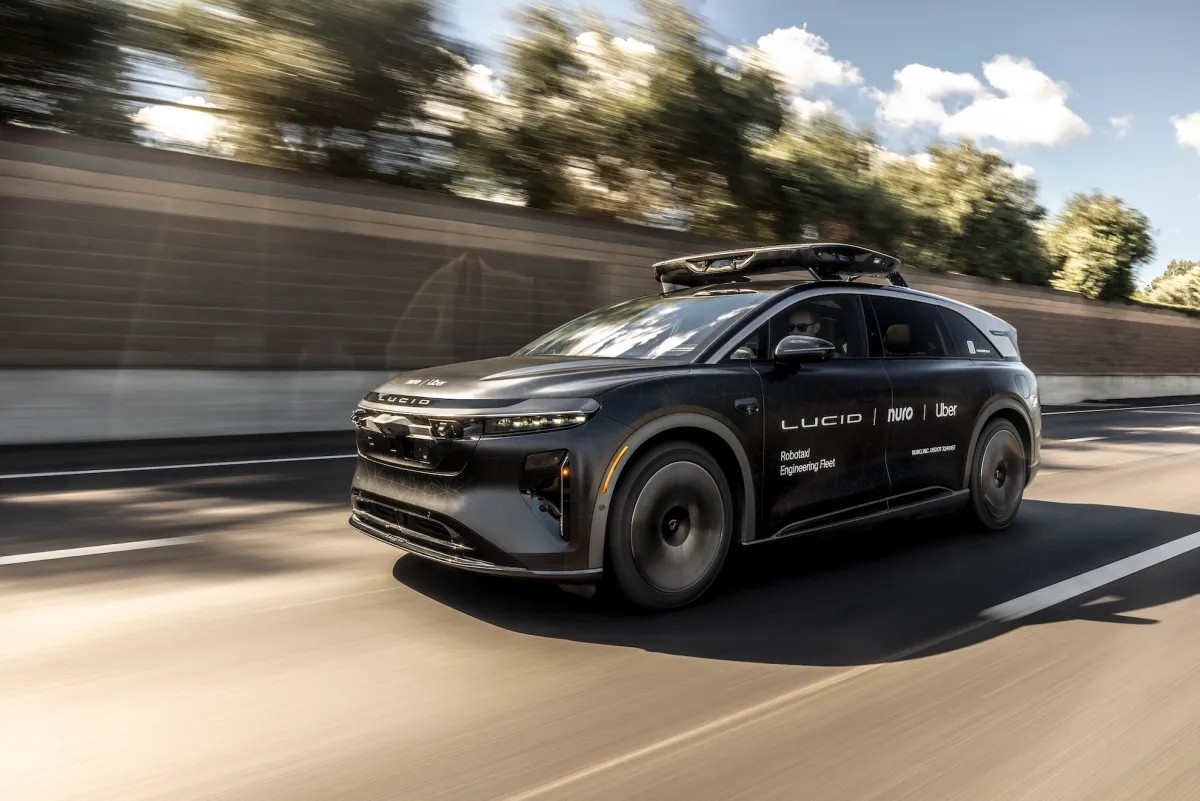
Uber and Nuro have officially entered the next phase of their partnership, beginning internal testing of a premium autonomous ride-hailing service in San Francisco. Currently, select Uber employees can request rides in specialized Lucid Gravity SUVs via the Uber app, marking a significant step toward a commercial rollout.
The Technology Behind the Ride
The vehicles used in this pilot program are not standard electric vehicles; they are highly sophisticated mobile sensor suites. To navigate the complex streets of San Francisco, the Lucid Gravity SUVs are equipped with:
- Nuro’s Autonomous System: The “brain” of the vehicle, which manages driving decisions.
- Nvidia Drive AGX Thor: The high-performance computing platform powering the autonomy stack.
- Advanced Sensor Suite: A combination of high-resolution cameras, solid-state lidar, and radar to provide a 360-degree view of the environment.
While the vehicles operate in autonomous mode, a human safety operator remains behind the wheel to serve as a backup, ensuring safety during this critical testing phase.
A Multi-Million Dollar Strategic Alliance
This pilot program is the practical application of a massive financial commitment made between the companies. The partnership is built on significant capital exchanges designed to secure a foothold in the future of autonomous transport:
- Uber’s Investment: Uber has invested $300 million in Lucid and an undisclosed “multi-hundred-million dollar” amount into Nuro.
- Fleet Commitment: Uber has agreed to purchase at least 20,000 Lucid Gravity SUVs over the next six years.
- Operational Model: Uber intends to own and operate the premium robotaxi service, potentially utilizing third-party support to manage the fleet.
Why This Testing Phase Matters
Moving from closed-course testing to real-world employee rides is a pivotal transition in the development of autonomous vehicles (AVs). This phase focuses on two critical challenges that often determine the success or failure of robotaxi services:
- The “Rider Experience”: Beyond just driving, the companies are testing how the vehicle, the software, and the passenger interact. This includes the interface within the app and the comfort of the ride.
- The Logistics of Pickups and Drop-offs: Navigating curbsides, managing traffic during passenger boarding, and ensuring safe stops in busy urban environments are notoriously difficult tasks for AI. Real-world testing allows Nuro to refine these “last-meter” maneuvers.
Looking Ahead
Nuro currently maintains an engineering fleet of 100 Lucid Gravity SUVs across various U.S. cities to gather data. While the current testing is limited to employees, the timeline for a broader rollout is becoming clearer. According to regulatory filings, production of these specialized, modified vehicles is expected to begin in late 2026, with a planned public launch following shortly thereafter.
This pilot represents a shift from theoretical autonomous driving to the logistical reality of managing a premium, large-scale transit fleet in a live urban environment.
Conclusion
By integrating Nuro’s AI with Lucid’s luxury hardware, Uber is positioning itself to lead the premium segment of the autonomous ride-hailing market. The success of this San Francisco pilot will determine if these vehicles can master the complex nuances of urban passenger service before their wide-scale release.