


If you lived in the 1980s, you remember the rush. It wasn’t just a decade; it was a sprint. Every month something new seemed to hit the shelves. Many of the devices that we take for granted today were created back then. We look at twelve specific technologies that have gone from novelty to necessity.
The list includes personal computers, graphical user interfaces, CDs, Walkmans, VCRs, camcorders, video game consoles, cable television, answering machines, cell phones, portable phones, and fax machines.
How personal computers changed home computing
The personal computer was not just a gadget. The way people interacted with data changed. Before this, computers were only for companies and universities. Now it fit on a desk of a suburban house. This democratization of technology paved the way for the digital age.
The effect was immediate. Users could manage finances, write documents and play games without leaving home. The hardware became smaller, cheaper and more accessible. This accessibility created a new market for software. Developers started writing programs especially for home users. The ecosystem grew rapidly.
The transition from an industrial tool to a consumer product is an important example of how personal computers changed everyday life in the 1980s. It wasn’t just raw power. It was about presence. The machine became an integral part of the household.
The personal computer moved computing power from the server room to the living room.
This change did not happen on its own. It relied on other innovations. The graphical user interface made the machine usable even for laymen. The floppy disk allowed for easy data exchange. The modem enabled connection to other systems. Each part reinforced the other.
The result was a cultural change. Information was no longer locked in books or government archives. It was on your desk. This accessibility opened up new opportunities for education and work. It also created new anxieties. The line between work and home began to blur.
The decade ended with the personal computer firmly entrenched. It was no longer a luxury. It was a requirement in many jobs. These early machines laid the groundwork for the Internet age.

IBM PC and the birth of an industry
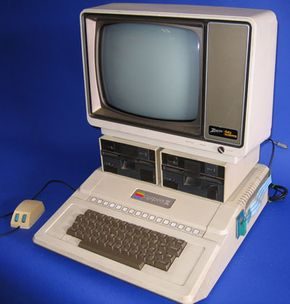
Personal computers are now as popular as cars and telephones. Without them, the World Wide Web wouldn’t exist, and you wouldn’t be reading this article right now. However, this is not always the case. The PC era began in the 1970s, right after the microprocessor chip was invented. Apple introduced the Apple I in 1976 and the Apple II in 1977. The Apple II was powered by a 1 MHz 6502 processor. This is an 8-bit chip with up to 48KB of RAM. Compare this to the latest entry-level Mac mini with a 1.5GHz processor, 60GB drive and 512MB of RAM.
Then in 1982, the IBM PC was introduced. The impact is hard to understand now, but IBM’s reputation was huge. They built huge mainframes for corporations. Entering the personal market, they brought instant credibility to personal computers. If it’s made by IBM, it must be good.
Although weak by today’s standards, this machine was powerful for its time. It uses a 16-bit 8088 processor running at 4.77 MHz. It is nearly five times faster than the Apple II or IIe. Handles 16-bit calculations. You can add an 8087 math coprocessor. The maximum amount of memory is 640 KB.
I bought an IBM PC in 1982. The price was about $2000. It has 64 KB of RAM. One 360K 5.25 inch floppy drive. Epson MX-80 dot matrix printer. It is a “complete” home system.
What struck you first? Keyboard. It’s built like a tank. Heavier than many modern laptops. Next is a monochrome display. Characters were sharp. At the time, 40-character displays were common. Next is the floppy drive. Compared to cassette tapes, it was blazing fast. It stored a huge amount of data for the time.
This setup was a miracle. For just $2,000, you can code and word-process in the comfort of your own home. It was amazing.
The IBM PC brought two major changes.
- Software revolution. Companies began to create actual programs for personal computers. Word processors. Spreadsheets. CAD tools. Business software exploded.
- Hardware revolution. Compaq became the first company to clone the PC. They built systems that ran all PC software. Others followed. Competition dropped prices. Innovation sped up.
Soon thousands of companies were competing in the personal computer business.
In the 1980s, Intel released the 80286, 80386 and 80486. The 80486 was a 32-bit processor. There are over 1 million transistors on a single chip. Operates at 25MHz. Supports 4 GB of memory. Hard drives were rare in 1980, but today they are cheap and widely available. By the end of the decade, personal computers were in every office and many homes.
For technical information, see How PCs Work.
Graphical User Interfaces
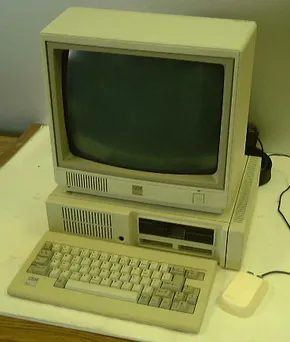

Operating systems didn’t always look like what we see today. When IBM launched the PC, it shipped with DOS. This was a command-line interface. You typed commands like DIR or COPY. The machine responded. It was simple to program. It fit the character-based screens of the era. But regular people struggled with it. Non-geeks found DOS intimidating.
Then came 1984. Apple released the Macintosh. It introduced a Graphical User Interface (GUI). This changed everything.
We take GUIs for granted now. We use them daily. But back then, it was revolutionary. People who lived through the shift remember the moment clearly. I do.
A store in Albany, NY, got a Mac in stock. Four of us drove there to see it. The machine looked alien. The form factor was unlike anything on the market. The screen was crisp and paper white. It had black characters. Most screens in 1984 were black with green or white text.
Then there was the mouse.
Holding it felt strange. Yet, it was shockingly easy. Your brain mapped the mouse to the cursor in seconds. Dragging or double-clicking wasn’t obvious though. No one had seen this before. A salesperson showed us how it worked. Then it clicked.
Using the machine became intuitive. Delete a file? Drag it to the trash. Move a file? Drag it elsewhere. Open a file? Click it. You didn’t need to know the application name. That was essential for PCs. You had to type it into the command line.
The transition from command-line interfaces to the Macintosh GUI was not just an aesthetic upgrade. It was a fundamental shift in human-computer interaction that made technology accessible to the masses.
Drawing on the paper-white screen with a mouse was a dream. Typing was better too. The Mac used actual fonts. Not block characters. What you typed looked like a book. It was amazing.
This technology became ubiquitous. Everyone uses a GUI today. Navigating the web from a command line is painful to imagine.
The GUI didn’t spread immediately in the 80s. Microsoft’s Windows wasn’t ready. Version 3.0 arrived in 1990. It wasn’t quite right. Version 3.1 changed that. Things took off in 1992.
The Portable Music Revolution: CDs and Walkmans
Next, we look at music. How did it become portable in the 1980s? The answer lies in two technologies. CDs and Walkmans. These devices transformed how we consumed audio.


The analog noise floor
It is difficult to picture a world without compact discs now. We take the format for granted, even if we rarely buy the physical media anymore. But in the early 80s, the CD wasn’t just a new product. It was a paradigm shift. To understand the shock value, you have to remember the audio landscape of the 1970s.
Music lived in two main boxes: vinyl LPs and cassette tapes. You could catch tracks on AM or FM radio, sure. The 8-track tape was still lingering in the peripheral vision of 1980, but it was dying. The compact cassette was winning. It fit in your pocket. You could record over it. It was superior.
But there was a catch. All analog formats shared one unforgivable trait: hiss.
Whether you were spinning a record or watching the reels spin on a boombox, the background noise was always there. It was a constant, low-level static. You learned to ignore it. You turned up the volume to drown it out. It was the cost of doing business with analog sound.
The shock of silence
Then came the CD. Around 1983, the first players hit the shelves. The first thing you noticed wasn’t the clarity. It was the silence.
I remember visiting an audiophile friend who had dropped over $1,000 on one of the early players. That was a mortgage payment back then. He loaded a disc, cranked the gain, and pressed play.
Nothing happened.
For a split second, you thought it was broken. Then the music exploded from the speakers. It wasn’t just loud. It was pristine. The absence of the hiss floor felt like standing in a vacuum before a sudden gust of wind. The dynamic range was staggering. The experience was visceral. It sounded like the band was in the room, not on a plastic disc.
No more wear and tear
The second miracle was durability. Analog media degrades with every play.
Cassettes stretched. The magnetic oxide flaked off onto the heads. The mechanical tape transport suffered from “wow and flutter”—pitch variations caused by inconsistent motor speed or tape tension. Vinyl records gathered dust. Scratches caused pops. Heat warped the plastic. To listen to a record properly, you needed a ritual.
High-end turntables featured massive platters to stabilize speed. Tone arms were counterbalanced to microscopic precision. You used anti-static brushes and sprays to clean the grooves. You might even dub the album to a tape just to avoid handling the vinyl. It was excessive. It was inefficient.
The CD wiped the slate clean. No dust. No scratches affecting playback. No heat warping. No mechanical motors to fail. It was pure digital data. You could throw it in a dishwasher and it would likely survive. The disc held over an hour of high-fidelity audio. It was rugged. It was convenient. It felt like magic.
The simple truth inside
The irony is that the technology behind this “magic” is brutally simple. A CD is essentially a reflective mirror.
On that mirror surface are billions of microscopic pits and lands—tiny scratches created during manufacturing. A laser beam inside the player scans across the disc. If the laser hits a flat land, it reflects strongly. If it hits a pit, the light scatters.
A sensor detects this difference in reflection intensity. Strong reflection equals a binary one. Weak reflection equals a binary zero. This binary code streams digital audio data to a decoder, which reconstructs the sound. It is elegant in its simplicity. It relies on light and reflection, not magnetic particles or vinyl grooves.
4: Walkmans

How small magnets enabled the portable audio revolution
We wear headphones like a second skin now. It’s so natural that we rarely stop to think about how strange it is to isolate yourself in a bubble of sound while walking down a crowded street. This sense of “personal listening” wasn’t always the default. Before the 1980s, music was a shared, stationary experience. You listened to the radio. You listened to a record player in the living room. You didn’t carry your playlist with you.
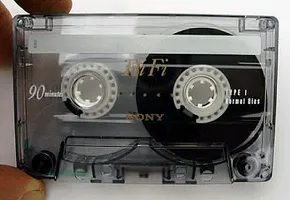
The shift happened because Sony decided to break the mold. They released the Walkman, a device that did two things that seemed impossible at the time.
First, they shrunk a cassette player. It was small enough to slip into a pocket. This mattered because people were already doing the work of curating music. They were recording songs off the radio or dubbing tracks from albums onto blank tapes. These custom mixes were the original playlists. The Walkman gave them a place to live.
The second innovation was the headset. Before 1980, your audio options were binary. You had tiny plastic earbuds that sounded tinny and thin, or you had massive over-ear cans. Those bulky headphones covered your ears with cups the size of cereal bowls. They were heavy. They were hot. They were impractical for anything other than studio monitoring or sitting still.
Sony solved the weight problem with a specific piece of hardware: the samarium-cobalt magnet.
These magnets were tiny. They were also incredibly powerful. By using samarium-cobalt, Sony could create a driver that delivered clear, rich sound without the heavy iron cores that added ounces of weight to every pair of headphones. Without this specific material science breakthrough, the lightweight Walkman headset would have been physically impossible. The device would have been too heavy to wear comfortably, and the sound would have suffered. The magnet didn’t just make the headphones lighter; it made them viable.
Why the early Walkman was a status symbol
The original Walkman wasn’t cheap. It was a luxury item. In 1981, the list price hovered around $300. That’s roughly equivalent to a high-end smartphone today, but it was a niche audio device. I actually won one in a raffle that year, which saved me from buying it outright.
It was a serious piece of hardware. It played cassettes, yes, but it could also record them using two built-in microphones. You could capture the world around you. There was also a “limit” button. Press it, and the music volume dropped while external sounds were amplified through the earpieces. It let you hear a conversation or a train announcement without ripping the headphones off. It felt like a hack, sure, but it was a clever one.
I ended up giving that raffle prize to my sister for Christmas. By the time prices dropped a year or so later, the market was flooded. Other manufacturers realized they could make their own players, and the Walkman went from a rare curiosity to a household staple.
The legacy of portable personal audio
Cassettes are gone. CD players are collector’s items. We stream music from the cloud now, downloaded and stored digitally. The hardware has changed, but the behavior remains the same. We want music that moves with us. We want control over what we hear and when we hear it.
The Walkman proved that people wanted this. It didn’t just sell units; it changed how we consume culture. It turned music from a background activity into a personal companion.
Next, we’ll look at how television and home video followed a similar trajectory. We’ll cover VCRs, camcorders, cable TV infrastructure, and the early days of video game consoles. The story of portable audio is over, but the story of portable media is just getting started.
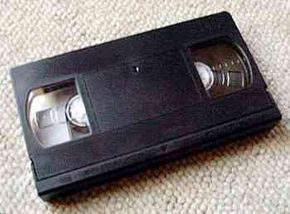

Diagonal solution for video recorder
The pre-digital age is hard to understand. Imagine a world with three television stations. No on-demand movies. If you want to watch a movie, you have to wait for one of the channels to play, including commercials and such. The idea of renting a movie on Friday night didn’t exist yet. Blockbuster wouldn’t open its first store until 1985. In the early 1980s, a broadcast-only landscape.
What breaks up the monotony are two things. cable TV. And a VCR.
Cable will get its due later. The VCR, however, was a mechanical miracle. On the surface it seems simple. It used magnetic tape, just like Sony’s Walkman. Equipped with a recording head. The technology seemed identical. So why can’t it be easily copied?
Linear recording fails here. Trying to organize video data in a straight line, like audio on tape, violates physics. It would take 50 miles of tape to make a two-hour movie. The tape must slide over the head at 25 miles per hour. You need a spool that is the same size as a car tire. It’s not a home appliance. It was an industrial machine.
VCRs solved this problem by tracking diagonally. The tape is wide. The recording head is in a drum that rotates at a speed of 1800 rpm. Each video frame is written as a long diagonal line instead of a straight line.
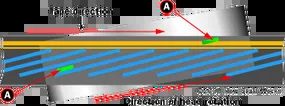

The mechanism is already quite ready. Inside the machine, the video head spins over the tape at about 25 miles per hour. The tape itself, on the other hand, moves slowly at 1.31 linear inches per second. This high-speed differential allows you to record analog video. But for decades the equipment remained expensive and bulky.
The real change happened in the 1980s. Three specific factors have combined to change the market. First, the mass production of video tapes lowered the costs of the media itself. Second, manufacturing moved to Asia, which lowered physical production costs. Third, an inexpensive microprocessor can be used to control the complex timing required for recording.
With these three factors in place, the price of a VCR finally dropped below the magical $1,000 mark.
The use of microprocessors not only reduces costs; It’s automated. You no longer need to man the device to record the right show at the right time. Machines can handle schedules themselves.
This simple change enables two new behaviors for your audience. The first is “time shift”. You can save programs that are shown at inconvenient times and watch them later. The second is fast forward. Ads can be completely skipped.
For the first time, the audience ruled the agenda. The television industry never expected such autonomy. Viewers can now choose their own viewing experience without being tied to the broadcast grid. It felt like power. With microchips and plastic tape, a quiet revolution is taking place in living rooms across America.
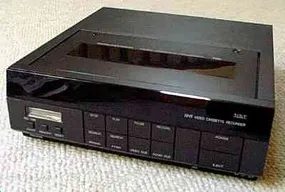

Studios realized it had found a new gold mine. Instead of relying solely on the box office, they started releasing movies on tape. They can be expensive, up to $70. This created an immediate economic gap. The rise of video rental companies filled this gap. For just a few dollars you can rent Hollywood blockbusters. This change has not only changed the way we watch movies. It birthed the concept of the home theater.
This technology may not be wallet or conscience friendly. A kid once stuck a video tape on his refrigerator and accidentally erased a “Star Wars” book. The kid was banned from the house for a week. But risk is part of the fun. It made the experience personal. The movie can be yours, even if it’s just for one night.
To meet this new demand, televisions got bigger. The first projection televisions also appeared on the market around the same time. They are huge, bulky and often dim, but they sell dreams. They understood the idea of a movie theater in the living room.
Think of the freedom the VCR gave people. This is hard to overstate. Previously, the choice was binary. Go to a movie theater or wait for the “Big 3” network to show movies at special times like Million Dollar Movie Night. These broadcasts are full of advertisements. You have no control.
There are thousands of Hollywood movies. However, for many years they were unknown to the public. You could not pause. You could not rewind. You could not watch The Godfather when you wanted. VCRs broke this monopoly. Viewers can choose “what” and “when”.
The impact was total. The video rental store became a cultural staple. It’s not just about saving money. It’s about access. Suddenly you can watch unknown foreign films, cult classics and action movies that never made it to prime time. The library of available content exploded.
For those interested in mechanics, the inner workings of these devices are of great interest. See How the VCR works for technical details.
6: Camcorders
将好莱坞带入你家的磁带技术很快就转向了室内。 它允许人们成为董事。 摄像机 将相机和录像机合并为一个手持设备。 不再拖着单独的卷到卷机器。 不再需要复杂的同步。 你指向,你按下录音,你就看到了一部电影。
对于普通人来说,这是家庭视频时代的黎明。 你的生日聚会不仅仅是一个回忆。 它是在磁带上的。 你可以回头看看。 你可以分享它。 电影制作的准入门槛崩溃了。 它不再只是工作室。 每个人都带着录像机和摄像机。
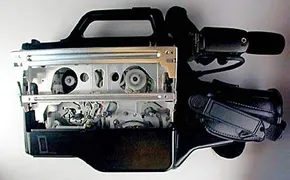

Shrink the VCR, attach the camera lens, pop in the giant battery, and strap the whole mess to your shoulder. You’ve invented the camcorder. For middle-class parents, having children in the 1980s was more than a luxury. This is a social duty.
To understand why this device caused such a frenzy, you have to look at the nightmare that preceded it. Before the advent of camcorders, home videos meant 8mm film cameras. The process was archaic and unforgiving. Buy a 25 foot roll of 16mm film. If possible, you can thread the film through the camera even in the dark. You got two minutes of footage. Then you have to turn on the camera, turn the spool, thread again and spend another two minutes.
After the photo is taken, the canisters to a lab. They cut the film down the middle and tape the pieces together into a 50-foot reel. Four minutes of continuous playback. That’s your reward.
The restrictions are brutal. The 8mm format is small and produces grainy, low-quality images. Shooting in two-minute bursts killed spontaneity. If you accidentally expose the film, the entire roll is trash. The cost of film stock and processing was high. To watch it, you need a large, unreliable projector and a special screen. Don’t forget the sound. These home movies are silent.
Then came the camcorder. The shift was instantaneous. Insert a standard VHS tape. You may already own one, but you can also purchase a new one for just $5. Suddenly you have two hours of recording time. The video has audio. The resolution was acceptable. You don’t have to wait weeks for your development to finish when you get home. Insert the tape into the existing VCR. It played immediately. No chemicals. There is no projector. No need to wait. It feels like magic.
8mm cameras disappeared from homes almost overnight. Everyone wanted a camcorder.
摄像机的工作原理
如果您想更深入地了解这些设备如何捕获和存储模拟视频信号的机制,请查看摄像机工作原理的技术细分。
7:有线电视
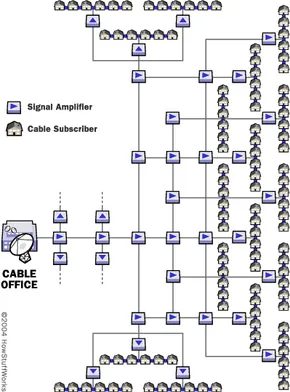

Cable television was not only born in the 1980s, but its popularity grew explosively. This product arrived just as VCRs and video rental stores were starting to turn living rooms into personal media centers. However, home video allows you to control your schedule, but cable TV offers completely different channels.
This technology is not new. People who live in mountainous areas or cities with dense skyscrapers have used cables to receive signals for many years. A terminal antenna on a hill can carry the signal into a valley or street where reception is blocked. The problem is in the delivery system itself. Early installations were based on coaxial cables running from the antenna to the TV.
Coax is a beast. The signal strength decreases with distance. To solve this problem, cable operators installed amplifiers. There can be 30 or 40 between the source and the set. Each amplifier slightly degrades the image quality. When the signal reaches the screen, it looks like garbage.
Fiber optics changes everything. Cable companies began to replace trunk lines with fiber optics. The number of amplifiers has been reduced from 40 to 5-6. Then reduce it to two or three. The signal becomes sharper. Costs have dropped significantly.
Then there’s the content. In the early 1980s, new cable television channels became common. CNN. MTV. HBO.
HBO changed the game. For a small monthly fee, you can watch movies without ads. There are dozens of them. MTV did something even more disruptive. Introducing music videos. Instead of flipping through the pages of magazines, teenagers and college students are now huddled in front of the television watching the latest clips on air.
Cable TV has changed from a luxury to a necessity. Instead of three channels, there are dozens of them. You can record programs on a video recorder and watch them later. It feels very futuristic. It’s like living in the future.
The Rise of Home Gaming
虽然有线电视正在改变我们消费媒体的方式,但另一个屏幕正在改变我们玩游戏的方式。 视频游戏机正在从街机新奇变成客厅的必备品。 这种转变一开始是微妙的,然后是不可避免的。
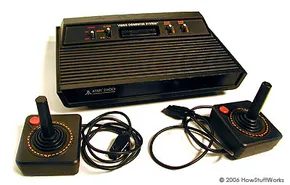

Although home video game consoles have been around since before the 1980s, they have received little cultural attention. For those with expensive computers like the Apple II, gaming was an arcade experience or a niche hobby. Sure, you could buy a Pong system for your living room, but that would be more of a novelty than a staple. In 1977, Atari attempted to change this with the Atari 2600. Sales were slow at first. The market only woke up in 1979 and exploded in 1980.
The catalyst? Space Invaders.
Atari’s sales grew sharply as prices fell and hit games grew. By 1982, the company was selling 8 million units a year. Video games are no longer just entertainment. they are everywhere. Pac-Man was released the same year as the home version, which was popular in the arcade and created the same craze. These games defined an era where simplicity triumphed over complexity.
Original hardware, amazingly long life
If you look at the Atari 2600 through a modern lens, its specs look ridiculous. The system runs on a 6507 processor, an 8-bit chip that runs at just 1.19 MHz. The graphics resolution is 160 x 190 pixels is blurry. Although the hardware technically supports 128 colors, each scan line can only display 4 colors. In other words, the screen is usually contrasted with black and a few colors that the programmer can squeeze out.
Memory was even tighter. The console only has 128 bytes of RAM. Storage was via a cartridge containing 4,048 bytes of ROM memory. Later games could extend this to 32KB by paging through eight 4K blocks, but the ceiling was low.
The hardware determines the game. You can’t expect an open world or complex physics. You will see a simple object moving on the screen. Sprite-based 2D animation. Some colors on a mostly black background. This is the limit. There is not enough processing power or memory for anything else.
“There was something right about the early games. They survive today, like playing cards – because they’re classics.”
But despite their technical limitations, these games continue. Space Invaders and Pac-Man are still playable, recognizable and relevant. Why? Because core loop was sound. Graphics are secondary to game mechanics. The important thing is not how real it looks. It’s about the feel of the game. These constraints forced us to get creative, strip away the extraneous and focus on pure interaction.
We are moving away from the era of limited pixels towards ways of communicating in the same time frame. The next step in the development of technology is not only entertainment, but also communication. We consider answering machines, cell phones, cordless phones and fax machines.
9:答录机
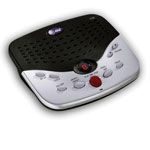

Before the answering machine, communication was synchronous patience. If you wanted to make a call, both parties had to be available at the same time. You picked up the phone when it rang. There was no buffer. No queue. just ringing.
The answering machine completely changed that dynamic. It felt like a miracle. The early models were big beasts with two cassette decks. One deck handled of your outgoing greeting. Another recorded incoming calls. A microprocessor controlled the movement of the tape and allowed you to listen to messages, skip or delete tracks.
Finally, the engineers simplified the hardware. Two decks became one. Then tape disappeared entirely and was replaced by solid state memory. The cost of producing cassette decks fell, but the real trigger was the breakup of AT&T.
Before the breakup of the 1980s, you couldn’t just buy a device. You had to rent an answering machine from the phone company. You have installed it. It was part of the service. When the monopoly broke up, anyone could buy a device and plug it into the wall. Asian manufacturers flooded the market with cheap devices. In the mid-1980s, owning an answering machine was common.
This change created a new problem in social etiquette. if you were home but left the phone ringing until the answering machine answered, you were considered a snob. Screening calls from your own apartment was bad form. People expected you to answer. Today, that judgment has disappeared. We don’t care.
The rise of mobile technology
The next jump was the mobile phone. It moved communication from home to pocket.
Early mobile phone networks were expensive and clunky. The devices were big. The service was limited to certain areas. But the promise was clear: you can be reached everywhere. It wasn’t just about convenience. It was about availability.
The transition from landlines to mobile devices has changed the way we work and socialize. You are no longer tied to the wall. You can answer calls in your car. In the street. In a meeting. The answering machine gave us time. The cell phone gave us presence.
It wasn’t an instant takeover. The expansion of networks and the shrinking of devices took years. But the course was set. The landline phone became a backup phone. The mobile device became the primary connection.
This change also changed privacy. With a landline, your home was a sanctuary. you were always accessible. The line between public and private space is blurring. You could be reached during dinner. While driving. While sleeping.
The etiquette shifted again. Now ignoring a call is the exception and not the rule. We expect immediate responses. The patience is over.
This development continues. Internet has been added to smartphones. Video calls. Continuous connection. But the foundation was laid in these earlier steps. The answering machine removed the pressure of simultaneity. The mobile phone removed the location restrictions.
What next? We don’t know yet. But the pattern is clear. The technology eliminates friction. It demands more from us in return.
The next installment in this series will look at the impact of instant messaging and the shift towards asynchronous communication worldwide.
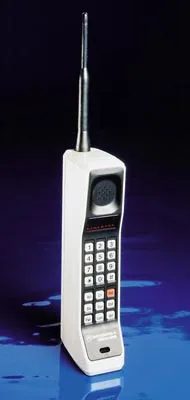

手机是真正进入现实世界的罕见科幻作品之一。 我们仍然没有飞行汽车、个人喷气背包或月球殖民地。 但我们确实携带 20 世纪 60 年代“星际迷航”电视节目中流行的手持通讯器。
因为今天每个人 都有手机,所以当我们散步、购物或开车时无法拨打即时电话时,你很难想象。 我们是如何在如此脱节的情况下生存下来的?
我记得 20 世纪 80 年代初,我和一位房地产经纪人一起开车。 他拥有手机的前身:车载无线电话。 这个机制非常简单。 一座巨大的无线电塔坐落在城市的中心。 这辆车的后备箱里装有一个巨大的 25 瓦无线电发射器和接收器。 里面有一个听筒和一个按钮面板。 它允许您在四个频道之一中进行选择。
是的。 20 世纪 80 年代初,北卡罗来纳州罗利市的整个城市只有 4 个无线电话频道。 这就是当时汽车无线电电话的罕见之处。 它们非常昂贵。
How Cellular Networks Changed the Game
The genius of the cellular concept lies in dividing cities into smaller units. Each unit has its own tower with antenna. That tower could transmit only two or three miles. Approximately 100 different radio frequencies are used within each cell. This allows for about 50 simultaneous calls.
Importantly, with proper spacing, these frequencies can be reused in other cells within the city. This system has a high capacity compared to older wireless telephone systems. Instead of one tower with four channels serving a 40-mile radius, you can have dozens of cells in a city with 50 callers in each cell.
Cell phone base stations are always only 1-2 miles away, so your phone requires a small 1-watt transmitter. This means the device is likely to be smaller. Battery life will be reasonable.
Building a city mobile phone system costs a lot of money. Companies have to build all these towers. The initial cost of the phones was nuts. The first truly portable battery powered handheld was called the DynaTAC. It cost $4,000. It’s as big as a brick and weighs about the same as a brick. The price per minute is over $1.
However, many wealthy people (like stock traders) really need this service. They are willing to pay. Car phones have gotten cheaper, but they aren’t cheap. In the early 1980s, if you talked to someone on a car phone, cell phone, or actual “brick” phone in your hand, you knew you were talking to someone “important.”
Cheaper prices and an expanded network
Like everything else related to technology, prices have come down. You can get this phone for free today. Calls only cost a dime per minute. Long distances and roaming are usually free. This was never the case in the 1980s.
When these systems were created, each city was an island. Companies like Sprint and MCI were tiny businesses. Services such as nationwide roaming and free long distance only became possible when prices fell and thousands of “ordinary people” started subscribing
For more information on mobile phone technology, see How Cell Phones Work.
The Cordless Phone Boom
The portable telephone was another “must-have” technology in the 1980s. When these phones come out, everyone had to buy one. Maybe it was cell phone envy? who knows.
When these phones were first introduced, they were very simple. This phone is practically two walkie-talkies in the same box. One walkie-talkie handled your voice. The other handled the voice of the caller. This method does not require a push-to-talk button on a standard walkie-talkie.
These phones use the usual 27 MHz and 49 MHz frequencies of walkie-talkies and baby monitors. That meant short distances and a fair amount of interference. This also means that your neighbors can eavesdrop on your phone.
Still, cordless phones are popular because you could get rid of the cord. You can talk on the phone while walk around the house or yard
The reason these phones exploded in popularity is not because of the technology. Walkie-talkies have been around for decades. As with the answering machine, the breakup of AT&T and the deregulation of devices connected to phone lines the explosion came from
For more information, see How Cordless Telephones Work
12: Fax Machines
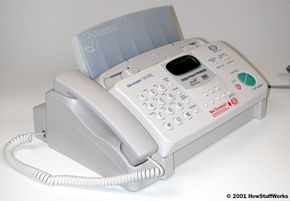

The breakup of AT&T in the 1980s didn’t just shatter a monopoly; it flooded the market with new hardware. Suddenly, home lines were clogged with answering machines and portable phones. People ran dedicated wires from their desks to modems, logging into bulletin board systems that served as the gritty, text-based precursors to the modern internet.
But the real miracle arrived in a bulky plastic box.
While the fax machine had existed for decades, it was a niche luxury until the 1980s brought the cost down to earth. Three specific technological shifts made this possible. First, the microprocessor became cheap enough to fit into consumer devices. Second, heat-transfer print heads dropped in price, allowing machines to print on rolls of heat-sensitive paper without expensive ink. Third, optical sensors became inexpensive, enabling devices to read text on a page quickly and accurately.
Why the Fax Machine Changed Business Forever
Once the price point hit a critical threshold, adoption exploded. Millions of people bought these machines because they offered something digital email simply couldn’t at the time: a physical signature, transmitted instantly.
In the pre-email era, sending a document required the postal service. With a fax, you could send a sheet of paper with a wet signature to anyone in the country in seconds. It felt like magic.
During the golden age of the fax, the device handled everything.
- Restaurants took lunch orders via fax instead of the phone.
- Marketing departments sent out ads and brochures directly to desks.
- Legal documents were signed and faxed immediately rather than waiting for mail delivery.
- Personal letters and even recipes traveled through the fax network.
This was the early taste of what we now take for granted. Today, we send attachments via email. Back then, we sent paper. The mechanism was different, but the intent was identical: move information instantly from one person to another.
The 1980s Tech Landscape
The fax wasn’t the only innovation defining the decade. The 1980s were a period of rapid technological firsts, many of which still influence our lives today.
Satellite television brought channels directly to home dishes. Laser discs offered high-quality video before DVDs existed. Simple home robots like the Heathkit Hero introduced basic robotics to hobbyists. Digital music synthesizers changed how we produced sound. Even cultural icons like the Rubik’s cube and the DeLorean car became symbols of the era’s futuristic optimism.
Space exploration also took center stage. The Space Shuttle launched for the first time in 1981, bringing humans closer to space travel than ever before. This optimism was tempered by tragedy in 1986 with the Challenger disaster. Meanwhile, the MIR space station launched in 1986, marking a new era of long-duration human presence in orbit.
The sheer volume of “firsts” is staggering. It is surprising how many of these technologies survived the decade’s end and remain relevant. The 1980s weren’t just a bridge to the digital age; they were a laboratory where the future was tested, broken, and rebuilt.
For those interested in the mechanics behind these devices, detailed breakdowns of how fax machines, floppy drives, and early telephones operate are available for further reading.


