


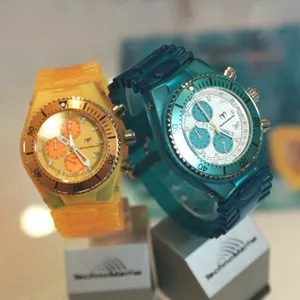
Cell phones tell us the time. Why bother with a wristwatch? Most people stopped looking at their wrists years ago, yet manufacturers keep making them. The TechnoMarine line proves the point. These timepieces run about $315 each. They are not just functional tools. They are style statements.
Then there is the premium tier. The Techno Diamond version costs just over $3,000. That is a significant jump in price. It features diamond accents. The base model remains accessible for those who want the design without the high-end gemstones.
Why buy a watch when your phone shows the time?
Because aesthetics matter. A $315 watch is an accessory. A $3,000 diamond-studded piece is jewelry. The function of telling time has become secondary to the look. You are not checking the hours. You are checking the vibe.
The contrast between the $315 TechnoMarine and the $3,000 Techno Diamond is stark. One is a fashion choice. The other is a luxury investment. Both exist in the same market, proving that the wristwatch has not died. It just changed purpose.
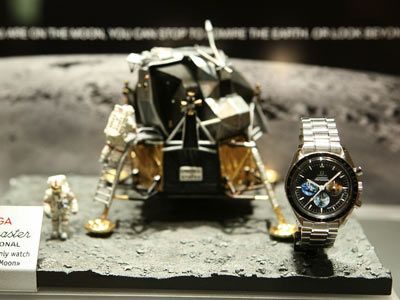

The Only Timepiece to Touch Lunar Surface
The Omega Speedmaster Professional isn’t just another luxury accessory sitting on a shelf. It is the only watch to have been worn on the moon. That distinction remains unbroken half a century later. When you look at the timepiece on display at the Omega Speedmaster 50th Anniversary, you are looking at an object that survived vacuum, extreme temperature swings, and the chaotic physics of a spacewalk.
It feels almost like a prank. A Swiss mechanical watch, designed for pilots and racers, was sent up in a plastic bag by the Apollo 13 crew. They had to cut a hole in the bag to use it during their emergency spacewalk. It worked. It kept time while the astronauts were floating in zero gravity, tethered to a crippled service module, miles above the ocean.
Why the Speedmaster Survived Where Other Watches Failed
NASA didn’t pick the Omega because it looked good. They picked it because it passed tests that would have made your wrist watch weep.
Before the moon landing, the Space Program used the Omega Speedmaster as a backup timing device. It had to withstand:
– Temperatures from -20°C to +100°C.
– Humidity and shock.
– Magnetic fields.
– Constant vibration.
Most electronic watches of that era failed. The quartz crystal inside them cracked under thermal stress. The mechanical movement of the Speedmaster, however, held steady. It was heavy, clunky, and hard to read in the dark. But it didn’t break. That reliability is why it became the “Moonwatch.”
How the 50th Anniversary Model Differs from the Original
The watch on display at the anniversary event is a tribute, not a clone. The 50th Anniversary edition typically features a specific dial design, often with a blue or black finish and gold accents, marking the 1969 achievement.
The original 1969 reference (often the 145.022 or 145.027) had a different bezel style and case thickness. The modern homage keeps the Heuer or Omega branding depending on the specific year of production, but the core mechanism remains the same: a manual-wind chronograph. You wind it by hand. No battery. No quartz. Just gears and springs.
If you are comparing this to current smartwatches, the difference is stark. Your Apple Watch or Galaxy Watch tracks your steps, your heart rate, and your emails. The Speedmaster tracks one thing: time. And it does it without a power source that dies if you forget to charge it.
Where to Find Authentic Vintage Speedmasters
If you are hunting for a piece of history, the secondary market is where the real money is. Look for references like the 145.022 (often called the “Big Case”) or the 145.027. Check the serial number on the case back. Early models have shorter serial numbers. The dial should say “Speedmaster” in the classic font.
Beware of fakes. The “Moonwatch” title has made it a favorite target for counterfeiters. A genuine vintage piece will have:
– A plexiglass crystal (early models) or sapphire (

Why the Moon Ties to Your Wrist
The moon isn’t just a celestial body. It’s a marketing engine.
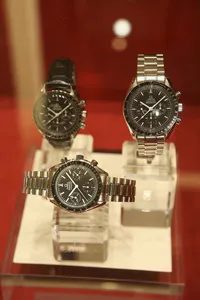
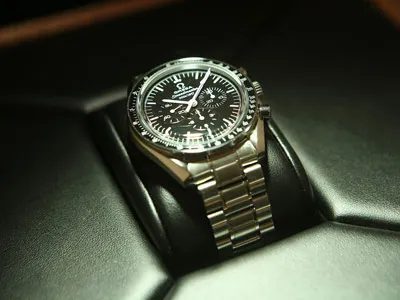
Omega made a specific bet. They said their Speedmaster would survive the vacuum of space. NASA agreed. Then Buzz Aldrin strapped the Omega Speedmaster Professional Chronograph to his wrist and walked on the lunar surface. That single moment cemented a status no other watchmaker has matched. It wasn’t just a watch. It was proof of survival under extreme conditions.
You might ask how a Swiss brand ended up owning the narrative of the first moonwalk. The answer is precision. The Speedmaster was the only chronograph fully tested and qualified by NASA for extra-vehicular activity. No other timepiece got that green light.
From Moon Walk to Mall Window
Fast forward to the Omega Speedmaster 50th Anniversary. The celebration wasn’t just a press release. It featured astronauts, including Charlie Duke, who displayed the watch during the event. The move was strategic. It linked the original lunar history to a new generation of collectors.
Today, you can find these pieces in Omega boutiques around the world. The story sells the product. The watch sits in a display case, but the weight of the history sits on the buyer.
Is the Lunar Connection Still Relevant?
Here’s where it gets tricky. Does the moon landing still matter in 2024?
Yes. But not because we’re going back. Because the Speedmaster became a symbol. It represents reliability when failure isn’t an option. That’s a strong brand anchor.
For everyday users, this means a few things:
- Authenticity : The story is verifiable. NASA documents exist.
- Value retention : Watches tied to historical events often hold value better than purely aesthetic pieces.
- Identity : Wearing a Speedmaster is a quiet signal. It says you value engineering over hype.
You don’t need to be an astronaut to appreciate the mechanics. But knowing who wore what, and when, changes how you look at the dial. It turns a timepiece into a timestamp.
The moon is far away. The watch is right here. The connection between the two is the point.
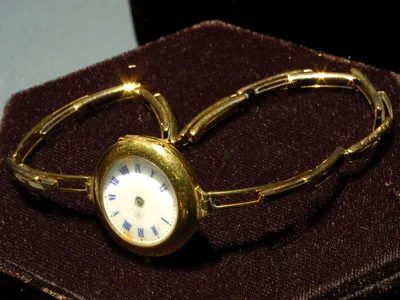
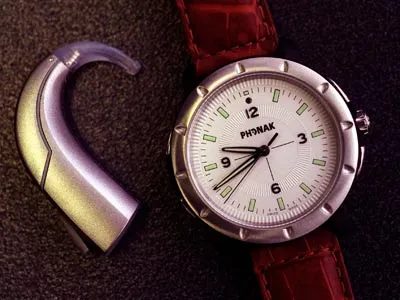
The Gold Wristwatch That Survived the RMS Titanic Sinking
You see this gold wristwatch in a museum case. It is a Titanic survivor. The ship went down in 1912. This watch did not. It sat in the ocean for decades. Now it tells a story about luxury and loss.
Watches have evolved past simple timekeeping. Take the Phonaks wristwatch. It looks like a standard timepiece. It is not. It doubles as a remote control. The wearer uses it to adjust their hearing aid. No extra fob. No separate app on your phone. Just the watch on your wrist.
A single device handling two functions. That is efficient design.
Why does this matter? Accessibility meets everyday style. You do not need to look like you are wearing medical equipment. The watch blends in. The hearing aid stays controlled.
How Modern Wristwatches Handle Dual Functions
The Titanic artifact shows the past. The Phonaks device shows the present. Both are gold-toned. Both are worn on the wrist. The difference is purpose.
- Titanic Watch : Historical artifact. Status symbol.
- Phonaks Watch : Functional tool. Accessibility aid.
Which one would you choose? If you need to hear better, the Phonaks wins. If you want a piece of history, the museum piece wins.
The tech inside the Phonaks is simple in effect. Button press. Volume up. Volume down. Easy. No learning curve for most users.
Where to Find These Specialized Timepieces
You will not find the Titanic gold watch for sale. It is in a collection. The Phonaks watch is available. It serves a specific market. People with hearing loss who want discreet control.
Do you need a hearing aid remote? Check for Phonaks integrated watch options. They are niche. They are useful.
The shift from pure timekeeping to multi-function devices is steady. Smartwatches do it with screens. The Phonaks does it with buttons. Less screen time. More tactile feedback.
Why Designers Keep Adding Features to Wristwatches
Why add a hearing aid remote to a watch? Convenience. You already have your hands full. A button on the wrist is faster than digging out a phone. Faster than remembering a separate device.
The Titanic watch reminds us that objects outlast events. The ship sank. The watch endured. The Phonaks watch will likely outlast its current software updates. Hardware longevity is key here.
Is it overkill to put a hearing aid controller on a watch? Maybe. But if it works, does it matter? The user saves time. The user saves frustration.
The next time you look at a wristwatch, ask what else it does. It might just be telling time. It might be controlling your hearing. The possibilities are quiet, but they are there.
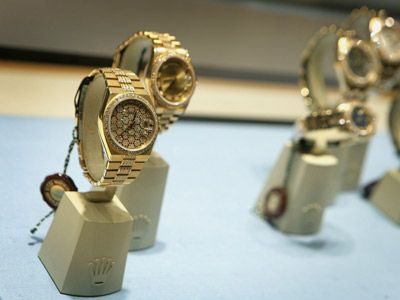
The price of bling in luxury watchmaking
Precision isn’t the only thing that drives the cost. You look at those jewel-encrusted Rolex watches sitting in a Dubai store window and you see something else entirely. The mechanics are there, yes. But the diamonds, the sapphires, the sheer weight of gold? That’s where the margin really lives.
Why do brands do this? It’s not about telling time. It’s about status. A standard Submariner is a tool. A fully set version is jewelry. The gap between the two isn’t measured in hours on a bench, but in carats and karats.
For the everyday buyer, this distinction matters if you’re thinking about resale. The mechanical value of the watch is fairly stable. The gemstone value is a whole different market, one that’s volatile and heavily dependent on fashion trends. If you buy a piece for the stones, you’re betting on the jewelry market. If you buy it for the movement, you’re betting on horological heritage.
It’s a different product entirely. Just because the logo is the same doesn’t mean the investment profile is.
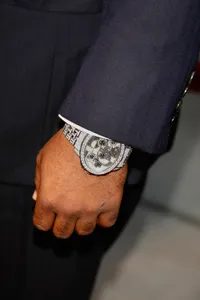
Damon Dash’s Tirex Watch at the “Shadowboxer” Premiere
Damon Dash walked the red carpet in Los Angeles for the Shadowboxer premiere wearing something loud: a Tirex watch. Not just any watch, either. This one came covered in diamonds. It was a clear statement piece from his own luxury watch line.
You see this kind of flash all the time in entertainment circles. A producer shows up, and the accessory does the talking before the movie even starts. Dash leaned into that energy. The diamond-encrusted face caught the camera flashes, making the watch the focal point of the moment.
Why the emphasis on the product? Because it wasn’t a Rolex or a Patek Philippe. It was his brand. He was wearing his own merchandise on a high-visibility stage. That’s marketing with intent. The diamond setting isn’t just decoration; it’s a signal of status and personal investment in the label.
Luxury isn’t always about heritage. Sometimes it’s about who’s wearing it, and whether they own the thing on their wrist.
The scene captured the intersection of music, film, and personal brand building. Dash didn’t just attend the event; he promoted his watch line in the process. For fans of hip-hop fashion, this is a familiar pattern. Designers and producers use red carpets to push their own creations into the spotlight.
Does it matter if the watch is “just” a promotional item? To Dash, no. It’s a product he stands behind. The diamond enclosure adds weight to that claim. It says, “Look at what I can make. Look at what I can wear.”
The Shadowboxer premiere provided the stage. The Tirex watch provided the spectacle. Two different things, same moment. That’s how modern celebrity branding works. You don’t just show up. You show up with something that demands a second look.
When Decorative Fish Meet 1930s Timepieces
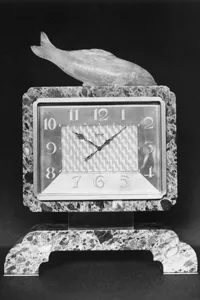
Rose quartz. Green marble. A decorative fish diving behind a face.
That is the look of a specific vintage clock. It harks back to the 1930s. The materials are heavy, the design is ornate. It is not a digital gadget. It is a physical object with weight and history. The fish element adds a layer of surrealism to an already decorative piece.
The Gadget-Laden Legacy of James Bond
James Bond is rarely without a tool.
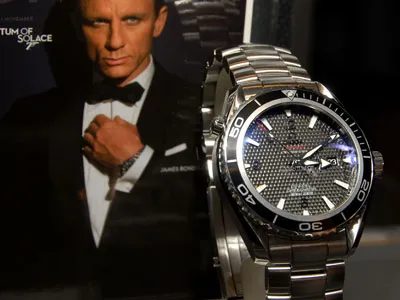
The watch industry knows this well. A close-up from the “Great Moments in Time with James Bond” event highlights the Tourbillon collection. These timepieces are not just accessories. They are statements. They reference a character defined by clever, high-stakes technology.
Why the connection? Because Bond watches have become iconic.
“A James Bond watch is less about telling time and more about signaling a specific kind of capability.”
The tourbillon mechanism itself is complex. It is a rotating assembly that helps compensate for the effects of gravity on the precision of a mechanical clock or watch. For the average user, it is a sign of luxury. For the Bond fan, it is a nod to the intricate gadgets that save the day.
The event ties these elements together. Vintage aesthetics meet modern engineering. The 1930s clock with its marble and fish sits in the same cultural space as the high-precision Bond watch. Both are objects that demand attention. Both rely on craftsmanship.
Whether you are a collector of vintage horology or a fan of spy fiction, the overlap is clear. Style matters. Function matters. The story behind the object matters most of all.
The 2009 LG Watch Phone: When Wrist Computing First Became Real
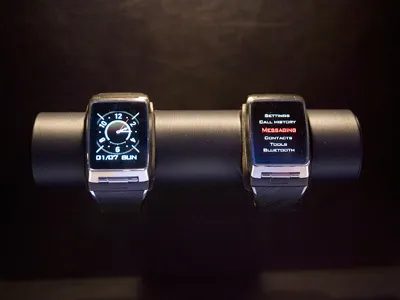
LG’s 2009 debut of a functioning watch phone remains a weird, fascinating artifact in the history of wearable tech. The device wasn’t a toy. It wasn’t a prototype stuck in a lab. It worked.
Side-by-side views from that era show the hardware in two distinct modes. One image captures the timekeeping function, the standard watch face. The other reveals the telephone mode. This dual capability defined the product’s identity. It was a phone you wore on your wrist, not a phone you held in your hand.
Why does this specific 2009 model matter to someone browsing tech history today? Because it proved the form factor was viable. The screen was small. The interface was clunky by modern standards. But the core premise held up. You could make calls. You could check the time. You could do both without pulling a device out of a pocket.
The technology behind it was simple compared to what exists now. It lacked the complex sensors, the health tracking, and the large displays that define smartwatches in 2024. Yet, the engineering challenge of fitting a functional phone into a wrist-sized casing was significant. LG solved it. The result was bulky, yes. But it was real.
For the average user back then, this was likely a novelty. A status symbol. A conversation starter. But for the tech industry, it was a validation. It showed that consumers might accept a phone on their wrist. It set the stage for the next wave of wearables.
Did it change daily life? Not immediately. Most people stuck to their pocket phones. The screen was too small to type on. The battery life was probably short. But the concept survived. The “watch phone” label stuck.
Today, looking back at those 2009 images, you see the ancestor of the Apple Watch, the Galaxy Watch, and the Pixel Watch. The form factor hasn’t changed much. The complexity has exploded. The utility has grown. But the fundamental idea? Wearing your communication device? That started with LG, back in 2009.
The device didn’t start a revolution overnight. It planted a seed. A small, metallic seed, sitting on a wrist, waiting for the rest of the tech world to catch up.
LG Watch Phone: Dialing the 2010s Backwards
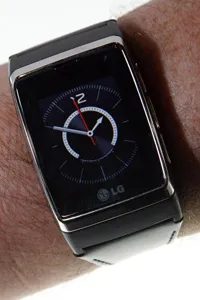
The LG Watch Phone looks like a relic from a different era. It dials time. Literally. The face is a clock. The body is a phone. This is a physical mashup of analog aesthetics and early-2000s mobile tech.
You hold it, and it feels heavy. Dense. The touch screen responds, but the real gimmick is the mechanical display. It ticks. It shows the hours. No digital abstraction. Just hands moving across a dial.
Hardware Specs: What Actually Works
Beneath that retro styling sits a modest tech stack. The device packs an MP3 player for local audio. A video camera sits ready for video conferencing. You can call someone and see their face. That was a feature. Back then, it was rare.
Bluetooth handles wireless connectivity. Text messaging works as expected. The processor likely chokes on modern apps, but for its time, it did the job. It wasn’t trying to be a smartphone. It was trying to be a watch that made calls.
Why This Design Failed
Did it work? Barely. The market moved fast. Touchscreens got bigger. Clocks disappeared from hardware interfaces. Users wanted apps, not analog dials. The LG Watch Phone targeted a niche that didn’t exist at scale.
It’s a curiosity. A museum piece. The video conferencing capability stands out, given the era. Most phones back then couldn’t do that well. This one could. But the form factor held it back. It was too weird to be daily, too limited to be essential.
The dial tells time. The screen tells stories. The LG Watch Phone tried to be both. It ended up being neither.
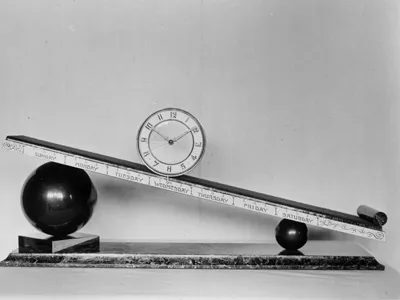
Mechanical alternatives to digital timekeeping
Circuitry is not the only way to track hours. Nor are gears. Some mechanisms bypass traditional horology entirely.
This rolling clock uses gravity.
It rolls down a slope. The incline indicates the days of the week. No batteries. No microchips. Just physics doing the heavy lifting.
You might ask how a simple ball determines the day. It does not. The track does. The slope is designed so the object travels a specific distance before stopping. That distance maps to a specific day marker.
Why build a clock that rolls?
Mostly for novelty. But it highlights a broader point: time measurement is flexible. We assume watches are rigid, static objects. They do not have to be.
“Time can be a journey, not just a number.”
This design leans into that idea. The user watches the object move. The anticipation becomes part of the experience.
Is it precise? Probably not in the way a quartz oscillator is. It lacks the atomic-level stability of modern electronics. But it does not claim that precision. It trades accuracy for visual interest.
Where does this fit in software and IT contexts?
Nowhere directly. But it illustrates a principle relevant to human-computer interaction. Interfaces do not have to be text-based or graphical. They can be physical, kinetic, tactile.
Think of haptic feedback. Think of voice assistants. Think of ambient displays.
All of these change how users perceive time. A rolling clock is an extreme example. It forces you to watch. It removes the passive glance. You have to look at the slope. You have to track the movement.
That is a different cognitive load.
In software, we often optimize for speed. Fast responses. Instant updates. Minimal friction.
This clock does the opposite. It introduces friction. Delay. Physicality.
Does that mean it is better? No. It means it is different.
For developers working on time-sensitive applications, the lesson is subtle. Users do not always want the fastest answer. Sometimes they want the most engaging one.
A rolling clock will never replace your phone. But it reminds you that time is a perception, not just a value in a database.
And that matters when you design anything a human will touch, watch, or wait for.
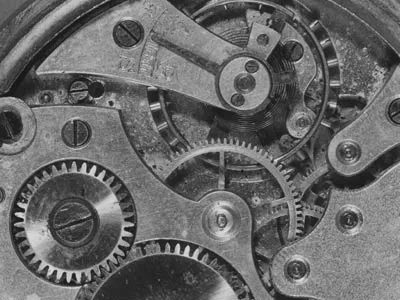
The Mechanics Behind Mechanical Watch Movement Precision
That 1949 close-up of a wristwatch interior isn’t just pretty. It’s a blueprint. Mechanical watches rely on a complex array of springs and gears to measure time with startling accuracy. No batteries. No quartz oscillators. Just physics.
The mainspring stores energy. The gear train transmits it. The escapement releases it in tiny, controlled ticks. Each component has a job. Fail one, and the whole system drifts.
Why does this matter for everyday users? Because mechanical timekeeping is tangible. You can open the case and see the machinery breathing. Quartz watches are more accurate, yes. But they hide their secrets behind a black box. Mechanical movements invite curiosity.
How Springs and Gears Work Together
The balance wheel oscillates back and forth. The hairspring controls that rhythm. Think of it like a pendulum, scaled down to fit your wrist. The gear train reduces the rotation speed so the hands move at the right pace.
This isn’t new tech. It’s engineering refined over centuries. A 1949 movement and a modern one share the same DNA, though tolerances are tighter now. Lubrication matters. Dirt kills precision.
Which Components Matter Most for Accuracy
The escapement is the heart. It alternates between locking and releasing the gear train. Every tick is a micro-event. If the jewels aren’t polished right, friction builds. If the balance amplitude drops, time loses.
Caliber size plays a role. Smaller movements pack more parts into less space, making assembly harder. Larger ones allow easier maintenance. Both can be precise if built well.
“A watch is a small machine that tells you what you already know: time is passing.”
Where to Test Your Knowledge of Watch History
Want to see if you can identify a vintage piece? The Name the Price: Watches Quiz digs into that territory. It’s not just about recognizing logos. It’s about understanding what makes one movement valuable versus another.
Mechanical watches endure because they’re repairable. A broken spring can be replaced. A dead quartz battery is often the end of the line. That’s not nostalgia. It’s practicality.
The next time you glance at your wrist, look closer. Behind the crystal, something is still working.


