Training your ear by visually singing can often feel like work. It is dry. It’s tough. Notes De Musique flips that script. Turn music theory into a game. This Android app is aimed at beginners and adults who want to deepen their knowledge of music. It does not feel like studying. I feel like I’m playing.
The user interface is interactive. Exercise your eyes and ears. You can quickly recognize the staff’s notes. This builds long-term memory. The app supports your progress. There are different difficulty levels. You can practice with different keys. You identify notes from images. Or put the note where it should be. Gamification keeps you immersed. You are the one who measures your progress. You collect wins. Fun is in the center.
Offline learning, instant feedback
Works even offline. This gives you flexibility. Use it at home. Use it in a school music room. Installation is intuitive. Start training in seconds. This encourages children to practice spontaneously. Lowers the barrier for beginners. Visual and audio feedback guides you. Adjust the session time. Change the difficulty level. It builds reflexes. It stimulates learning.
Installation and platform restrictions
Get it from the Google Play Store. It’s safe. Compatible with Android standards. It’s free. There is no charge for downloading. No license required. No advance payment is required. This helps families. Useful for teachers. This helps associations democratize access.
Installation is easy. Requires an Android device. Requires Android 4.1 or higher. It does not collect excess data. We respect your privacy. We do not collect unnecessary information.
There are no official versions for other systems. Windows is out. macOS has ended. Linux is out. iOS is out. You cannot install it natively on a PC. You cannot install it on an iPhone. You cannot install it on an iPad.
Emulation is possible. Some advanced users run Android emulators on desktops. This allows you to play the game on hardware other than Android. Not officially supported. Technical knowledge is required.
Updates happen automatically through the store. You can also check it manually. Force update from the application page. Stay updated. Get bug fixes. Improve user experience. Get new features.
Why this matters to everyday users
Most people think of music theory as conservatory knowledge. it is not. This is for people who want to understand audio. At Notes De Musique, we remove the scary element from the equation. Use repetition. Use immediate feedback.
For parents, it is a tool. Children learn without pressure. For adults, it is a refresher. Maybe you played the piano as a child. You forgot the basics. This will bring them back.
Offline functions are key. Don’t have internet? No problem. You can practice anywhere and anytime. On a bus. In the park. At a desk. This accessibility changes the frequency of exercises. Frequency is more important than duration. Small, frequent sessions stick.
The free model is rare in this space. Many applications place their functionality behind a paywall. This one does not. It is complete. This removes the question of “Will it work?” anxiety. Download. You start. There is no subscription trap.
Does it replace the teacher? No. It supplements. It drills the basics. It lays the foundation. The teacher adds nuances. Context. Expression. But for rote memorization and recognition? This app works. it works.
The lack of iOS support is a limitation. Apple users are left out. If you’re in the Apple ecosystem, you need an alternative. Emulators are a stopgap solution. They are clunky. This will drain the battery. They are not native. For Android users, this is a complete package.
What about updates? The developer pushes them via the store. Stay updated. Features improve. Bugs vanish. This is the standard for all good Android apps. But that doesn’t make the experience stagnant.
Our privacy policy is fundamental. authorization. that’s it. In the age of data collection, this is refreshing. The app does not require your location information. Contact information is not required. Must be performed. That’s it.
Conclusion
Learning music can be isolating. This can be frustrating. The notes change the dynamics. It is easily accessible. This is very interesting. Works with most Android devices. Works even offline. It’s free.
The limitations are clear. Not iOS. There is no desk. But for people in the Android space, it fills a gap. Bridging the gap between theory and practice. Transform abstract symbols into concrete skills.
Start with your notes. You heard it. you recognize it. You put it down. repeat. The loop is simple. The effects are cumulative. A combination of skills.
The world needs more people who understand music. Someone who understands structure. This application reduces admission fees. time. money. friction. Eliminates friction. Leave the rest as is.
It’s a small tool. But tools are important. Especially those that can provide power without charging. The fact that it exists for free is important. It proposes a different development model. One of them emphasizes practicality. It’s not about winning.
How does this affect other platforms? They have a job to do. But for now, Android users have strong options. It’s not perfect. No software. But it does exactly what it says. It teaches music. In a permanent way.
After practice, there was silence. This is where the real work begins. Insert pattern. Listen to music in your head. The app provides you with a key. You direct them.
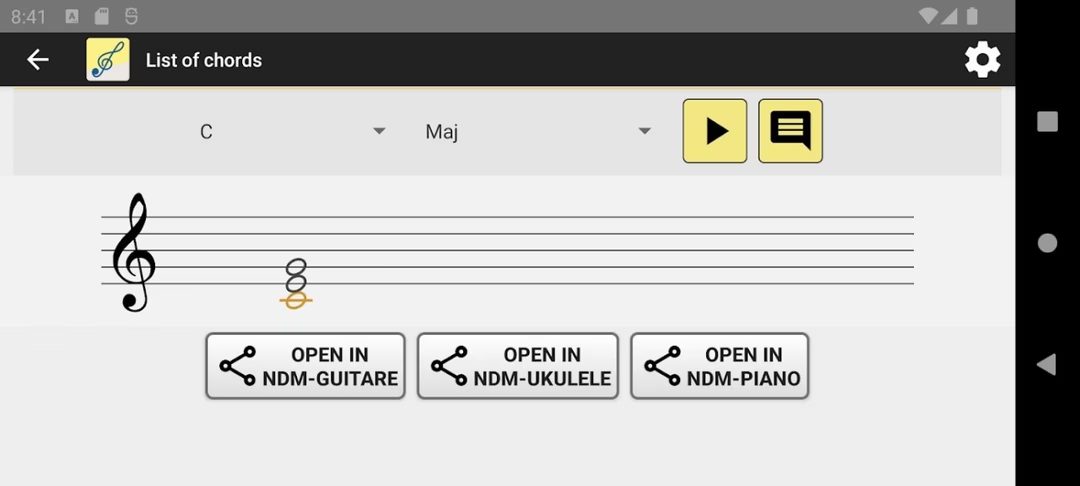

Most music apps try to do it all. Theory, ear training and instrument practice are all in one big package. Notes De Musique does not. Remove the noise. It focuses on one thing: reading music.
This unique focus makes it a powerful tool for solving specific problems. If you’re tired of second-guessing staff notes, start here.
Comparison with a wider selection of music learning tools
Check out Perfect Ear or Yousician. they are powerful. But they scatter your attention. You might spend 20 minutes on rhythm and pitch. Notes De Musique contains no such distractions. Pedagogy is monothematic. Build muscle memory for visual recognition.
“Notes De Musique is characterized by its emphasis on reading sheet music.”
This is not a fault. This is a strategy. This app is an ally for students who need automatic note recognition. You don’t need to master piano or guitar. You have to master the notation.
Who is this for? Suitable for self-directed students. It’s for teachers. Teachers can use it for group assessment and initial presentations. The scoring system gives immediate feedback. You see your series. See your progress. This visibility increases persistence.
Technical simplicity and cost structure
There is a catch? Not really. The model is free. I don’t have a student license. There are no hidden subscriptions. There are no large in-app purchases.
This is important. Many users do not like the friction of the paywall in educational tools. Notes De Musique removes it. You can get the content. There are pay nothing.
Note that this is subject to change. Developers usually add premium tiers later. Be careful. At the moment, however, there are no barriers to access.
Updates and impact on the community
Apps live and die by updates. Developers are listening. Users provide feedback directly through the Play Store. This is more than just a bug report box. It’s a feature request pipeline.
Recommendations that shape evolution. This participatory model allows applications to respond to real-world needs. It is a living tool.
Can I download older versions? In general, no. Play Store only hosts the latest verified versions. If you want an earlier version, you’ll have to look elsewhere. be careful. Third-party sources pose security risks. Stability is not guaranteed. Use the official channels unless you really know what you’re doing.
Why portability is a game changer
Music lessons are often organized during free time. Between exercises. In the waiting room. On the bus.
Notes De Musique takes advantage of this. It’s small. It’s fast. It adapts to fit your schedule.
The difficulty level scales. You start with simple note recognition. You move on to complex reading. This app targets your specific weaknesses. This kind of accuracy is difficult to achieve in a typical classroom setting.
Security and data protection
You won’t be bombarded with ads. Developers respect your information. This creates a peaceful environment. Disturbances are removed.
User feedback also confirms this popularity. The installed base is expanding. It is becoming a standard tool in music pedagogy.
Practical evaluation
Does it replace the teacher? No.
Does it replace a conservatory course? No.
It complements them. Automate the tedious part. Identifying notes. The visual memory.
This is important for pianists, guitarists, singers and orchestral musicians. It builds reflexes. Makes the daunting subject of music theory manageable. You play. You read. You succeed.
It is accessible. It is efficient. It’s modern.
The market for digital music education is crowded. “Notes De Musique” is stands out by saying less. It does one thing very well. In the noisy world of applications, silence is a feature.
That feature allows you to read music for the first time without panicking.
Technical requirements for Notes De Musique on Android
Before you click the download button, you need to know what you are actually getting. Notes De Musique specifications have been deliberately streamlined. No complicated setup wizard required. There is no need to force an account. Just install it from Google Play Store and start playing.
This is important because friction can cause inconsistency. If an app requires a 7-step installation to practice sight-reading, students will give up. This app does not play that game. Core exercises can be performed offline, so you can perform them on the subway or in a dead zone without buffering. Internet connection is not required after installation.
The distribution model is simple. It is free software. The main features are available for free, but the developer may offer optional additional features depending on the version in your region. On Android devices, it is categorized into games, education, and music. Works on standard touchscreen smartphones and tablets. This architecture supports the popular ARM and ARM64 processors and covers almost all devices released in the last decade.
When checking compatibility, the only source of information about the exact file size is the Play Store listing. This number varies. No need to worry about manual updating. Google Play handles patches automatically. The privacy policy is standard and can be accessed directly from the app’s store page.
Why this tool is useful for musicians
Downloading Notes De Musique solves a particular problem: automatic recognition of notes from sheet music. This is not a full suite. It doesn’t teach rhythm in depth. It does not cover music theory or dictation. It focuses entirely on reading notes in different clefs.
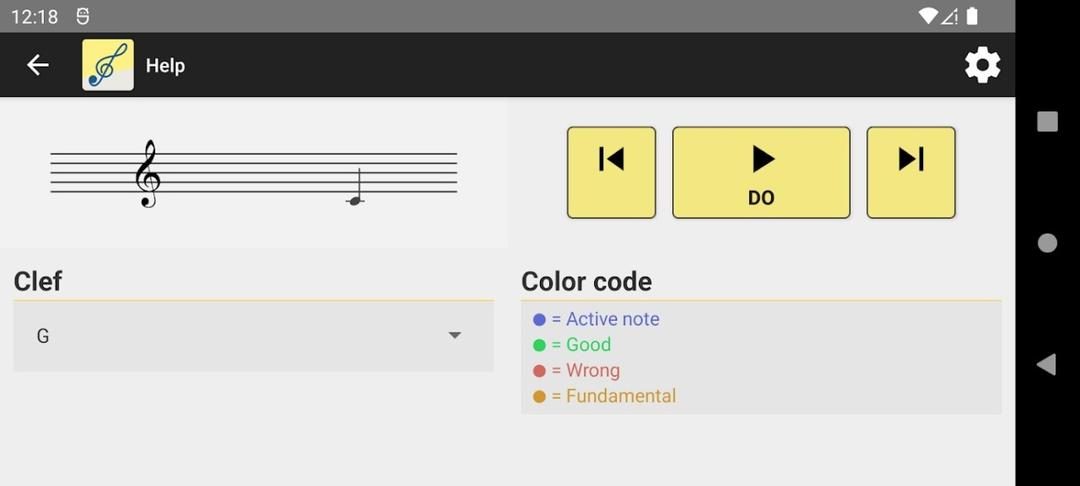
This narrow range is a strength. Most learning apps try to do everything but do nothing. This builds muscle memory. Short repeated sessions are used. You get immediate visual and auditory feedback. If you miss a note, you’ll know right away. If you answer correctly, your score will be updated.
The progression system will keep you hooked. Levels unlock as you progress. Points follow winning streaks. The user interface is clean and tidy. Disturbances are kept to a minimum. This structure is suitable for beginners who need clear boundaries and advanced users who want to improve their reading speed for piano, wind instruments and vocal music.
It’s easy to incorporate into your daily life. Exercise for 10 minutes between classes. Or drill for thirty minutes before a rehearsal. The offline function means that you are not connected to a Wi-Fi network. This makes everyday practice possible instead of mere idealism.
Limitations to consider before installation
There are trade-offs. The biggest one is platform exclusivity. This is an Android app only. If you use an iPhone or iPad, you’re out of luck. There is no official iOS version. There are no desktop apps for Windows or Mac. Progress cannot be synchronized between devices.
The scope of the activity is also limited. It also covers reading notes. It doesn’t cover everything from solfège and ear training. No courses on time signatures, dynamics or harmonic analysis were found. It complements, not replaces, the comprehensive curriculum.
This is not a criticism. This is a design choice. Avoid application bloat by focusing. It fulfills one promise. It’s a faster sight reading. Very effective for this particular purpose. Otherwise, another tool is needed.
The decision depends on your needs. If you have trouble identifying notes quickly in real time, this can help fill in the gaps. If you want a comprehensive music theory course, look elsewhere. A solid free option for targeted, high-frequency training on your Android device.

Hidden costs of free updates
Most users find software updates a hassle. If you are busy, you can skip some things. This mindset is why many systems rot from the inside. Vendors fix vulnerabilities. they fix bugs. Less often they explain why. Or how.
The result? The user base is fragmented. Some are on version 3.0. Some are in 4.1. Some were installed five years ago but have been forgotten. This fragmentation is a security nightmare. It also reduces productivity.
Why does fragmentation reduce productivity?
You can’t optimize your workflow if half of your team uses different interfaces. or different features. Version 4 may include a new AI assistant. Version 3 had a clumsy manual input system. The gap is growing. Cooperation has stopped. Files get lost in translation.
“The price of doing nothing isn’t just safety, it’s stagnation.”
Think about it. If updates are delayed, opportunities will be missed. Features that are not available. You are still fighting against mistakes. Still exposed to security holes. The longer you wait, the harder it is to jump.
The Upgrade Cliff
Early adopters jump on board quickly. They were given shiny new tools. They also found an early bug. Enterprise users wait. they test. They confirm. They wait longer. The version I was using at the time of the move was out of date. The transition to the next version is going to be huge. You can see big changes everywhere.
This is the update cliff. Please jump early. Or fall hard later.
How to decide when to upgrade
This is not just a problem with the latest version. It’s about stability. support. Compatibility.
- Check the release notes. Look for breaking changes.
- Check the hardware requirements. Old laptops choke when using new software.
- Test in the sandbox. before going into production.
- Talk to your vendor. Ask about end-of-life dates.
Don’t guess. Verify.
Security aspect
Vulnerabilities don’t care about your schedule. They care about exposure. An unpatched system is an open door. Each additional day of delay gives the attacker one day to detect. To exploit. To steal.
Modern threats are constantly changing. Static defenses die slow. Dynamic updates are required. Apply patches often. A culture of maintenance.
Where are you?
Look at the stack. How many versions are running in your environment? If the answer is more than one, you have a problem. A growing one.
The goal is not to be number one. It’s to be current. Consistently current. Update friction is real. But the cost of staying behind is higher.
So what’s the next move? The update queue is waiting.