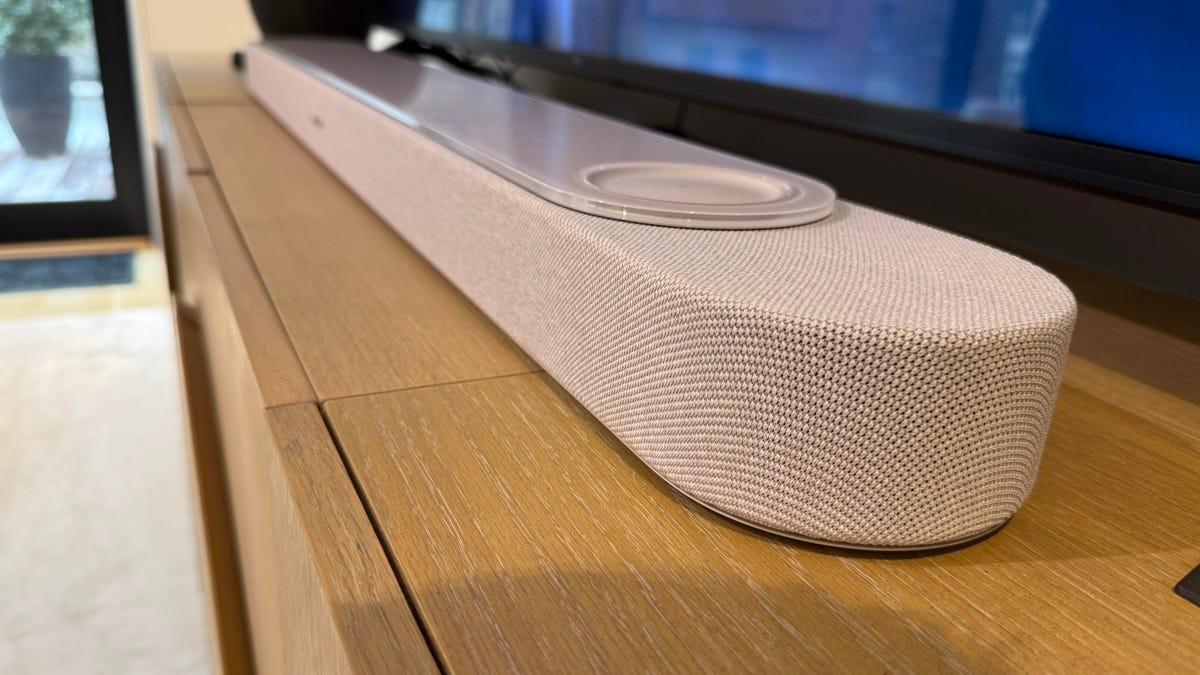
Bose has launched its new Lifestyle Ultra collection, a significant shift in how the company approaches home audio control. By replacing its dedicated proprietary app with support for Google Cast, Apple AirPlay, and Spotify Connect, Bose is prioritizing user convenience and ecosystem integration over centralized brand loyalty.
The new lineup includes the Lifestyle Ultra Soundbar ($1,099), the Lifestyle Ultra Speaker ($299), and the Lifestyle Ultra Subwoofer ($899). All three are available for pre-order, marking a strategic pivot away from the “walled garden” approach that has defined multi-room audio for years.
A Shift in Control: Why the App Change Matters
The most notable change in the Lifestyle Ultra series is not hardware-based, but software-driven. Previously, Bose users relied on a dedicated app to manage their speakers, similar to the model pioneered by competitor Sonos. However, Bose has now deprecated this method for everyday use.
The New Workflow: The Bose app is now used strictly for initial setup and calibration (using your smartphone’s microphone instead of a wired headset). For daily music playback and volume control, users must rely on the streaming service they already use—such as Spotify, Apple Music, or YouTube Music—via Cast or AirPlay protocols.
This move addresses a growing consumer frustration with complex, all-in-one audio apps. Competitor Sonos faced significant backlash and leadership changes after its unified app became bloated and unstable following the introduction of new products. By adopting industry-standard casting protocols, Bose allows users to:
* Group Bose speakers with non-Bose devices in their home.
* Control audio directly from familiar interfaces without switching apps.
* Avoid the “app fatigue” associated with managing multiple smart home ecosystems.
Hardware Deep Dive: The Ultra Lineup
While the software strategy has changed, the hardware retains Bose’s signature acoustic engineering, though with some important caveats regarding compatibility and performance.
The Lifestyle Ultra Soundbar
Replacing the previous Smart Ultra Soundbar, this unit is designed as the centerpiece of the system.
* Audio Architecture: It features Dolby Atmos compatibility and includes Alexa Plus integration.
* Driver Configuration: The soundbar utilizes two proprietary PhaseGuide transducers to project sound outward, alongside six full-range drivers (two up-firing, four front-facing) and a center tweeter.
* Design: It maintains a premium aesthetic with a glass-and-fabric finish, similar to its predecessor.
The Lifestyle Ultra Speaker
This single-channel speaker is versatile, serving as a standalone music source or part of a multi-room setup.
* Height Effects: It features a height driver using Bose’s “direct reflecting” technology. While it adds presence, it does not function as a true Dolby Atmos height channel unless used as a rear speaker in a surround setup.
* Connectivity: It includes a 3.5mm input for analog sources like turntables and supports stereo pairing when two units are used together.
The Lifestyle Ultra Subwoofer
Bose markets this as its “most powerful” subwoofer to date. In testing, it provided essential low-end impact for movie content, compensating for the soundbar’s limited bass output compared to competitors like the Sonos Arc Ultra, which can operate effectively without a sub.
Critical Considerations for Buyers
Potential buyers should be aware of two significant limitations that define this new generation of Bose audio.
-
No Backward Compatibility
The Lifestyle Ultra system is not backward compatible with existing Bose soundbars or older Lifestyle systems. While you can connect older Bose subwoofers via the “Sub Out” port, the core Ultra components cannot be mixed with legacy Bose speakers in a unified system. This creates a barrier for existing customers looking to upgrade incrementally. -
Performance Comparisons
Early impressions suggest that while the sound quality is high, it may not outperform all competitors in every category:- Bass: The soundbar alone does not match the bass depth of the Sonos Arc Ultra; the subwoofer is nearly mandatory for a complete cinematic experience.
- Speaker Punch: The Lifestyle Ultra Speaker offers a subtle height effect that depends heavily on room layout. Some listeners found it less “punchy” than the cheaper Sonos Era 100, suggesting that Bose’s focus on seamless integration may come at the cost of raw acoustic impact in standalone scenarios.
Conclusion
Bose’s Lifestyle Ultra collection represents a pragmatic evolution in smart audio, prioritizing user experience and simplicity over rigid ecosystem control. By embracing standard streaming protocols, Bose removes friction for users who prefer to stay within their favorite music apps. However, the lack of backward compatibility and the reliance on the subwoofer for deep bass mean this system is best suited for new buyers rather than those looking to expand an existing Bose setup.