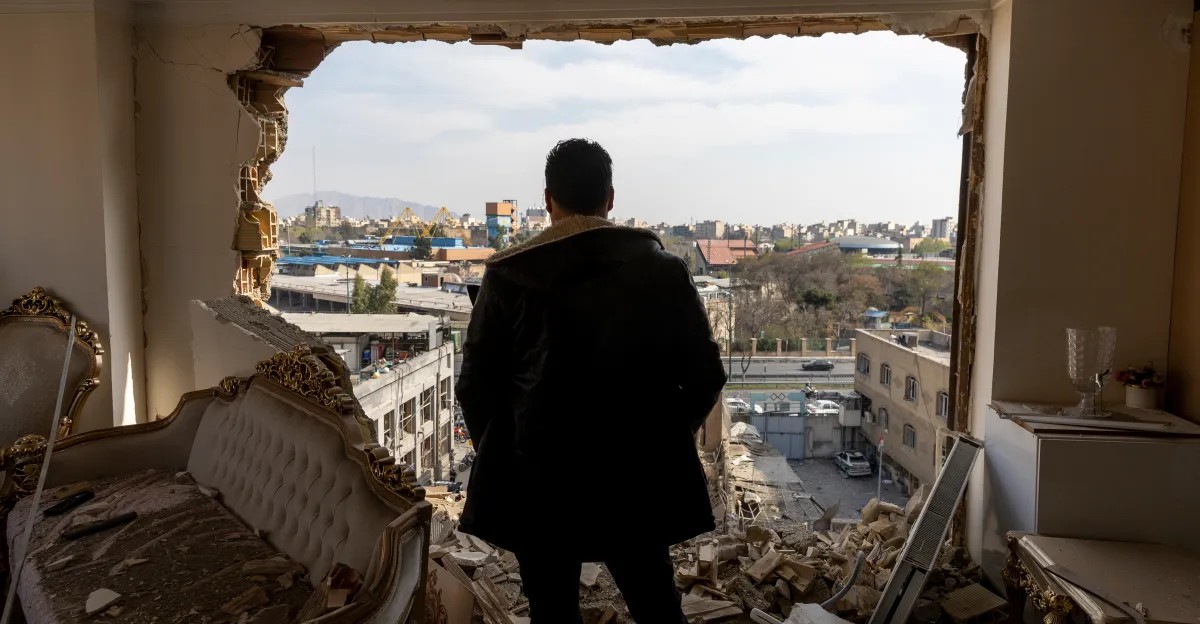
The conflict in Iran has entered its fourth week with no clear end in sight. The Pentagon is requesting $200 billion to sustain the operation, destabilizing the global economy while airstrikes intensify in densely populated Iranian cities. This article focuses on the lived experience within Iran — a perspective often obscured by media blackouts and escalating violence.
A Nation Under Siege
Since the attacks began, Iran has been under a near-total internet blackout, making accurate reporting from within the country nearly impossible. However, networks of Iranian citizens and diaspora groups are sharing experiences that paint a grim picture of daily life under bombardment and political repression.
Roya Rastegar, a producer and co-founder of the Iranian Diaspora Collective, is one of the few voices providing insight into the situation. Her sources on the ground report a brutal reality: communication is fragmented, unstable, and actively controlled by the regime. The blackout isn’t a technical failure, but a deliberate political tool to isolate 90 million Iranians from the outside world.
“Messages are coming out in bursts, not reliably,” Rastegar explains. “People use VPNs through friends of friends, sending voice notes before going offline again. Calls are monitored. Fear constrains every conversation.”
This isn’t just about physical danger; it’s about an information siege. Iranians lack real-time data on strikes, casualties, or even whether state propaganda is accurate. The demand from within the country is simple: restore the internet. The blackout isolates people psychologically as much as physically.
Daily Life in a Warzone
Despite the ongoing conflict, life continues in a fractured form. People attempt to work, study, and care for families under constant bombardment and surveillance. Basic necessities are increasingly scarce, with gasoline rationing and widespread business closures. Even those who were previously middle-class now struggle to afford essentials.
Nighttime is particularly brutal: explosions, planes overhead, and the ever-present anticipation of attack disrupt sleep. People run to windows or rooftops at every sound, unsure if it’s a strike or just another act of terror.
Streets in Tehran are deserted. Bakeries remain open but empty. The regime’s security apparatus — including plainclothes Basij officers — aggressively stops citizens, checking phones and making arrests. Many Iranians now fear the regime’s brutality more than the airstrikes themselves.
A Regime That Has Long Been at War With Its Own People
This conflict isn’t new for Iranians. The regime has waged a one-sided war against its own people for 47 years, disproportionately targeting women, minorities, and the poor. Some citizens report feeling anxious when the strikes stop, because the alternative—the survival of the Islamic Republic—is even more terrifying.
“The regime lost its legitimacy when it massacred tens of thousands of people,” Rastegar states. “Iranians have become so desperate that they see outside intervention as the only remaining path.”
The Shifting Mood Within Iran
Initial reactions to outside intervention were mixed, with some hoping for the regime’s fall. However, the mood has soured after civilian casualties, including a strike on a girls’ school that killed 168 people. Now, many are exhausted, grieving, and trapped in limbo.
Despite this, Iranians refuse to be silenced. Even in the face of state violence, citizens continue to protest and resist. One recent example is the defiance shown during Chaharshanbe Suri, an ancient fire ritual where people jumped over flames in the streets despite threats from the regime.
The Future Remains Unclear
The question now is what comes next. While there’s no consensus on a replacement for the current regime, a transitional council of anonymous leaders has reportedly made contact with the United Nations. Shirin Ebadi, a Nobel laureate, has been named head of a Transitional Justice Committee, and figures like Reza Pahlavi are advocating for democratic transition.
Meanwhile, a documentary crew is working with six young Iranian dancers who refuse to stop filming despite the risks. Their defiance embodies a larger sentiment: Iranians don’t just want to survive; they want to assert life, beauty, and agency in the face of annihilation.
The situation in Iran remains volatile. The future of the country hinges on whether the regime will fall, and if so, what will replace it. For now, millions live under siege, caught between bombs, surveillance, and a desperate hope for a better tomorrow.