Uzbekistan is making a strategic leap into high-tech manufacturing through a new partnership with ROBOTIS, a leading South Korean robotics firm. The agreement, signed between the UzElTechSanoat Association and ROBOTIS, aims to establish domestic production of humanoid robots, build specialized manufacturing infrastructure, and cultivate a workforce capable of managing advanced robotic systems.
This move is more than just an industrial agreement; it represents a fundamental shift in the country’s economic trajectory. By moving from consumer of technology to a producer of complex machinery,, Uzbekistan is attempting to secure a foothold in the global high-tech sector.
Building the Foundation: Education as an Industrial Driver
For a high-tech industry to succeed,, it requires more than just factories; it requires a steady pipeline of specialized talent. Uzbekistan is addressing this through a “bottom-up” approach, integrating robotics and coding into the education system at an early age.
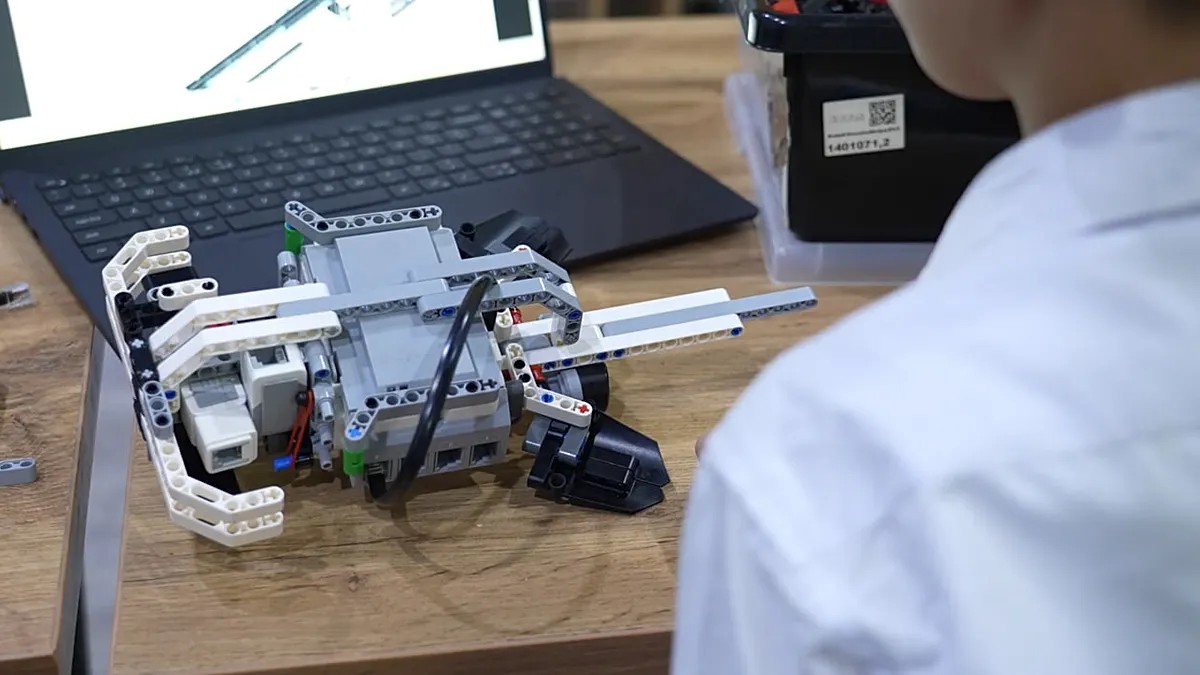
In specialized environments like the Robot Academy, children aged eight to fifteen are moving beyond theoretical learning to hands-on engineering. Using modular systems like the EVO-3 educational kits, students learn to:
– Assemble hardware: Building the physical structure of a machine.
– Write code: Using languages like Scratch and Python to create algorithms.
– Bridge the gap: Understanding how digital commands translate into physical, mechanical movement.
This hands-on training is critical. In modern manufacturing, the line between software engineering and mechanical assembly has blurred. By teaching students to control motors and respond to sensor inputs, these academies are teaching the fundamental principles of industrial automation.
The Digital Uzbekistan-2030 Strategy
The push for robotics is part of a larger national roadmap known as the Digital Uzbekistan-2030 strategy. The government is aggressively expanding IT education centers and specialized academies nationwide to meet the rising demand for digital literacy.
The goal is to transform the labor market. As seen in the ambitions of young students—who are currently learning Python with the intent to build websites or automate systems—the focus is on creating a generation of workers who are “future-proof.” This digital upskilling is intended to drive economic growth and ensure that the country’s workforce can compete in an increasingly automated global economy.
Connecting the Pipeline: From Students to Specialists
The partnership with ROBOTIS provides the missing link between classroom curiosity and industrial reality. The agreement specifically includes:
1. Specialized Training: Developing programs to turn students into professional robotics engineers, programmers, and technicians.
2. Infrastructure Development: Creating the physical environments necessary for high-precision robot manufacturing.
3. Technological Transfer: Leveraging South Korean expertise to establish a domestic innovation ecosystem.
“Programming helps develop their thinking, logic, and intellectual abilities,” notes teacher Navruz Shaydullayev, highlighting that the benefits of robotics education extend far beyond the machines themselves.
Conclusion
Uzbekistan is attempting to synchronize its educational evolution with its industrial ambitions. By training children in robotics today, the nation is preparing the specialized workforce required to manufacture the humanoid robots of tomorrow.