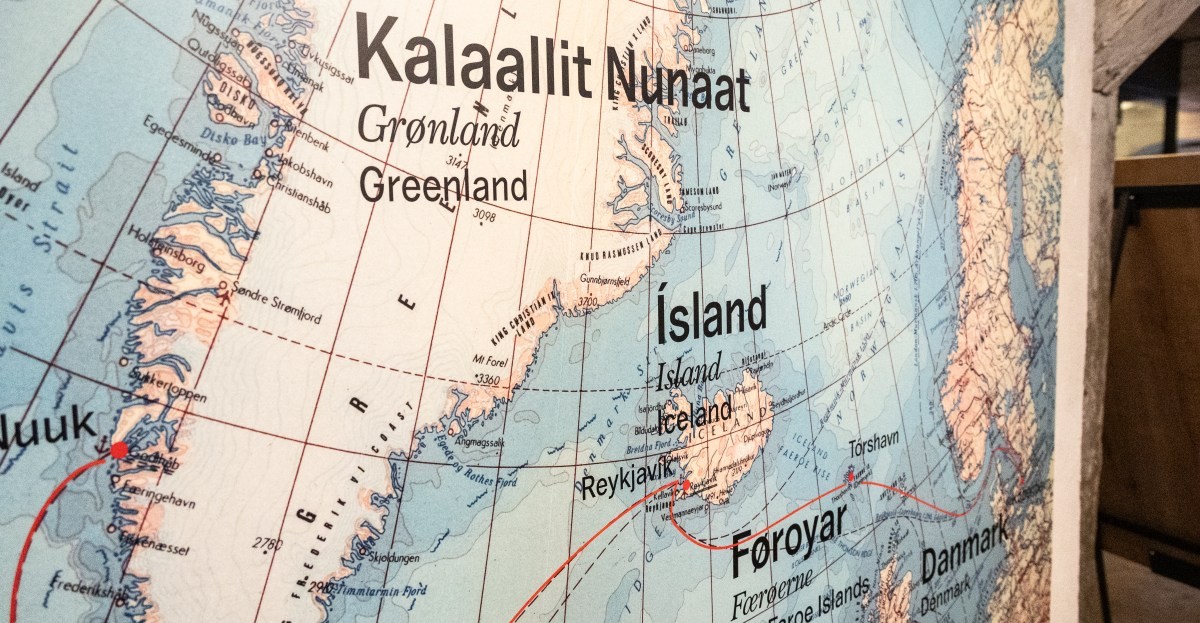
President Donald Trump is once again pursuing the acquisition of Greenland, this time through the appointment of Louisiana Governor Jeff Landry as a special envoy tasked with bringing the territory under US control. This renewed effort, far from a random obsession, reflects a broader and increasingly assertive foreign policy strategy centered on regional dominance and skepticism towards traditional allies.
The Renewed Push for Greenland
Trump’s interest in Greenland dates back to his first term, but recent actions suggest a more calculated approach. Landry’s appointment, despite his limited foreign policy experience, signals the administration’s intent to leverage unconventional diplomatic channels. As Trump himself stated, the move is framed as a matter of “national protection,” but underlying motivations reveal a deeper ambition to reshape the geopolitical landscape.
The Danish and Greenlandic governments have swiftly rejected the idea, citing international law and national sovereignty. However, the administration appears unfazed, with Trump openly discussing the potential use of force if necessary. This disregard for established norms highlights a willingness to challenge the current world order.
Beyond Minerals: A Strategic Play
While resource exploitation, particularly rare earth minerals currently dominated by China, remains a factor, the push for Greenland extends beyond economic interests. The administration’s latest National Security Strategy (NSS) emphasizes the “Trump corollary to the Monroe Doctrine,” aiming to exclude external powers from the Western Hemisphere.
Trump has repeatedly pointed to the presence of Russian and Chinese vessels in the Arctic, framing Greenland as a strategic necessity. Yet, the core issue isn’t simply access to the territory; it’s control. The administration views European governance, even in ostensibly allied nations like Denmark, as a potential impediment to US dominance.
A Neo-Royalist Worldview
According to political scientist Abraham Newman, Trump’s territorial ambitions reflect a “neo-royalist” worldview that rejects the principle of equal sovereignty among nations. The goal is not cooperation but dominance, asserting American superiority over smaller or less assertive states.
This mindset extends beyond Greenland, with similar rhetoric applied to Canada and other US neighbors. The administration has also shown contempt for European governments, questioning their reliability and even suggesting they cannot be trusted with nuclear weapons.
Undermining European Sovereignty
The NSS explicitly calls for supporting right-wing parties in Europe and encouraging countries to weaken ties with the European Union. Annexing Greenland, or at least controlling it, fits directly into this pattern. It demonstrates a willingness to dismantle existing alliances and exert direct influence over strategically important territories.
The appointment of Landry, a loyalist with no significant foreign policy background, further exemplifies this approach. The administration increasingly relies on informal networks and personal connections rather than traditional bureaucratic structures.
A Distillation of Trump’s Foreign Policy
Although the prospect of actually annexing Greenland remains remote, the underlying strategy is clear: to expand American control, exploit resources, and undermine European influence. This effort reflects a coherent, if unconventional, vision of US foreign policy under Trump.
The administration’s actions in Ukraine, Venezuela, and elsewhere demonstrate a willingness to blur the lines between commercial interests and security objectives. In this context, the push for Greenland isn’t an outlier but a central element of Trump’s broader agenda.