TCL’s QM9K is a high-end LED TV aiming to challenge OLED dominance by offering a brighter, potentially cheaper alternative. This model boasts exceptional brightness – the highest tested in CNET’s labs – but its performance is more nuanced than just raw luminosity. While the less expensive QM8K impressed with its overall balance, the pricier QM9K doesn’t quite match its predecessor in picture quality, particularly in shadow detail.
Brightness and Gaming Performance
The QM9K excels in well-lit rooms and enhances gaming visuals with its high brightness and fast response times. However, it exhibits slight motion blur during fast-paced games, unlike the smoother performance of OLED models. For dedicated gamers, the QM9K is a strong contender, though the LG G5 or Hisense U8Q offer superior picture quality at comparable or lower prices.
Design and Features
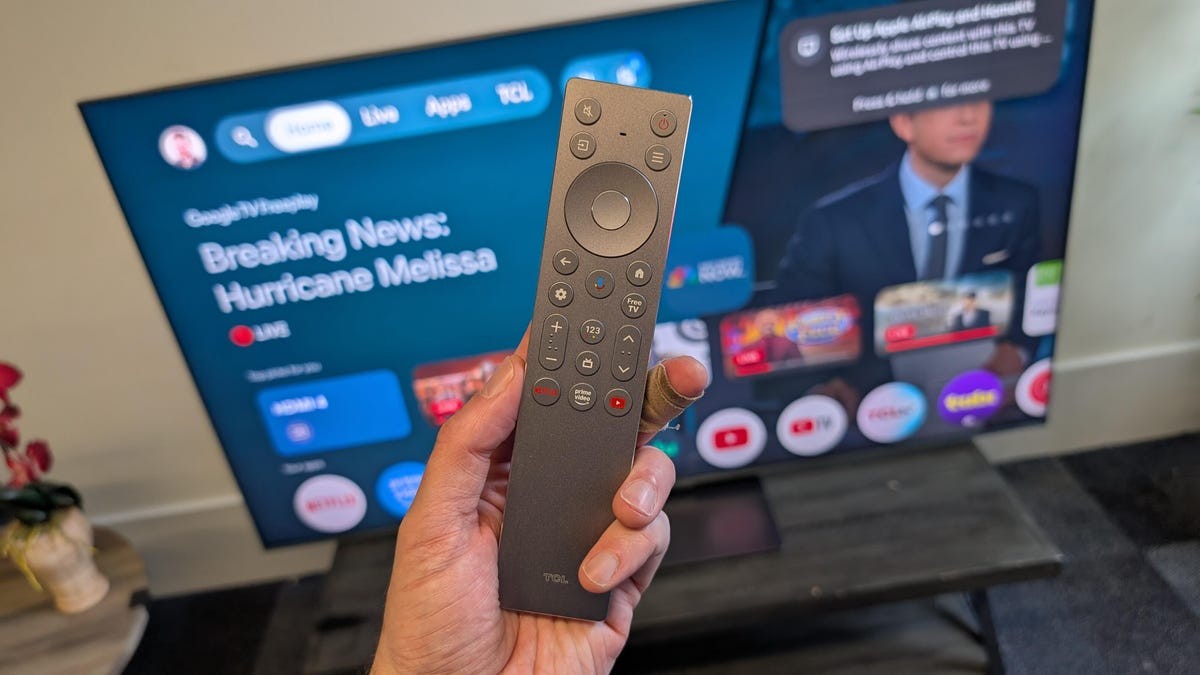
The QM9K’s design is functional but unremarkable for a flagship model. Its plastic-and-metal stand, though easy to assemble, feels less premium than some competitors. The inclusion of a backlit remote is a welcome addition, featuring a metal facade and dedicated HDMI controls.
The TV boasts 6,000 local dimming zones—up from the QM8K’s 5,000—enhancing contrast by independently adjusting brightness across the screen. TCL’s Halo Control system reduces backlight bleed, improving overall picture clarity. The QM9K supports Dolby Vision, HDR10+, HDR10, and HLG, alongside Dolby Atmos audio tuned by Bang & Olufsen.
Google TV and AI Integration
The QM9K runs Google TV, ensuring regular updates and integration with smart home ecosystems like Google Nest. It’s also the first TV to feature Google’s Gemini AI assistant. While generative AI on a TV is currently more of a novelty than a necessity, Gemini offers intuitive responses to queries like game times or show availability, even resuming paused content seamlessly.
Picture Quality Comparison
Compared to the Sony Bravia 8 II and LG G5 OLED, the QM9K delivers impressive brightness but lags in shadow detail. In scenes with extreme light and dark contrast, the LG OLED consistently outperformed the TCL and Sony in both contrast and highlight reproduction. The TCL also exhibited slightly muted colors compared to its competitors, with less saturation in certain hues.
In gaming, the QM9K’s brightness enhances visibility, but OLEDs provide superior black levels and dynamic range. The TCL showed minor motion blur in fast-paced games, while OLEDs remained smoother. The TV’s input lag was abnormally high in non-gaming mode (over half a second), but competitive (around 10ms) when Gaming mode was enabled.
Bright Room Performance
The QM9K’s ultra-bright screen (up to 4,500 nits in Vivid HDR mode) makes it highly watchable in well-lit environments. However, its glossy screen is more prone to reflections than competitors, potentially distracting in certain setups.
Sound Quality
The built-in speakers deliver Dolby Atmos effects but lack clarity and bass compared to dedicated sound systems. The LG G5 provided the most natural sound with better surround effects and deeper bass.
Calibration Notes
The QM9K requires calibration to achieve accurate color and greyscale. Out of the box, it exhibits poor color response and gamma issues, even in Filmmaker mode. Professional calibration software like Portrait Displays Calman is recommended for optimal picture quality.
In conclusion, the TCL QM9K delivers exceptional brightness but falls slightly short of OLED performance in overall picture quality. While a strong contender for gamers and those prioritizing brightness in well-lit rooms, the LG G5 or Hisense U8Q offer superior image accuracy and balance at competitive prices.