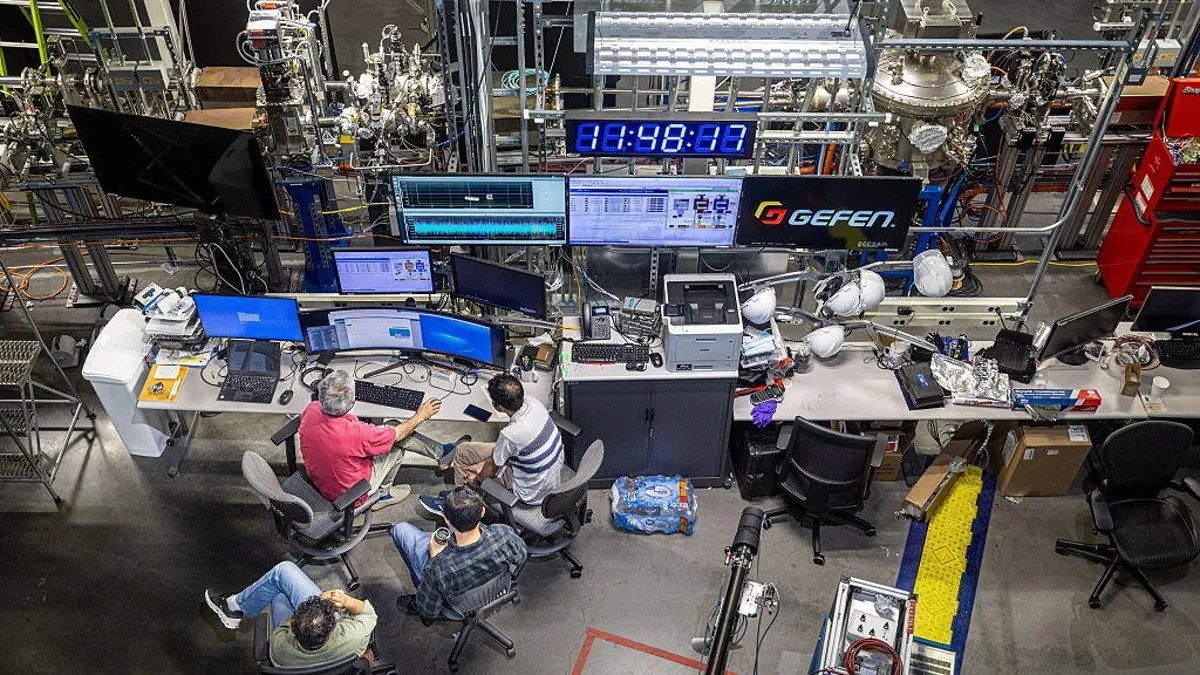
The US Department of Energy (DOE) is spearheading a major initiative, dubbed the “Genesis Mission,” to integrate artificial intelligence (AI) deeply into scientific research. This week’s announcements signal a broad collaboration between government labs, leading tech companies, and academic institutions, aiming to accelerate discoveries across multiple fields.
The Scope of Collaboration
Twenty-four AI labs and companies – including giants like OpenAI, Google DeepMind, Nvidia, Intel, and Amazon Web Services – have pledged resources to build a national platform for AI-enhanced science. This isn’t just about providing computing power; it’s about making frontier AI models directly accessible to researchers at all 17 national laboratories.
Key commitments include:
- OpenAI: Will facilitate collaboration between its models and DOE labs, leveraging supercomputers for cutting-edge research.
- Google DeepMind: Plans to provide early access to tools like AlphaEvolve (coding agent for material science), AlphaGenome (genetic research), and WeatherNext (weather forecasting).
- CoreWeave: Offering secure, high-performance AI cloud infrastructure to empower researchers.
Why This Matters: A New Era of Scientific Tools
Dario Gil, the DOE’s undersecretary for science, frames this as a fundamental shift. “We’re taking super seriously that this is the new scientific instrument for our age… just like astronomy got revolutionized with telescopes.” AI models now allow scientists to model complex systems, generate hypotheses, and run preliminary experiments with unprecedented speed and accuracy.
The implications are significant. AI can accelerate breakthroughs in areas like quantum computing, energy, drug discovery, and materials science. By automating parts of the research process, scientists can focus on high-level analysis and innovation.
Context: A Shift in Priorities
This push toward AI-driven science comes after a period of policy shifts under the previous administration. Some government funding for scientific research was cut or redirected, particularly for climate change studies. The Genesis Mission may be seen as a course correction, refocusing on innovation while aligning research with national priorities like energy independence and advanced technology development.
The fact that this is happening now, with such heavy private sector involvement, raises questions about the future of public science funding. Will AI become the dominant tool, potentially marginalizing traditional research methods? How will access be managed to ensure equitable participation across academia and smaller labs?
The Future of Discovery
The Genesis Mission represents a bold bet on AI’s ability to reshape the scientific landscape. By combining human ingenuity with machine intelligence, the US aims to maintain its lead in global innovation. If successful, this collaborative effort could usher in an era of faster, more efficient scientific progress – but its long-term impact on research structures and funding models remains to be seen.