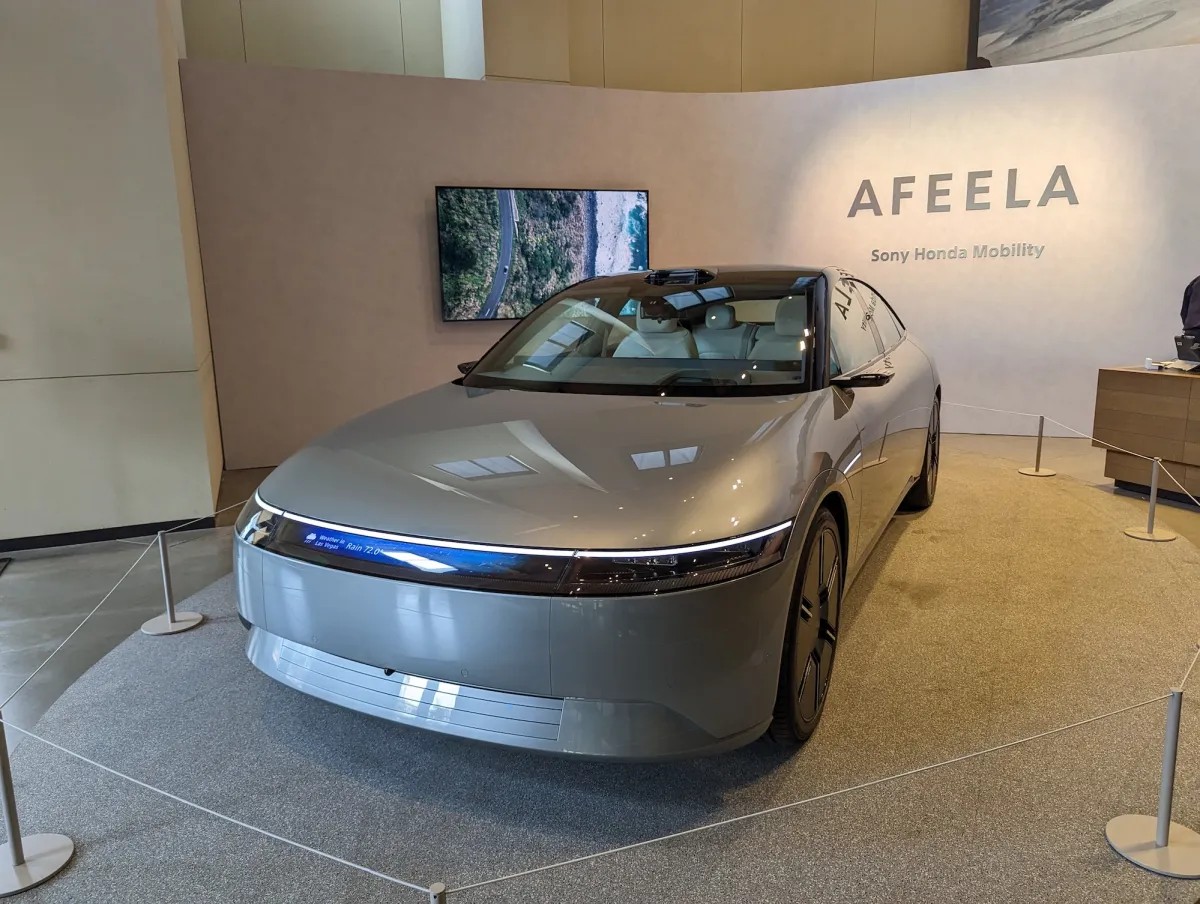
The ambitious collaboration between Sony and Honda to develop electric vehicles under the “Afeela” brand has ended, marking a significant setback for both companies’ foray into the automotive sector. The decision follows Honda’s recent announcement to cancel three planned EVs for the U.S. market, citing economic pressures and shifting market conditions.
Honda’s Strategic Shift and its Impact
Honda attributed its retreat to rising competition from Chinese EV manufacturers and the threat of increased tariffs under a potential second Trump administration. This abrupt change in strategy directly undermined Sony Honda Mobility (SHM), the joint venture, as it relied on Honda’s technology and manufacturing capabilities to bring the Afeela sedan and SUV to fruition. The planned Afeela 1 sedan, initially slated for release this year, carried a projected starting price of around $90,000.
A Failed Vision? From Prototype to Cancellation
Sony first signaled its automotive ambitions at the 2020 Consumer Electronics Show with the Vision-S concept vehicle. The prototype showcased Sony’s entertainment and sensor technologies, featuring an immersive dashboard display, advanced audio systems, and a comprehensive suite of sensors. While initially presented as a technology showcase, the vehicle gained unexpected attention, prompting Sony and Honda to formalize a partnership in 2022. The Afeela branding was introduced in 2023, but the venture ultimately failed to overcome the challenges of a rapidly evolving EV market.
The Tumultuous EV Landscape
The EV market has undergone a dramatic transformation since Sony’s initial entry. Government incentives have waned, while competition has intensified. Several EV startups have collapsed, and established automakers have delayed or canceled their own electric vehicle projects. This turbulent environment, combined with economic headwinds, made the Afeela’s luxury positioning increasingly untenable. The joint venture entered a market already saturated with high-end competitors like Rivian and Lucid Motors, making it difficult to establish a unique value proposition.
Uncertainty for the Future
The fate of SHM and its employees remains unclear. The company has stated that it will reassess its future direction in collaboration with Sony and Honda, but no concrete plans have been announced. The collapse of this venture underscores the immense difficulty of entering the automotive industry, even for well-funded conglomerates.
The Afeela project’s failure highlights the harsh realities of the EV market: shifting political landscapes, intense competition, and the need for sustainable, long-term strategies beyond initial hype. The experiment serves as a cautionary tale for other tech firms considering a move into automotive manufacturing.