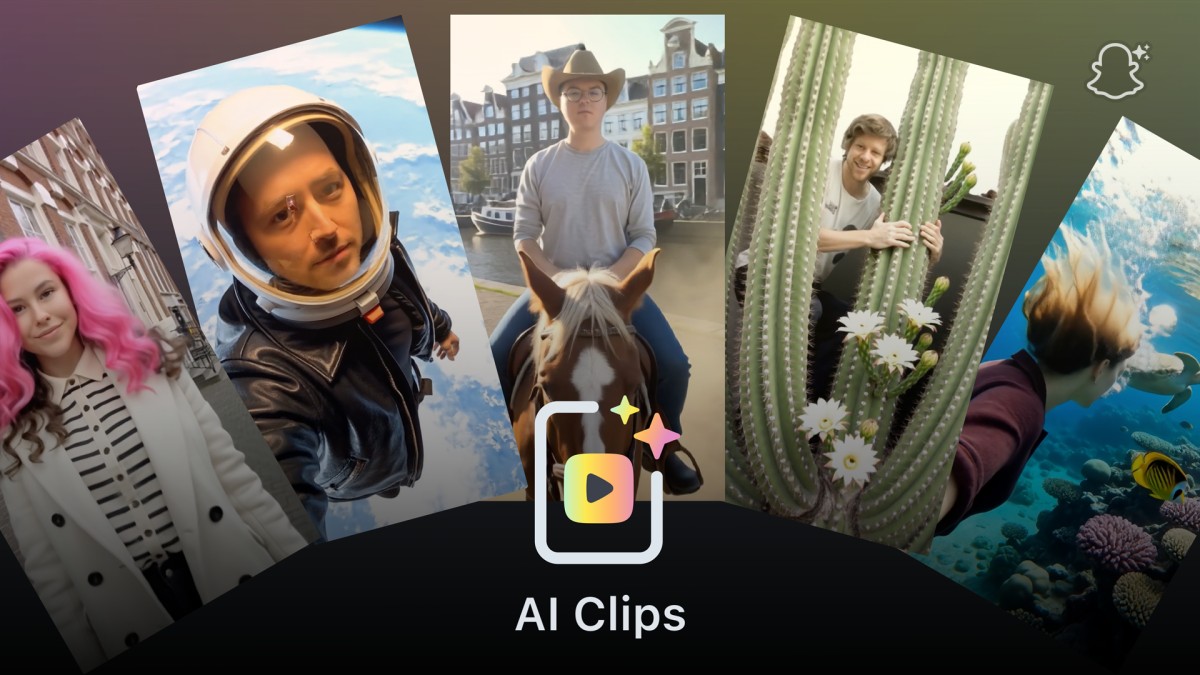
Snapchat has introduced a new feature called “AI Clips” within its Lens Studio platform, enabling creators to transform static photos into short, five-second videos using artificial intelligence. This development positions Snapchat as a leader in combining closed-prompt AI video generation with direct photo input, distribution, and monetization opportunities.
How AI Clips Work
Unlike general text-to-video tools, AI Clips operate within a controlled environment. Lens creators design the AI effect, and users then apply it to their own photos to generate the video. The process is designed for speed, allowing developers to publish these AI-powered Lenses in minutes without needing external software.
For example, a creator could design a Lens that turns a selfie into a simulated red carpet walk, offering users a quick and engaging AR experience.
Monetization and Access
AI Clips are exclusive to subscribers of Snapchat’s Lens+ service, which costs $8.99 per month. Lens+ provides access to premium Lenses and AR effects alongside the benefits of the standard Snapchat+ subscription. Crucially, Lens creators enrolled in Snapchat’s Lens+ Payouts program can directly earn revenue from the AI Clips they develop.
This monetization model is a key differentiator, as Snapchat claims no other platform currently combines closed-prompt AI video with direct distribution and financial incentives for creators.
Competition and Scale
Snapchat is not alone in this space; YouTube recently launched “Reimagine,” a similar feature that turns single YouTube Short frames into eight-second clips using user-provided photos. However, Snapchat’s integrated approach – combining the tool with its established creator network and monetization program – offers a unique advantage.
The timing of this launch coincides with Snapchat reporting nearly two trillion Snaps created in 2025, averaging 63,000 Snaps per second. This demonstrates the platform’s massive scale and potential for AI-driven engagement.
Snapchat’s AI Clips represent a strategic move to enhance user creativity, drive subscription revenue, and maintain its competitive edge in the rapidly evolving AR and AI landscape. The closed-prompt system ensures a degree of control over generated content, while the monetization model incentivizes developers to create compelling, commercially viable Lenses.