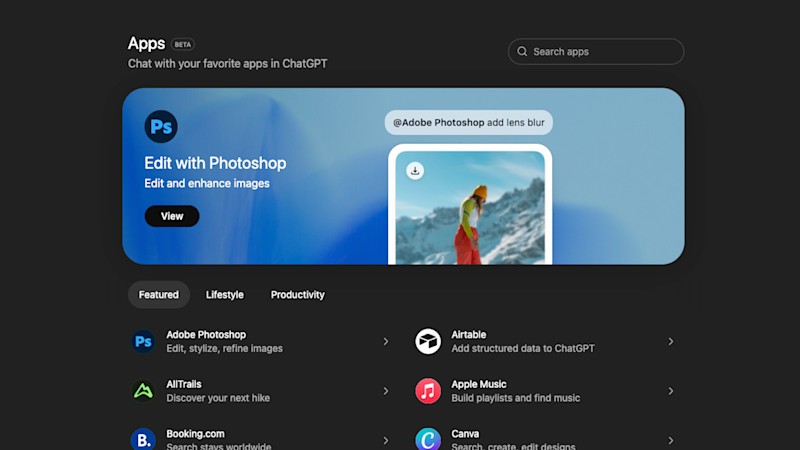
OpenAI has officially launched its App Directory, allowing third-party developers to submit applications directly integrable into ChatGPT. This move transforms the popular chatbot from a conversational AI into a growing software distribution platform, reaching over 800 million users. The key takeaway: ChatGPT is evolving into more than just a text-based interface – it’s becoming a hub for interactive tools and workflows.
What’s Changing?
For the first time, developers can create and submit apps that ChatGPT users can discover, install, and use seamlessly within their conversations. These apps are triggered by mentioning them with the “@” symbol or through a dedicated tools menu. The rollout begins in early 2026, following OpenAI’s review process to ensure compliance with its policies.
This is a significant expansion beyond OpenAI’s initial curated partner program, which included companies like Booking.com, Canva, and Spotify. The new system, powered by the open Model Context Protocol (MCP) originally developed by Anthropic, allows for far more dynamic interactions: apps can include buttons, maps, real-time data feeds, and other interactive elements.
Why This Matters
The shift from a limited pilot program to open submissions is critical because it unlocks the potential for rapid innovation and user-driven growth. While OpenAI previously experimented with a “GPT Store” (which continues to exist), the App Directory introduces a more interactive and versatile ecosystem. The old GPT Store was mostly text-based; now, ChatGPT apps can be full-fledged experiences.
The impact is clear: OpenAI is positioning itself as a central distribution point for AI-powered tools. This strategy mirrors the app store model pioneered by Apple and Google, but adapted for the conversational AI era.
Monetization and Restrictions
Currently, monetization options within ChatGPT apps are limited to linking out to external websites for physical goods purchases. Selling digital goods, subscriptions, or in-app services is not yet permitted, though OpenAI has indicated it is exploring future monetization models.
All apps must adhere to strict guidelines:
- Compliance with OpenAI’s usage policies
- Suitability for general audiences, including teens
- Clear privacy policies and support contact information
- No advertising, deceptive behavior, or prohibited commerce categories
Developers submit apps through the OpenAI Developer Platform, where they can track review status. Only one version of an app can be under review at a time.
Data Handling and Transparency
A key concern is how user data is handled when third-party apps connect to ChatGPT. OpenAI emphasizes transparency: users are informed about the types of data shared before connecting to an app, and developers are responsible for how they handle that data. Apps must minimize data collection, avoid requesting sensitive information, and clearly label any external data transfers.
However, OpenAI has not clarified whether it retains or logs the data exchanged between ChatGPT and third-party apps, nor how that data might be used for model training or internal analytics. This ambiguity raises privacy concerns and remains an open issue as the ecosystem expands.
The Bigger Picture
OpenAI’s move to open up ChatGPT to third-party apps marks a fundamental shift in its strategy. The platform is evolving from a standalone chatbot into a versatile software hub. Developers gain access to a massive user base, while users gain access to specialized tools directly within their conversations.
The infrastructure is now in place for an AI-native app ecosystem to flourish. OpenAI describes this as “just the beginning,” and the momentum suggests that ChatGPT will continue to reshape how users interact with AI-powered tools.