NVIDIA CEO Jensen Huang delivered a characteristically ambitious keynote at the company’s GTC event, outlining a future fueled by accelerating AI development – from gaming and robotics to orbital data centers. While the presentation was packed with futuristic visions, the immediate impact for consumers appears limited, overshadowed by the company’s need to justify its $4.4 trillion market cap.
The Core Message: AI is Accelerating
Huang insists AI isn’t a bubble but a rapidly expanding ecosystem. He showcased a timeline of recent breakthroughs, beginning with OpenAI’s ChatGPT in 2023 and moving through Anthropic’s Claude Code (now used internally at NVIDIA). The key shift, according to Huang, is from training large language models to deploying them in novel ways, which is where NVIDIA sees its next growth opportunity.
This matters because NVIDIA’s success depends on proving the long-term viability of AI beyond hype. A stable, expanding market for AI chips requires real-world applications, not just theoretical potential.
Practical Announcements: Gaming and Agents
The most concrete updates focused on two areas:
- DLSS 5: NVIDIA’s next-generation AI upscaling software, set to launch this fall, promises improved visual fidelity. However, the announcement was met with backlash from some gamers who felt it was unnecessary for already graphically strong titles like Resident Evil: Requiem.
- AI Agents: NVIDIA is doubling down on open-source AI agents, adding a security layer called Nemo Claw to address concerns about platforms like OpenClaw. The company also released an AI Agent Toolkit for developers, alongside its own complex reasoning model, Nemotron 3.
The push into AI agents is critical for NVIDIA as the market matures. Agents represent a new revenue stream beyond raw processing power, but their reliability remains a key challenge.
Beyond Earth: Space Data Centers and a Frozen Future
Huang’s vision extended beyond terrestrial applications, announcing plans for Vera Rubin Space-1, NVIDIA’s first orbital data center. While the timeline is unclear, the move signals an ambition to dominate AI infrastructure regardless of location.
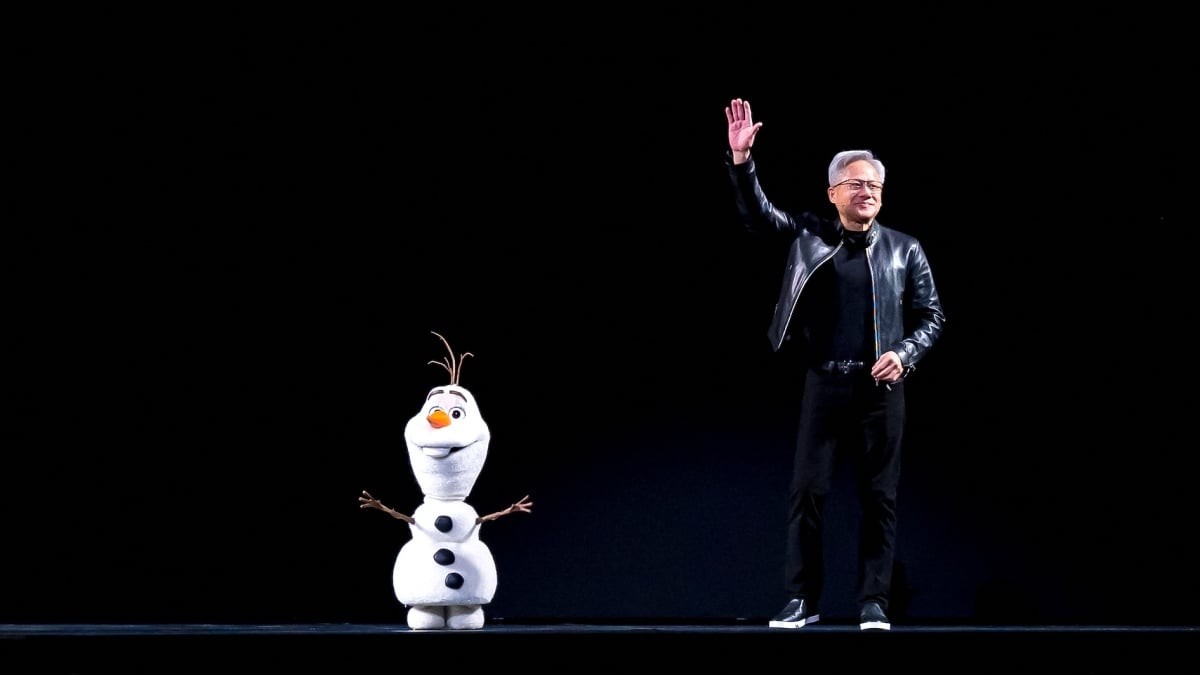
The keynote concluded with an awkward yet memorable demonstration: Huang conversing with a robot version of Olaf from Frozen. The interaction was stilted, highlighting the limitations of current AI in natural conversation.
“The future is not about simply building faster chips; it’s about creating ecosystems where AI seamlessly integrates into every facet of life.” – Jensen Huang, CEO, NVIDIA
Huang’s vision, whether realized or not, is clear: AI will reshape gaming, robotics, space exploration, and beyond. But the road ahead hinges on delivering practical value, not just grand promises.