The portable speaker market is booming, and in 2026, consumers have more options than ever. From rugged outdoor companions to premium home audio solutions, this guide breaks down the top contenders, analyzing their strengths, weaknesses, and where they fit in your life. The core trend? Incremental improvements with a focus on connectivity, battery life, and refined sound quality.
Sonos: The Seamless Ecosystem
Sonos Move 2: Sonos continues to dominate the premium portable space with the Move 2. It’s a straightforward upgrade over its predecessor, delivering improved sound thanks to a dual-tweeter design and extending battery life to a remarkable 24 hours. While the $449 price tag is steep (especially with a wireless charging dock), frequent discounts bring it down to a more palatable $350. Its key advantage? Seamless integration into existing Sonos systems, coupled with reliable Bluetooth connectivity for on-the-go use.
Sonos Roam 2: The Roam 2 addresses a key frustration with the original model: connectivity. The new version boasts dedicated Bluetooth pairing, eliminating the previous convoluted setup. At $180, it’s a more accessible entry point into the Sonos ecosystem, offering impressive sound for its size despite minimal acoustic changes.
JBL: Durability and Versatility
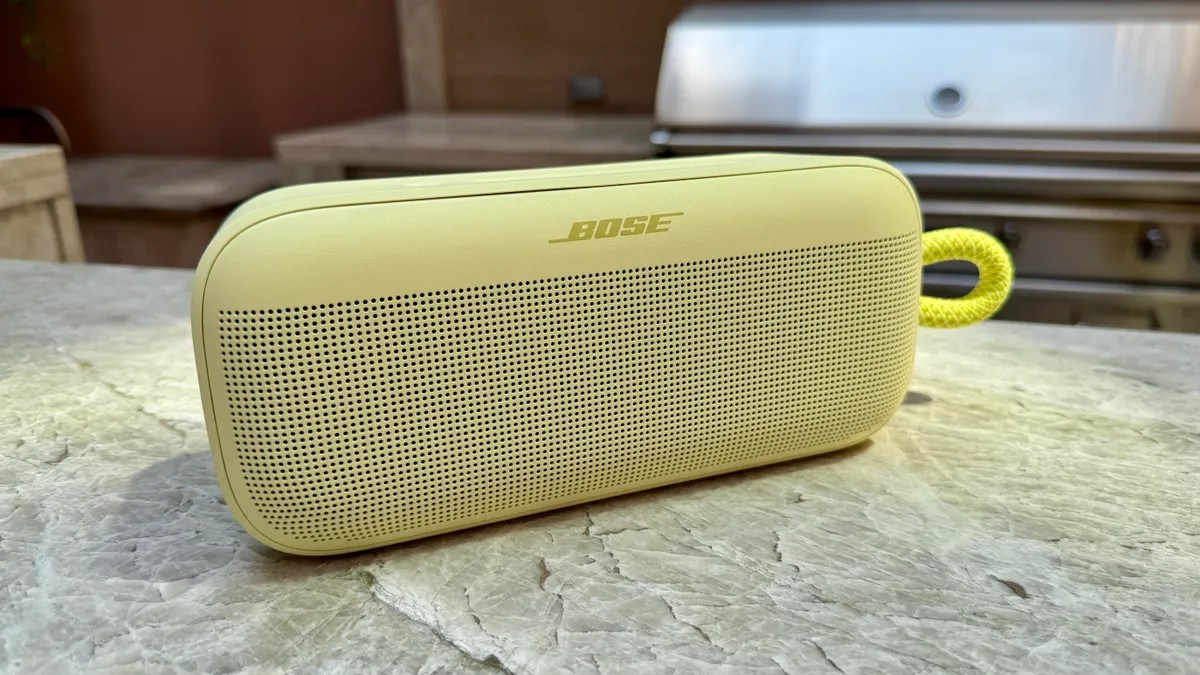
JBL Flip 7: JBL’s Flip line remains a favorite for its durability and portability. The Flip 7 ($150) introduces a Push-Lock accessory system for carabiners and loops, but the real improvements are internal: a refined woofer and “AI Sound Boost” that minimizes distortion at high volumes. While not flawless in this regard, it’s a step up from its predecessor and competes well with Bose’s SoundLink Flex.
JBL Charge 6: JBL’s Charge 6 is also on the market, but for those looking for the most bang for their buck, the older Charge 5 is being discounted. It’s still a very good Bluetooth speaker that offers good sound quality in a rugged design.
JBL Clip 4: The JBL Clip 4 has been superceded by the newer Clip 5, which features slightly better sound and a new carabiner design. But the Clip 4 is still a very good micro Bluetooth speaker and can be had at a discount.
JBL Pulse 5: The JBL Pulse 5 speaker has been improved with better sound quality and a more impressive 360-degree light show. It’s also IP67 dustproof and waterproof, and it offers up to 12 hours of battery at moderate volume levels.
Tribit: Value and Power
Tribit Stormbox Blast 2: Tribit continues to offer compelling alternatives. The Stormbox Blast 2 ($260) delivers powerful sound – 200W with an 80W subwoofer – rivaling more expensive models from JBL and Sony. Its upgraded design and microphone inputs for karaoke make it a versatile option for larger gatherings.
Tribit XSound Plus 2: The XSound Plus 2 is a successor to the similarly priced MaxSound Plus, offering slightly louder output and improved battery life (up to 24 hours at 50% volume). Its Bluetooth 5.3 and compatibility with Tribit’s app for multi-speaker pairing add value.
Tribit Stormbox Flow: Tribit’s StormBox Flow is another Bose SoundLink Flex knockoff for less that shares some similarities with the Soundcore Motion 300. The Tribit may sound slightly better than the Motion 300, edging it out for bass performance by a tad, but the Anker speaker wins on design. Like the Bose SoundLink Flex, the Tribit StormBox Flow can be laid down flat with its speaker firing up.
Tribit XSound Go: Despite being on the market for several years, the Tribit XSound Go remains one of the top Bluetooth speakers for the money. Besides sounding decent for streaming your favorite music and more, this affordable Bluetooth speaker is also fully waterproof.
Other Notable Contenders
LG Xboom Bounce (Core): LG’s collaboration with Will.i.am yields surprisingly well-tuned speakers. The Bounce ($200) provides fuller sound than the Grab, with a natural midrange that enhances vocals. The Bounce Core model offers the same performance at a lower price.
Anker Soundcore Motion X600: Anker delivers a premium experience with the Motion X600, featuring spatial audio and LDAC codec support. Its metal grille and carrying handle exude quality, while the five-driver array provides impressive sound for its size.
Anker Soundcore Motion 300: The Soundcore Motion 300 is Anker’s answer to Bose’s SoundLink Flex, offering similar size and features at a lower price ($80).
Sony ULT Field 1: Sony’s ULT Field 1 ($150) delivers a balanced sound profile that competes with JBL’s Flip 6. It sounds fuller and more balanced, with clarity and detail for its size.
Marshall Middleton: The Marshall Middleton ($200) offers a blend of quality sound and rugged design. It has equalizer controls on the speaker itself and is fully waterproof and dustproof with an IP67 rating.
Harman Kardon Luna: Harman Kardon’s Luna is a standout in the mini speaker category, offering clear, natural sound and punchy bass in a sleek design.
Sony LinkBuds Bluetooth Speaker: Sony’s LinkBuds Bluetooth speaker sounds surprisingly good for its tiny size. It’s easily among the best-sounding micro Bluetooth speakers out there and is equipped with a two-way speaker system featuring a dedicated tweeter and Sony’s X-Balanced Speaker unit (woofer).
Sony SRS-XB100: Sony’s smallest Bluetooth speaker was once again modestly upgraded in 2023, with a new Bluetooth chipset, slightly improved sound and speakerphone performance. This portable Bluetooth speaker is both dust- and waterproof with an IP67 certification and, like its predecessor (the SRS-XB13), it’s rated for 16 hours of battery life at moderate volume levels.
Anker Motion Boom: Anker’s Motion Boom is a good mini boom box for the money. Equipped with a handle and weighing a little over 4 pounds, the speaker reminds me of one of those giant flashlights or “floating lanterns” that were in vogue about 30 years ago.
UE Hyperboom: Ultimate Ears’ Boom Blueto speaker delivers loud and immersive sound, making it ideal for parties and outdoor gatherings.
Conclusion
The 2026 Bluetooth speaker market is defined by refinement rather than revolution. Sonos continues to set the standard for premium ecosystems, while JBL, Tribit, and Anker offer compelling value propositions. Consumers should prioritize their needs—portability, durability, sound quality, and connectivity—to make the best choice. The trend towards incremental improvements suggests that future iterations will focus on further enhancing battery life, seamless multi-device pairing, and more intelligent noise cancellation.