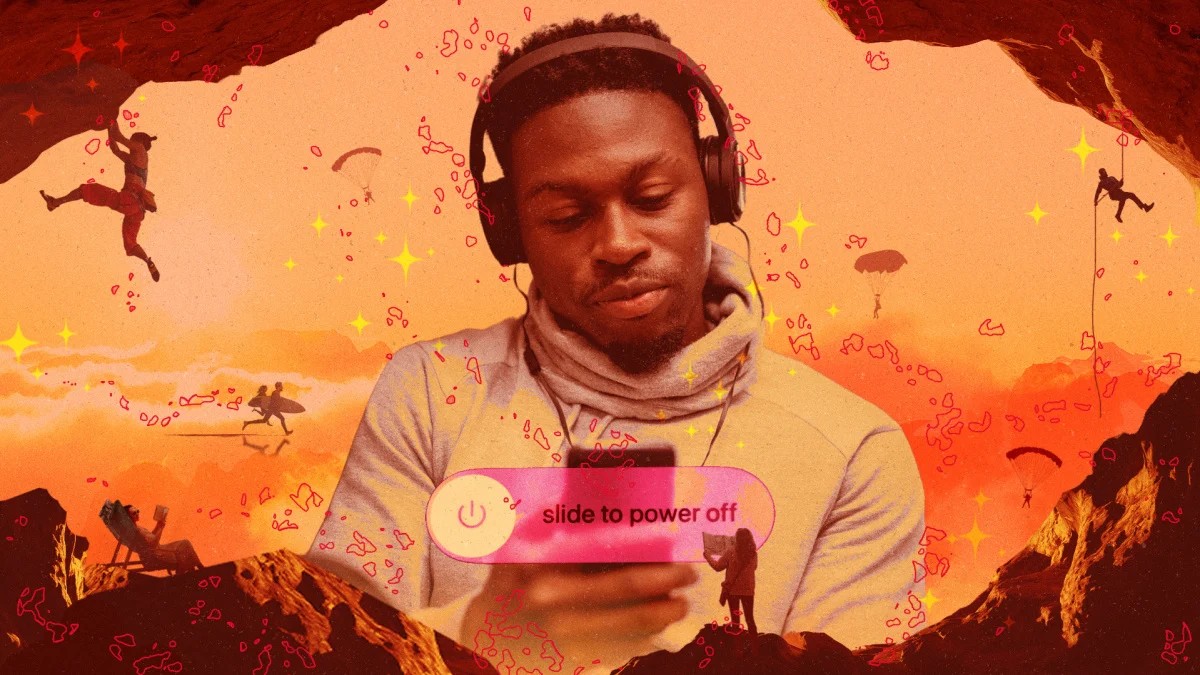
The concept of “friction-maxxing” – deliberately introducing difficulty into our tech-saturated lives – has emerged as a counter-movement to the relentless pursuit of convenience. Coined by sociologist Kathryn Jezer-Morton, this approach isn’t about suffering for suffering’s sake, but rather about reclaiming agency and fulfillment by embracing effort. In a world designed to eliminate obstacles, friction-maxxing is a deliberate choice to add them back in.
The Problem with Seamlessness
For decades, technology has aimed to reduce friction. Devices are easier to use, services are designed for instant gratification, and algorithms anticipate our needs before we even voice them. While this has undeniable benefits, it has also created a culture of passive consumption where meaningful engagement is replaced by mindless scrolling. The irony is that the very tools meant to liberate us have instead made us dependent and disengaged.
Jezer-Morton’s initial observation was simple: our modern world makes it too easy to avoid discomfort. Reading, walking, thinking, interacting with strangers – all require effort, but these are precisely the experiences that ground us in reality. The trend of optimizing away every inconvenience has left many feeling hollow despite constant connectivity.
How Friction-Maxxing Works in Practice
The core idea isn’t about extreme deprivation. It’s about making conscious choices that require more effort. This could mean:
- Shopping at a grocery store instead of ordering delivery.
- Hosting spontaneous gatherings instead of relying on curated social events.
- Taking handwritten notes instead of typing on a keyboard.
- Walking without GPS, forcing your brain to build its own spatial map.
- Choosing a book over short-form video content.
The goal isn’t to punish yourself, but to reintroduce challenges that stimulate cognitive engagement and real-world interaction. The discomfort is the point: it’s a reminder that you are doing something, not just passively consuming.
The Science Behind It
Dr. Gloria Mark, a professor of informatics at the University of California at Irvine, explains that this isn’t just philosophical. Our brains thrive on effort. “Depth of processing” – the cognitive work required to understand and retain information – is significantly higher when we engage with activities that require sustained attention. Reading a physical book, for example, forces you to interpret meaning, while scrolling through social media offers instant gratification with minimal mental exertion.
The key is to choose friction deliberately, not randomly. A meditation teacher, Jay Vidyarthi, warns against turning it into a self-flagellation exercise. The goal isn’t to make life harder for the sake of it, but to recognize the value of effort in fostering genuine fulfillment.
Beyond Tech: Friction in Relationships
Friction-maxxing extends beyond digital habits. The habit of checking work email while with family, for example, can be broken by physically removing the app from your phone and replacing it with one that supports mindfulness. This forces a conscious decision to engage with the present moment instead of escaping into productivity.
The deeper point is that friction isn’t just about resisting convenience; it’s about reaffirming your connection to humanity. In a world obsessed with optimization, choosing effort is a radical act of self-assertion.
The Takeaway
Friction-maxxing isn’t a prescriptive checklist, but an invitation to re-evaluate your relationship with technology and with life itself. By intentionally introducing more effort into your daily routines, you can resist the allure of frictionless living and rediscover the satisfaction of genuinely engaging with the world around you. The ultimate goal is not to eliminate convenience, but to choose when to resist it in favor of richer, more meaningful experiences.