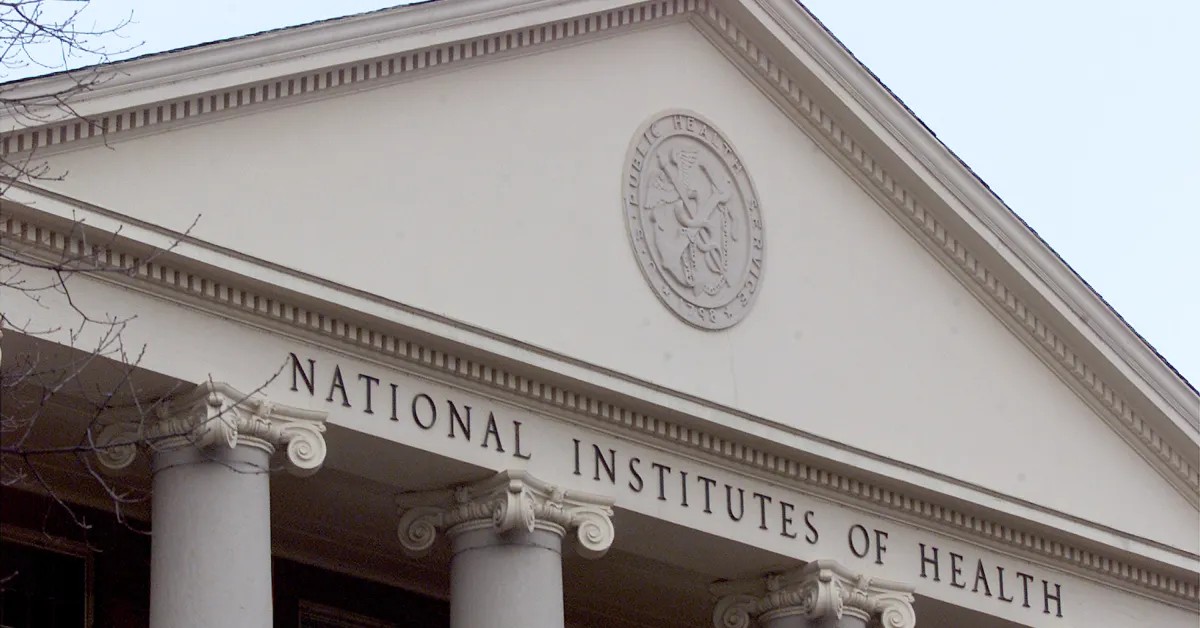
The United States government dramatically reduced funding for critical medical research in recent years, impacting progress against diseases like cancer, Alzheimer’s, and mental illness. While medical advances in the past decades relied heavily on sustained federal investment, new data reveals a sharp decline in grants awarded for potentially life-saving studies. This isn’t just an abstract budgetary issue; it directly affects the pace of discovery and innovation in healthcare.
The Scale of the Cuts
New data from the National Institutes of Health (NIH) shows a significant contraction in research funding. Grants for Alzheimer’s and aging research were nearly halved, dropping from 369 in 2024 to just 177 in 2025. Mental health research faced a 47% decrease, and cancer research grants fell by 23% despite rising cancer rates among younger adults. Overall, NIH funding for new research projects plummeted from roughly 5,000 in 2024 to approximately 3,900 in 2025.
Experts describe the situation as unprecedented. Jeremy Berg, a former director of one of NIH’s largest institutes, stated this is “the worst year I’ve ever seen, probably going back to the 1980s.” The cuts exacerbate an existing strain on the research system, where competition for limited funds already stifled unconventional ideas.
Policy Changes and Funding Mechanisms
The primary driver of these cuts is a recent White House Office of Management and Budget policy requiring NIH to pay the full cost of approved grants upfront. Previously, NIH funded grants year by year, allowing for more projects with a given budget. Now, multi-year grants must be fully paid at the outset, drastically reducing the number of new projects funded.
Michael Lauer, who oversaw NIH grant-making for nearly a decade, explained the effect bluntly: “Instead of funding five grants, you now only fund one… four other grants that would’ve been funded don’t get funded.” This single change alone is estimated to have eliminated roughly 1,000 new research initiatives.
Additionally, the Trump administration terminated thousands of existing grants, with the leftover money reverting to the US Treasury instead of being reinvested in research. Approximately $500 million was lost this way. On top of this, grant applications increased by 12% in 2025, further intensifying competition for dwindling funds.
The Impact on Innovation
Reducing funding doesn’t just mean fewer projects get started; it fundamentally alters the type of research that survives. Nobel laureate Philippe Aghion’s work demonstrates that excessive competition stifles innovation, favoring conservative science over high-risk, potentially transformative ideas.
Exploratory research, such as the recent UK study linking shingles vaccines to reduced dementia risk, may struggle to secure funding under these conditions. Even groundbreaking researchers like Katalin Karikó, whose mRNA work underpins the Covid-19 vaccines, faced repeated grant rejections before her breakthroughs.
Long-Term Consequences
The cuts are not just short-term setbacks. Researchers are leaving the field, relocating to other countries, or abandoning science altogether. These losses are likely permanent, as experts note that talent lost is unlikely to return.
Early signs indicate that 2026 may be even worse, with the White House delaying the release of approved NIH funding and making significantly fewer new awards than usual. The true cost of this funding crisis will be the discoveries never made—the “beautiful island of incredibly important stuff” that researchers may never reach.
The current trajectory poses a serious threat to medical progress, hindering the development of treatments and cures for some of the most pressing health challenges facing society.