Grammarly, the well-known writing assistance platform, is undergoing a major transformation. The company announced Wednesday it will now operate under the new brand name Superhuman, signaling a broader strategic pivot toward an all-encompassing AI productivity suite. This rebrand isn’t merely cosmetic; it reflects a fundamental change in how the company envisions its role in the workplace.
From Writing Tool to AI Platform
Founded in 2009, Grammarly grew to serve over 40 million users by focusing on grammar and writing improvement. In recent years, it expanded its portfolio through acquisitions, including the collaborative workspace platform Coda and the premium email service Superhuman Mail. The rebranding consolidates these brands under a single identity, aiming to position Superhuman as an AI-native platform that integrates seamlessly into existing workflows.
This is a key move. Many AI tools are still siloed, requiring users to consciously switch between applications. Superhuman is attempting to embed AI directly into how people already work, rather than forcing adaptation.
Introducing Superhuman Go: Contextual AI Assistance
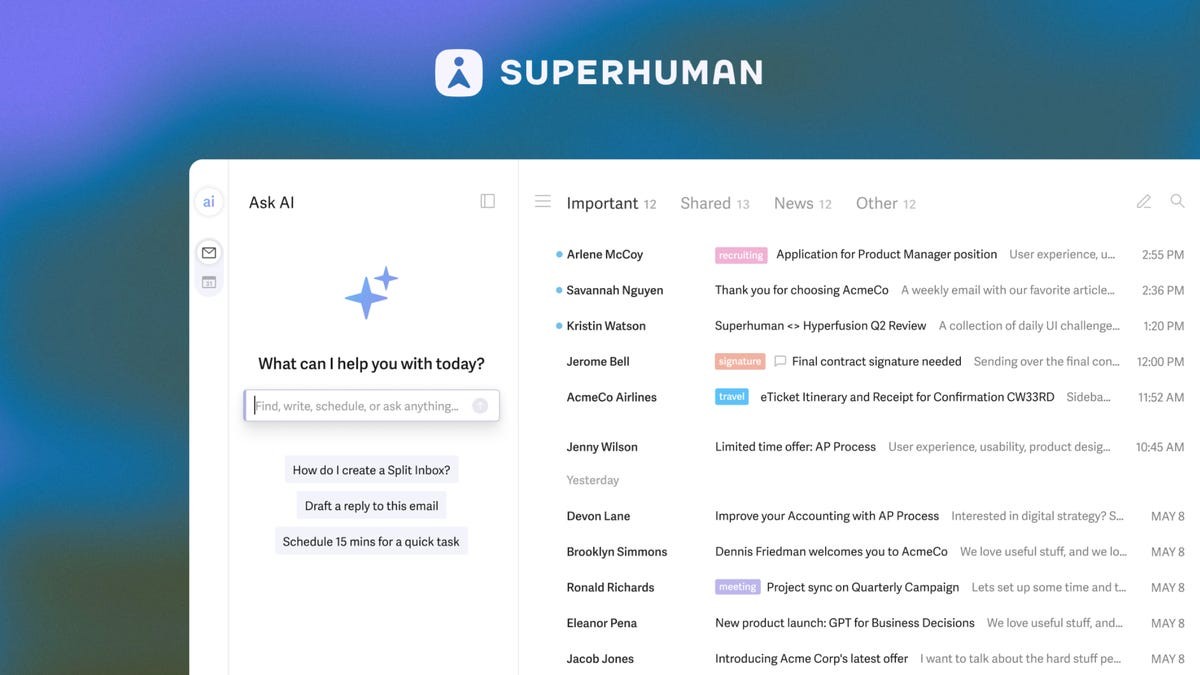
At the heart of the rebrand is the launch of Superhuman Go, an AI assistant designed to operate across multiple applications. Unlike standalone AI tools, Go aims to proactively provide relevant information and automate tasks within the tools users already rely on. For example, it can pull account details from a CRM while drafting an email, summarize meeting notes, or automatically file bug reports for engineering teams.
Go connects to over 100 apps, including major platforms like Google Workspace, Microsoft Outlook, Jira, and Confluence. Its functionality relies on “agents” – small, specialized AI modules trained for specific tasks such as summarizing data or retrieving information. This is a smart way to avoid building a monolithic AI system; instead, it leverages targeted AI for specific needs.
A Unified Suite with an Agent Store
The Superhuman suite now combines Grammarly’s core writing features, Coda’s collaborative workspace, and Superhuman Mail’s inbox tools into a single offering. Combined with Go, the aim is to create a more fluid experience across writing, communication, and project management.
Superhuman is also launching an Agent Store, featuring both in-house and partner-developed AI agents. Early partners include Common Room, Fireflies, Latimer, and others. The company plans to open this ecosystem further through an Agents SDK, enabling third-party developers to create their own connected AI agents. This suggests a long-term vision of a platform where AI tools are modular and extendable.
A Free Trial Period
The Superhuman suite, including the Go assistant and AI agent network, is now available to paying users via Chrome and Edge extensions. Mac and Windows versions are planned. Importantly, all Go features will remain free to try until February 1, 2026, giving users ample time to evaluate its value before subscription requirements kick in.
In conclusion, Grammarly’s rebranding as Superhuman represents a strategic bet on the future of AI as an invisible, integrated part of the workplace. By combining writing tools, workspace features, and contextual AI assistance, the company aims to provide a unified productivity experience that adapts to users rather than the other way around. The success of this strategy will depend on its ability to deliver tangible value without disrupting established workflows.