Bad Bunny’s Super Bowl halftime performance was more than a show; it was a carefully constructed cultural statement about Puerto Rico’s history and identity. While some viewers missed the depth of the symbolism, the performance was packed with references to the island’s past, present, and its place in the Americas.
A Visual History of Puerto Rico
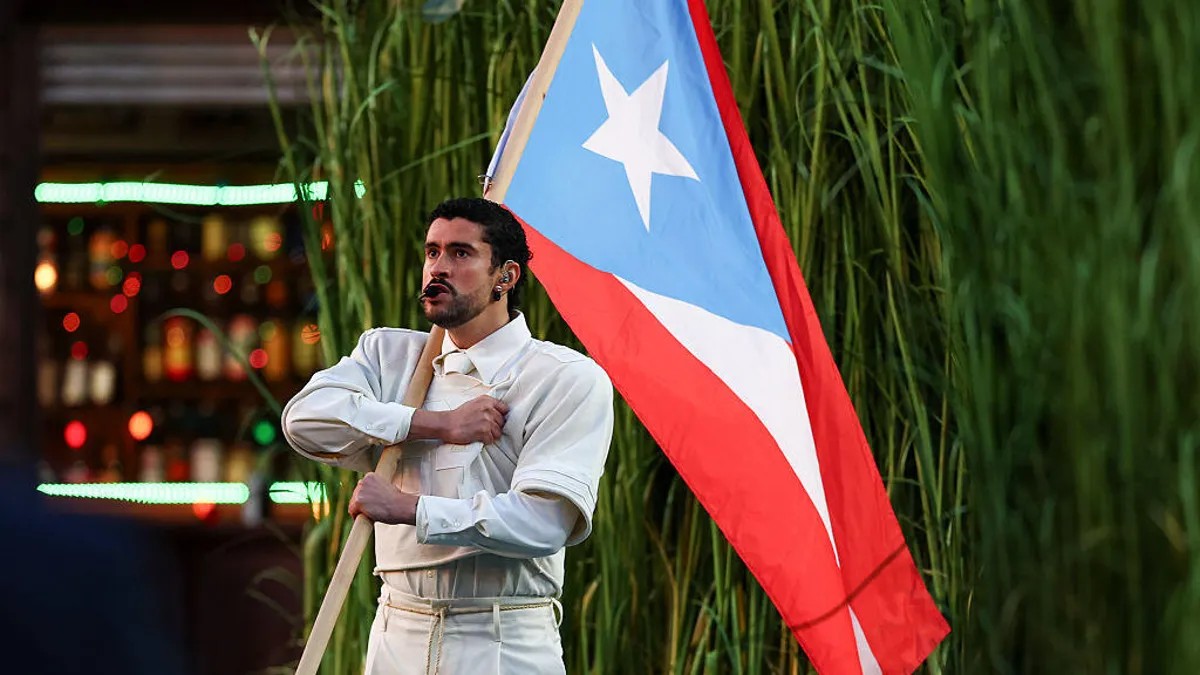
The performance began with Bad Bunny walking through a field mimicking a sugar cane plantation. This isn’t random: sugar cane is central to Puerto Rico’s colonial history, first under Spanish rule and then as a U.S. territory. The island’s economy was built on exploiting its resources and labor, a legacy Bad Bunny made visible.
The set also featured scenes of everyday Puerto Rican life, like men playing dominoes and boxing nods to local champion Tito Trinidad. This wasn’t just background scenery; it was a deliberate showcase of the culture.
Latino Unity on Display
Bad Bunny brought several prominent Latino artists onto the stage, including Pedro Pascal, Cardi B, Karol G, and Young Miko. Their presence wasn’t accidental. It represented a welcoming gesture to Latinos across the Americas, effectively turning the performance into a pan-Latin celebration.
“El Apagón”: A Stark Reminder of Reality
The song “El Apagón” (The Blackout) was performed with dancers climbing electric poles, with transformers visibly exploding. This wasn’t just dramatic staging; it was a direct reference to Puerto Rico’s chronic power outages, caused by aging infrastructure and extreme weather. The visual served as a harsh reminder of the island’s ongoing struggles.
A Real Wedding in the Middle of the Show
In one of the most striking moments, Bad Bunny included a real couple getting married on stage. The wedding, complete with a child asleep on chairs (a common sight at late-night Latino parties), was a nod to the joy and resilience of Puerto Rican celebrations. The artist reportedly invited the couple to get married during his performance, turning a personal moment into a cultural symbol.
“Lo Que Le Pasó a Hawaii”: A Commentary on Colonialism
When Ricky Martin joined Bad Bunny to sing “Lo Que Le Pasó a Hawaii” (What Happened to Hawaii), the moment carried significant weight. The song draws parallels between the exploitation of Pacific Islands and the U.S.’s relationship with Puerto Rico. Martin’s presence highlighted how Puerto Rican artists can now assert their culture on a global stage, after years of navigating mainstream success by assimilating into American culture.
Passing the Torch: A Grammy for the Next Generation
Bad Bunny handing a Grammy to a young boy was a symbolic gesture. Some interpret it as a reference to Liam Ramos, a child previously taken by ICE. Others see it as Bad Bunny passing the torch to the next generation. Regardless, the act symbolized empowerment and the potential for future success.
Celebrating Diaspora and Love
Bad Bunny’s performance ended with him saying “God bless America” while dancers carried flags from across the Americas. The phrase, traditionally tied to U.S. patriotism, was deliberately ironic. His message: “Together, we are America.” The show culminated in a call for unity, reinforcing the idea that love is more powerful than hate.
The performance was a masterclass in storytelling, meticulously crafted to celebrate Puerto Rican identity. It wasn’t just entertainment; it was a statement that resonated deeply with the diaspora, making them feel seen and celebrated.