


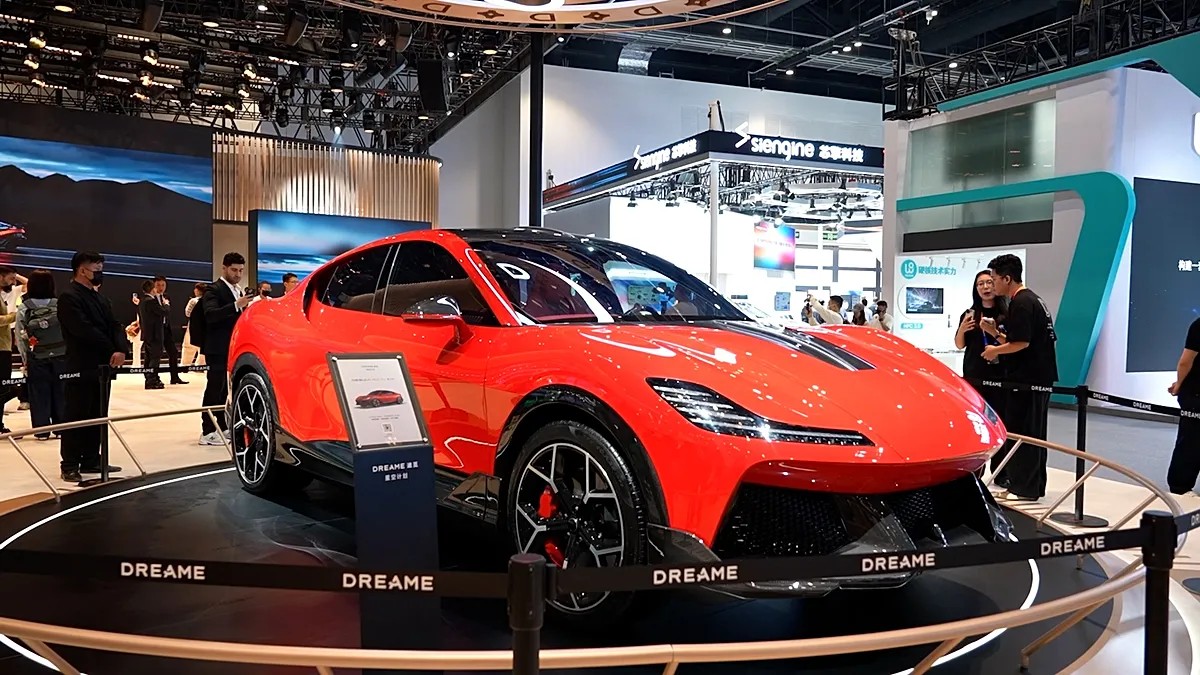
The scale of Auto China 2026 in Beijing has reached unprecedented proportions. Spanning two massive venues and covering a record 380,000 square meters, the event serves as a high-stakes battlefield where traditional automotive manufacturing meets the rapid evolution of artificial intelligence and software.
Under the theme “Lead the Era, Intelligent Future,” the exhibition has moved beyond showcasing mere transportation. It is now a demonstration of how China is positioning itself as the global leader in electrification and vehicle intelligence.
A Massive Showcase of Innovation
The sheer volume of technology on display is staggering. The 10-day event features:
– Over 1,450 vehicles in attendance.
– 181 world premieres.
– 71 concept cars pushing the boundaries of design and function.
While global giants like BMW, Mercedes-Benz, Audi, Toyota, Volvo, and Ford maintained a strong presence with flagship models, the narrative of the show was clearly driven by Chinese domestic brands.
The Rise of the Chinese Giants
The exhibition floor highlighted the sophisticated multi-brand strategies adopted by major Chinese players:
- BYD: Arrived with its full ecosystem, including the Dynasty, Denza, Yangwang, and Fangchengbao marques, while showcasing proprietary “Flash Charge” and “Sky Eye” technologies.
- Geely: Utilized a semi-exclusive hall to present its diverse portfolio—Zeekr, Lynk & Co, Geely Galaxy, and China Star—while debuting its All-Domain AI 2.0 and advanced safety systems.
- Chery: Demonstrated scale by grouping iCAR, EXEED, Jetour, and Zongheng, unveiling new models like the EXEED EX7 and the rugged Weilin R08 PRO pickup.
- Xiaomi: Cemented its status as a tech-driven disruptor by showcasing its production lineup (SU7, YU7, and SU7 Ultra) and debuting the Vision Gran Turismo concept, signaling that the future of car design is being heavily influenced by the consumer electronics sector.
- Roewe: Focused on the intersection of AI and mobility with its “Jiayue” product series, developed in collaboration with Volcengine.
The European Connection: A Growing Market Threat
The developments in Beijing have direct implications for the European automotive industry. China has transitioned from a manufacturing hub to a dominant exporter, leveraging unparalleled expertise in battery technology, software integration, and connected services.
The impact is already visible. According to Georg Mrusek, an automotive expert at Horváth, Chinese passenger cars have already secured a market share of over 10% in key European regions like Norway, the UK, and Italy. Within the Battery Electric Vehicle (BEV) segment specifically, Chinese brands hold roughly 14% of the European market.
“Every second European consumer is open to buying a Chinese car as their next vehicle,” notes Mrusek.
Market Projections:
– Short-term (4–5 years): Chinese market share in Europe is expected to rise to 15–25%.
– Long-term (10 years): If Chinese brands successfully navigate regulatory hurdles and establish robust after-sales networks, they could capture over 30% of the European market.
From Hardware to Ecosystems
Perhaps the most significant takeaway from Auto China 2026 is a fundamental shift in what a “car” actually is. The industry is moving away from pure mechanical engineering toward integrated digital platforms.
As noted by industry experts, the modern vehicle is increasingly becoming a mobile technology hub that connects various aspects of a user’s digital life through AI and seamless services. For legacy manufacturers, the challenge is no longer just about building a better engine or a more efficient battery; it is about competing with a software-first approach that integrates the car into a broader technological ecosystem.
Conclusion
Auto China 2026 signals a turning point where Chinese automakers are no longer just competitors in price, but leaders in the digital and intelligent transformation of the automotive industry. For the global market, particularly Europe, this represents an era of intensified competition centered on software, AI, and integrated digital lifestyles.


