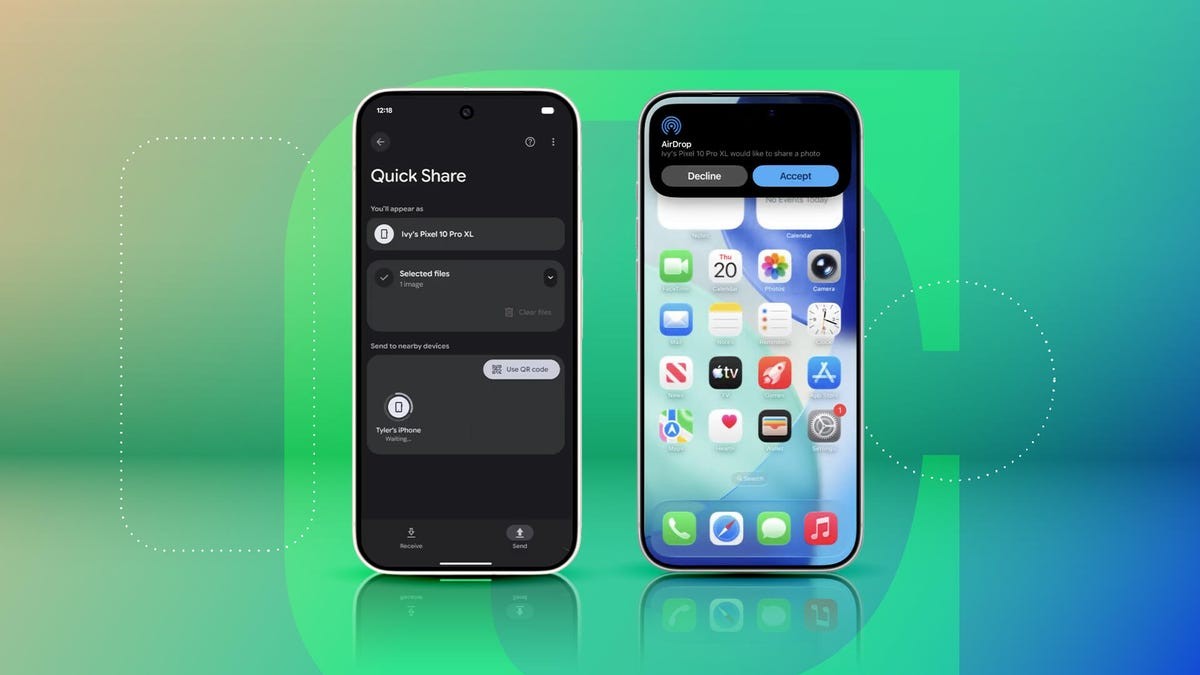
Google’s Quick Share feature now works with Apple’s AirDrop, bridging a long-standing gap between Android and iOS file sharing. This compatibility, rolling out to Pixel 10 devices, allows users to transfer files between the two ecosystems without relying on third-party apps or workarounds. The move highlights Google’s continued effort to improve interoperability despite Apple’s historically closed approach.
How the New Feature Works
Currently, the integration functions through AirDrop’s “Everyone” mode, meaning iOS users must temporarily adjust their settings to allow file transfers from unknown devices. This involves changing the default AirDrop visibility from “Contacts Only” to “Everyone for 10 Minutes.” While not the most seamless experience, it represents a functional workaround for direct peer-to-peer sharing.
Initial tests by some users encountered issues with device discovery, but updating the Quick Share extension via the Google Play Store and restarting the Pixel 10 device resolves this problem. Once updated, the feature operates as intended, allowing photos and other files to be shared between Android and iOS.
Why This Matters
The ability for Android and AirDrop to work together is significant because it addresses a long-standing consumer frustration. Historically, sharing files between Apple and Android has been clunky, often requiring email, cloud storage, or other intermediary services. This direct integration simplifies the process, making it more convenient for users who frequently collaborate across platforms.
This isn’t Google’s first attempt to push for cross-platform compatibility. The company previously lobbied Apple to adopt Rich Communication Services (RCS) as a replacement for SMS, a move that ultimately succeeded. The Quick Share integration follows a similar pattern: Google sidestepping Apple’s reluctance to improve interoperability.
Security and Future Plans
Google emphasizes that security was a primary focus during development. The company conducted both internal and external audits, collaborating with NetSPI, a cybersecurity firm, to ensure the integration doesn’t compromise user privacy. Testing shows the interoperability is “notably stronger” than other current industry implementations.
Google plans to expand compatibility to more devices and refine the user experience in future updates. The long-term goal appears to be seamless, secure file sharing across all major mobile platforms.
This integration, while incremental, signals a larger trend toward more open and collaborative mobile ecosystems. The more Android and iOS can work together, the better for consumers who don’t want to be locked into a single platform.