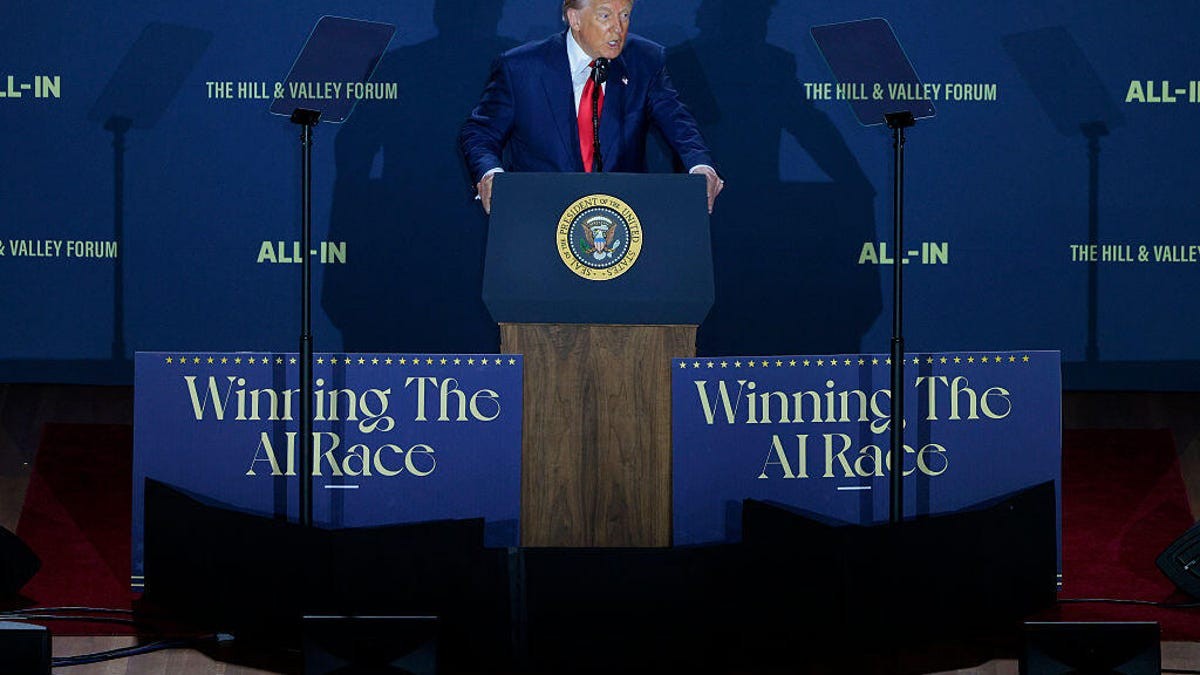
The White House released its new policy framework for regulating generative artificial intelligence Friday, signaling a clear intention for federal oversight—but one that critics say falls short of necessary protections. The plan, championed by Senator Marsha Blackburn’s “Trump America AI Act,” aims to streamline AI development under a single set of national rules, rather than allowing a patchwork of state regulations.
The Need for Regulation
The rapid advancement of AI has outpaced existing laws, leaving gaps in consumer privacy, copyright protection, and public safety. Concerns range from the potential for AI-driven job displacement to the spread of deepfakes and the exploitation of children through AI-generated content. The administration acknowledges these risks but proposes solutions that many experts consider insufficient.
Key Proposals: A Mixed Bag
The framework focuses on several key areas, but its approach is uneven.
- Children’s Protection: While acknowledging the dangers of AI-powered child sexual abuse material and the impact on teen mental health, the plan relies largely on existing laws—which critics argue are inadequate. States are given leeway to enact stricter regulations, creating a potential for inconsistency.
- Job Displacement: The White House suggests workforce training and youth development as a response to AI-driven job losses, rather than regulatory measures. This non-regulatory approach has been criticized as passive in the face of rapid automation.
- Infrastructure Concerns: The plan encourages streamlined data center construction, despite growing environmental concerns and strain on local electrical grids. While some tech companies have pledged to cover additional costs, enforcement remains voluntary.
- Copyright Disputes: The administration reaffirms its stance that AI companies can use copyrighted material for training without permission, citing fair use. This position faces ongoing legal challenges, but the framework suggests allowing lawsuits to proceed rather than intervening with new legislation.
Federal vs. State Control: A Central Debate
President Trump has repeatedly argued that federal dominance is essential to prevent the US from “losing” the AI race. A previous attempt to preempt state regulation failed in July, but the White House is doubling down on its claim to authority. Critics argue that this centralization overlooks the unique needs and concerns of individual states.
Industry and Advocacy Reactions
Tech industry groups generally support a unified national framework, while consumer advocates express skepticism. The Consumer Technology Association praised the plan, emphasizing the importance of AI innovation and free speech. However, organizations like the Electronic Privacy Information Center argue that the proposal is “light on protection and heavy on promotion of dangerous AI systems.”
The Core Problem
The White House’s approach is characterized by internal contradictions: advocating for federal preemption while also deferring to state authority. This ambiguity, coupled with a reliance on voluntary compliance and non-regulatory solutions, raises doubts about its effectiveness in addressing the real risks of AI.
“The framework contains some sound statements of principles, but its usefulness to lawmakers is limited by its internal contradictions and failure to grapple with key tensions between various approaches.” – Samir Jain, Center for Democracy and Technology
The Trump administration’s AI regulation plan is a limited step toward oversight. Without stronger enforcement mechanisms and clearer protections for consumers and vulnerable groups, the rapid expansion of AI may continue unchecked.