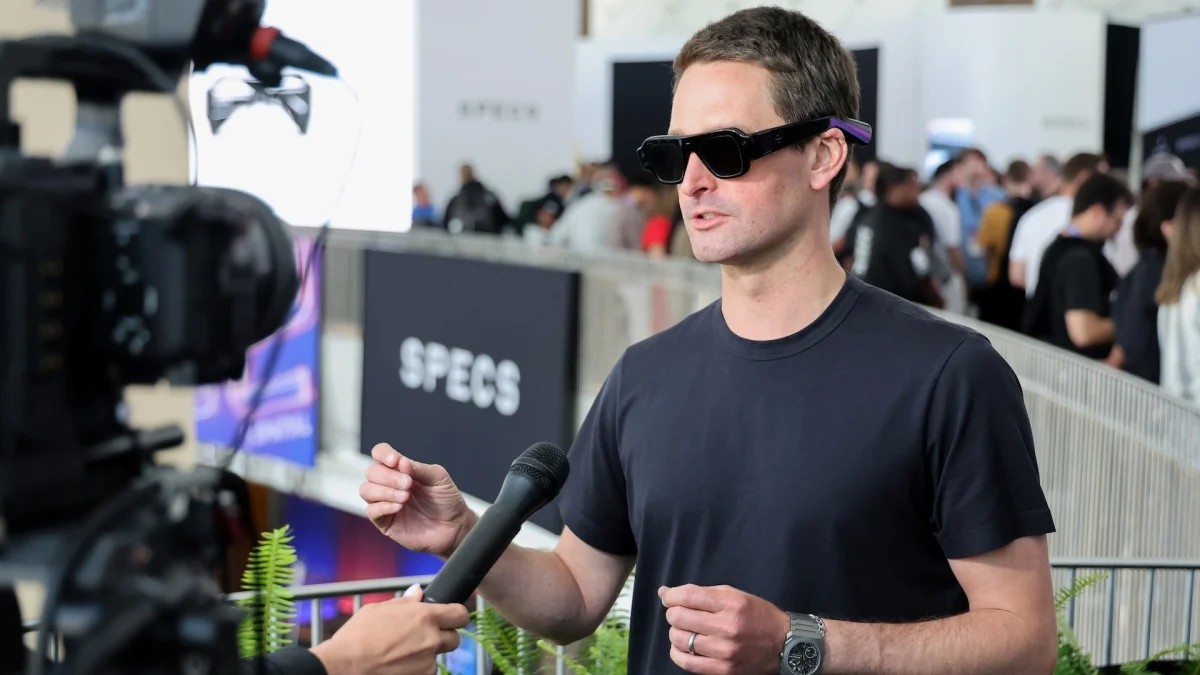
Evan Spiegel didn’t mince words during Snap’s Q2 earnings call on Monday. He called the company’s upcoming AR glasses, known as Specs (and historically as Spectacles), the firm’s “largest long-term opportunity.” But he also left the financials shrouded in mystery.
Pre-orders opened recently. The device costs $2,195. The launch date is September 16.
That price tag? It’s steep. Intimidating, even. Spiegel acknowledged this during the call. He admitted it’s a “high consideration purchase.”
“We’re hearing from folks is really that they want to try Specs,” he said.
But want is not buy.
Specs have been in the works for over a decade. Snap has poured massive resources into this AR future. Spiegel sees a world where AI does the heavy lifting and humans stop staring at screens. A world built into see-through glass. It’s a bold vision. But is the market ready?
How many Specs are people actually pre-ordering?
Here’s the rub: Snap won’t say.
When reporters asked about pre-order volumes, the answer was vague. “There’s been a huge amount of interest,” Spiegel claimed. Big claim. No data. No numbers. Just noise.
It’s ambiguous. Ambiguity breeds suspicion. Did the “huge interest” turn into actual credit card swipes? Or are people just looking at a $2,200 price tag and walking away?
“What we’re hearing from folks is really that they want to try Specs.”
— Evan Spiegel, Snap CEO
Specs are designed for a post-screen world. But right now, the public is stuck in a pre-purchase purgatory. You can’t demo them. Not yet. You have to wait until September.
Why the $2,195 price matters for early adoption
This isn’t just a gadget. It’s a bet on the “next computing platform.” Spiegel compared it to the introduction of desktop computers. That’s a big comparison. Desktops changed how we worked. Will Specs change how we live?
Maybe.
But first, people need to hold them. “I think for the broader public… it’s going to be really important for folks to go hands-on,” Spiegel said. He’s betting that touchscreens aren’t enough. You have to feel the weight. You have to see the AI overlay in real-time.
September 16 isn’t just a launch. It’s a demo day.
CFO Doug Hott echoed this sentiment. He talked about “product quality, customer experience, and the ecosystem.” He didn’t mention volume. He mentioned fit. How these glasses fit into your life. That’s the real sell. Not the tech specs. The utility.
Is Snap making money on the Specs hype?
Let’s look at the actual business.
Snap made $1.6 billion in Q2 2026. Up 19% year over year. That beat expectations. Good job, Snap.
But they lost $164 million net.
Losses. With a half-billion dollar savings program targeting layoffs. Snap cut 16% of its workforce earlier this year. Spiegel says they want to lower annual costs by $500 million by year’s end.
So, Snap is profitable? Sort of. Top-line revenue is up. Bottom line is red. They’re cutting costs to stay alive while betting everything on a $2,000 piece of glass that hasn’t shipped yet.
It’s a high-wire act.
The developers are impressed by the “technical leaps.” We know that. But developers don’t pay the bills. Consumers do.
And consumers are hesitant. At $2,195, this isn’t an impulse buy. It’s a statement.
Will people buy into the AR future? Or will they wait for the price to drop? For the tech to mature? For someone else to make the first mistake?
Snap is betting on the former. They’re betting that the vision is strong enough to overcome the price tag. They’re betting that September 16 will change minds.
The momentum is there. The excitement is… claimed. But until you can wear them, you can’t know.
And that’s the bottleneck.
Snap is waiting for you to try it on. The rest of the world is waiting for a sign.
Is the AR glasses market finally ready? Or are we just watching a tech giant spend a decade preparing for a room full of skeptics?