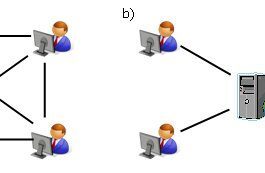
Electronic Data Interchange (EDI) is the backbone of modern business-to-business communication. It’s not just about sharing files. It is a structured, automated protocol for exchanging business documents between different computer systems. Think of it as a universal language that allows a retailer’s inventory software to communicate directly with a manufacturer’s order processing system without human intervention.
The goal is simple. Eliminate manual input errors. Humans make mistakes when entering data. The error disappears when the software interacts with the software. This process ensures that information such as purchase orders, invoices and delivery notices are transferred securely and standardized across organizational boundaries.
The standards that make it work
Why does this work? Because everyone accepts the rules. EDI is based on international standards that define the syntax and semantics of messages. Without these standards, the data would appear distorted to the receiving system.
Two major standards dominate the landscape:
- UN/EDIFACT: This is a worldwide standard. If you do international trade, especially in Europe or Asia, you probably use EDIFACT. It handles everything from administration to commerce and transport.
- ANSI X12: This format is prevalent in North America. If your supplier is located in the US or Canada, they may be using X12.
These standards ensure interoperability. Your system doesn’t care about the hardware another person is using. It just checks that the data follows the agreed structure. This means you can send valid orders from your laptop in Tokyo to your server in New York. The receiving system interprets the data automatically and consistently, regardless of its internal configuration.
Security and protocols
Mere standardization is not enough. We need a safe pipe. EDI implementations use private communication protocols to ensure data integrity and confidentiality. You might encounter protocols like:
- AS2: Widely used for secure file transfer over the Internet.
- OFTP2: Commonly used in the automotive industry and logistics for secure exchange.
- SFTP: Secure File Transfer Protocol, a standard for encrypted data transfer.
These protocols are critical for regulated industries. Healthcare, the automotive industry and the logistics industry handle sensitive data. Compliance is not optional. These tools meet the strict safety requirements of these industries.
Real impact in different industries
EDI has changed from a niche tool to a business necessity. It drives efficiency in supply chains where speed and accuracy are everything.
In manufacturing, it synchronizes order, delivery and payment processes. Seamlessly connect operators, manufacturers and distributors. In retail, it automates stock management and invoicing between suppliers and the chain. No more manual POs. No more faxing invoices.
The healthcare and insurance industries use EDI to exchange sensitive medical and contract information. This technology ensures that sensitive information remains intact and complies with data protection standards. It’s not just about speed. It’s about trust and compliance.
Compromises and costs
Implementation of EDI is not a plug and play operation. It requires significant organizational and technical adaptations.
You need a system that supports your chosen standard. Internal procedures must be rewritten to handle automated data flows. Security measures must be strengthened to respond to new digital risks. It’s not just about enabling features. This is a comprehensive digital transformation strategy.
However, the advantages are clear. Automated exchange reduces processing delays. Reduce paper costs. Better supply chain visibility. Companies using EDI can better track orders and improve customer satisfaction. They are able to react more quickly to market fluctuations. In a globalized economy, this agility is a competitive advantage.
However, there are still challenges. Integrating EDI into a broader digital strategy requires support from IT leaders, business and external partners. This is a complex ecosystem. When you start running, it’s powerful. Before it’s running, it’s a headache.
The future of business communication is not e-mail. This is a structured and automated flow of information. The question is not whether these standards will be implemented. It’s about how quickly you can integrate them into your operations, faster than your competition.
How the EDI architecture connects different systems
Electronic Data Interchange (EDI) The core of the system is more than just a file transfer tool. This is a complex bridge between different networks. An EDI translators, also known as a converter or mapper, is used in the engine room of this installation. These components do the heavy lifting of taking your internal ERP or CRM data and transforming it into standardized messages that partner systems can actually read.
Think of these interpreters as universal language interpreters at a United Nations summit. They are located at the interface between your internal business logic and your external EDI network. Without these, the internal data structures are at odds with the recipient’s expectations. They make sure the map matches the area.
Which EDI protocol is best for secure data transfer?
Data does not only travel through the Internet. This is sent via a special EDI protocol built specifically for this job. AS2 has become the de facto standard for secure Internet transmission. Why? Provides encryption, authentication, and an enforced receipt of non-repudiation. You can see that the file has arrived. You can see it hasn’t been tampered with.
But AS2 is not the only player. Depending on industry or partner requirements, you can use X400, OFTP2 or SFTP. These channels were chosen for their reliability under high load or high availability constraints. When you want to guarantee a large number of transactions, the choice of protocol determines the stability.
Why EDI protection cannot be negotiated
EDI processes strategic information and personal data. Security is not a feature. it’s the foundation. Application security EDI deployments require more than just passwords.
Here’s what you need:
– Data encryption during transfer.
– Digital signature to confirm your identity.
– Integrity controls to detect tampering.
These mechanisms prevent interception and counterfeiting. In addition to security, there is also a legal aspect. Transaction traceability and secure archiving are often legal requirements. In many areas, electronic documents must be legally binding and verifiable. If you can’t prove that the document hasn’t been changed since it was signed, it won’t help you in court.
How cloud and APIs are changing EDI
EDI was born from standardization, but has now developed into a hybrid model. The rise of cloud computing and APIs (application programming interfaces) has increased interest in hybrid architectures. Here, EDI works in parallel with real-time data solutions.
This migration is about more than just keeping the old system running. It’s all about agility. By integrating EDI with modern API-based processes, companies can benefit from:
– More flexible user experience.
– Reduce integration costs.
– Enable new data flows between partners faster.
This is a shift from batch processing to more Responsive, and most importantly, real-time connectivity.
Why government mandates promote EDI modernization
The law is a powerful catalyst. Countries like France are pushing electronic invoicing through platforms like Chorus Pro, forcing organizations to rethink their document management strategies. Companies don’t adopt EDI just to save money. They do it to stay compliant.
These mandates emphasize the intersection of law and technology. Companies must adapt their documentation practices to the new legal requirements and at the same time take advantage of innovations in automation and security. The result is a more robust and transparent supply chain.
The role of artificial intelligence and data analytics in EDI
After all, EDI is part of a larger wave of digital transformation. It’s no longer just about sending a purchase order. It’s about utilizing information. Trends show that:
– Open standards.
– Connected to Artificial Intelligence systems.
– Advanced data exploitation for forecasting and optimization of operations.
As cyber threats increase and business needs change rapidly, EDI offers a reliable and standardized basis for business exchange. It adapts. It continues. The question is not whether it will change, but how quickly organizations can take advantage of this development. The market is not waiting for the old systems to catch up.