Most people think coding is about complex algorithms. It isn’t. It’s mostly about making simple choices. In C, those choices come down to one thing: Boolean expressions.
You’ve seen them in if statements and while loops. They are the traffic lights of your program. Green goes. Red stops.
Take this basic example.
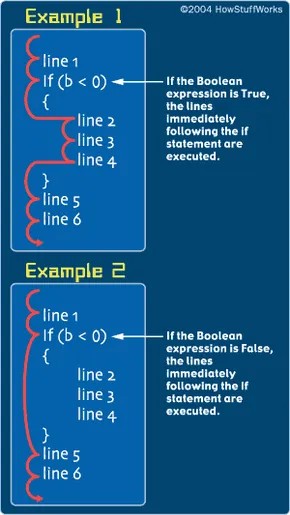
It asks for a number. It checks if that number is less than zero. If it is, the program speaks. If it isn’t? Silence.
The part (b < 0) is the Boolean expression. C evaluates it. True means execute the next line. False means skip it. Simple.
But what happens when you need more nuance?
Handling Zero and Positive Values
The single check above leaves a gap. What if the user enters zero? Or a positive integer? The program ignores them.
Here is a slightly more complex structure.
Now you have logic for negative, zero, and positive values. The else if and else sections catch the other cases. It’s still basic, but it covers all bases.
Complex Conditions and Common Pitfalls
Real-world logic rarely stays simple. Sometimes you need two conditions to be true at once.
Consider this line:
Read it like English. If x equals y AND j is greater than k, set z to 1. Otherwise, set q to 10.
Notice the operators.
C uses == to test for equality. It uses a single = to assign a value.
This is a classic trap. If you write if (x = y), you aren’t checking if they are equal. You are assigning y to x, then checking if the result is non-zero. Your logic breaks. Always use double equals for comparisons.
The && symbol represents a Boolean AND operation. Both sides must be true.
The Complete Boolean Operator Toolkit
You don’t need to memorize these, but you should know what they look like. They appear everywhere in C code.
- Equality :
== - Inequality :
!= - Less than :
< - Greater than :
> - Less than or equal to :
<= - Greater than or equal to :
>= - AND :
&& - OR :
|| - NOT :
!
Why This Matters for Everyday Users
Looping logic in C: while, do-while, and for structures
You can use while loops with the same ease as basic if statements. Consider a simple example:
This code repeats those two lines until a is greater than or equal to b. The structure is straightforward. C also offers a do-while construct, which guarantees the code block runs at least once before checking the condition. Here is a snippet showing a basic input check:
How the for loop simplifies iteration
The for loop is essentially a shorthand for a while loop. If you have code like this:
You can compress it into a single for statement:
The while loop has three distinct parts: initialization (x=1 ), the test (x<10 ), and increment (x++ ). The for loop packs these into one line. But you aren’t limited to simple variables. Look at this more complex scenario:
You can rewrite this using a for loop:
It looks cluttered. It is confusing. But it works. The comma operator allows you to chain multiple statements in the initialization and increment sections of a for loop. You cannot put a comma in the test section, though.
Many C programmers love packing logic into a single line. Others argue it destroys readability. There is no universal consensus. You just have to decide if you value brevity over clarity.
The danger of = vs == in Boolean expressions
The double equals sign == is a source of frequent bugs in C. Developers often type a single equals sign = by mistake. The compiler accepts both, but the behavior is drastically different.
In C, Boolean expressions evaluate to integers. Zero means False. Any non-zero integer means True. This means you can legally write:
But what happens if you write if (a=b)?
This is not a comparison. It is an assignment. The statement if (a=b) assigns the value of b to a, then tests the resulting value of a for its Boolean truthiness. If a becomes zero, the condition is False. If it becomes anything else, it is True.
Your variable a changes value during this process. This is rarely what you want when you intended to compare values. While this assignment-in-conditional feature can be useful in specific contexts, it is a trap for the unwary. Be careful with your = and == usage. One typo changes everything.